ANGLING REPORT – February 9th 2026

ANGLING REPORT

RICHARD DENNIS SECURES DOUBLE MATCH VICTORIES

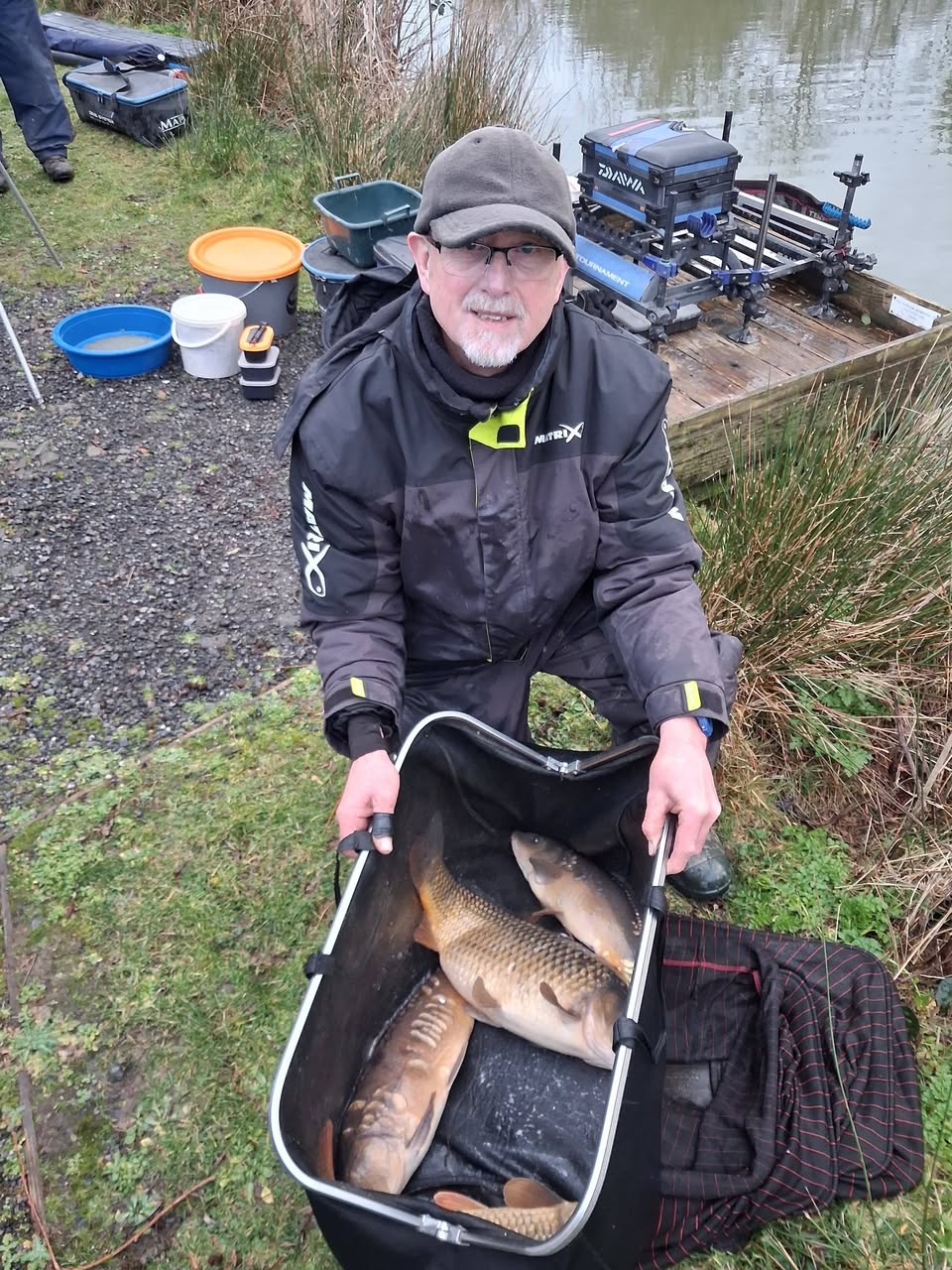
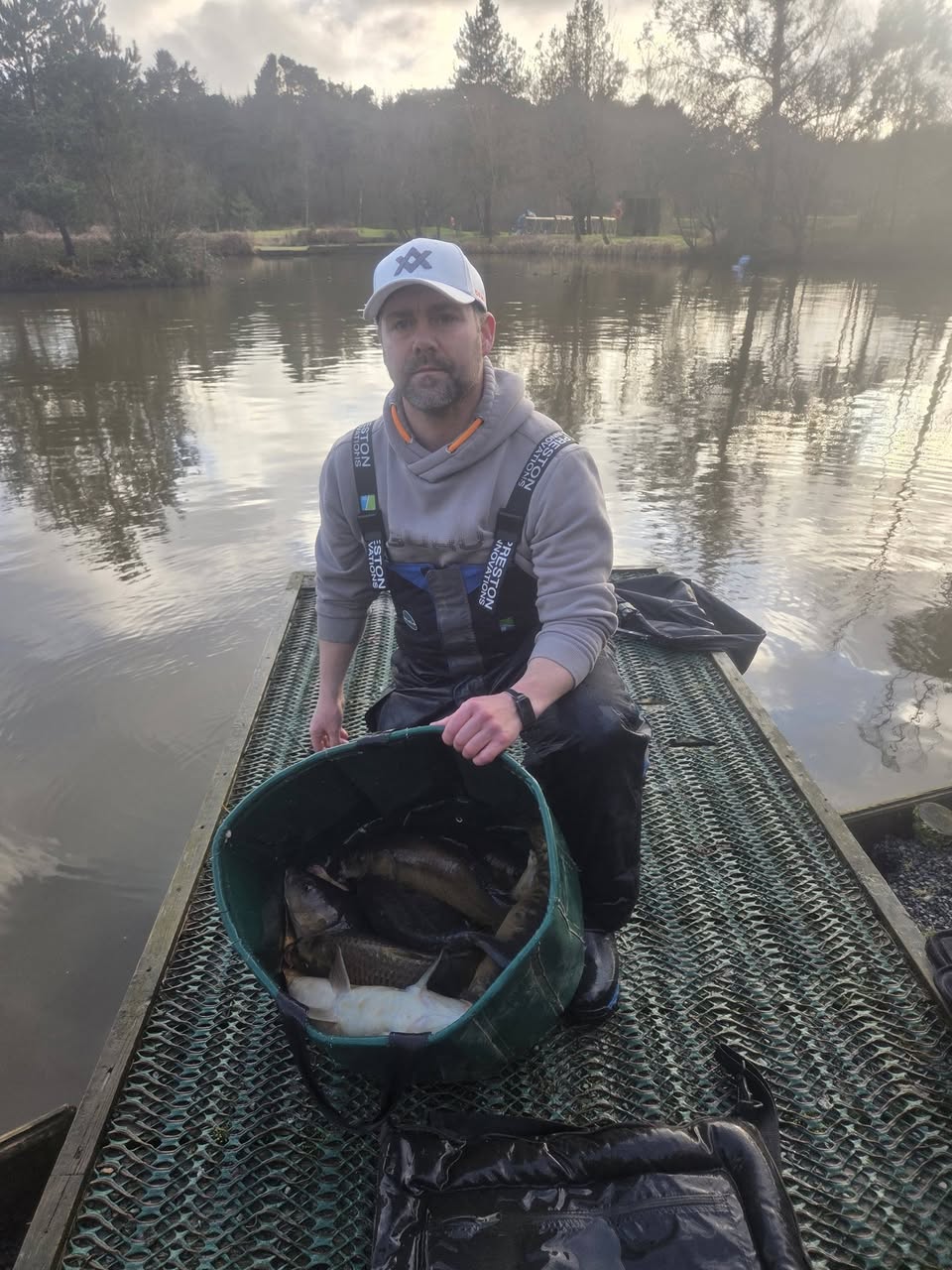
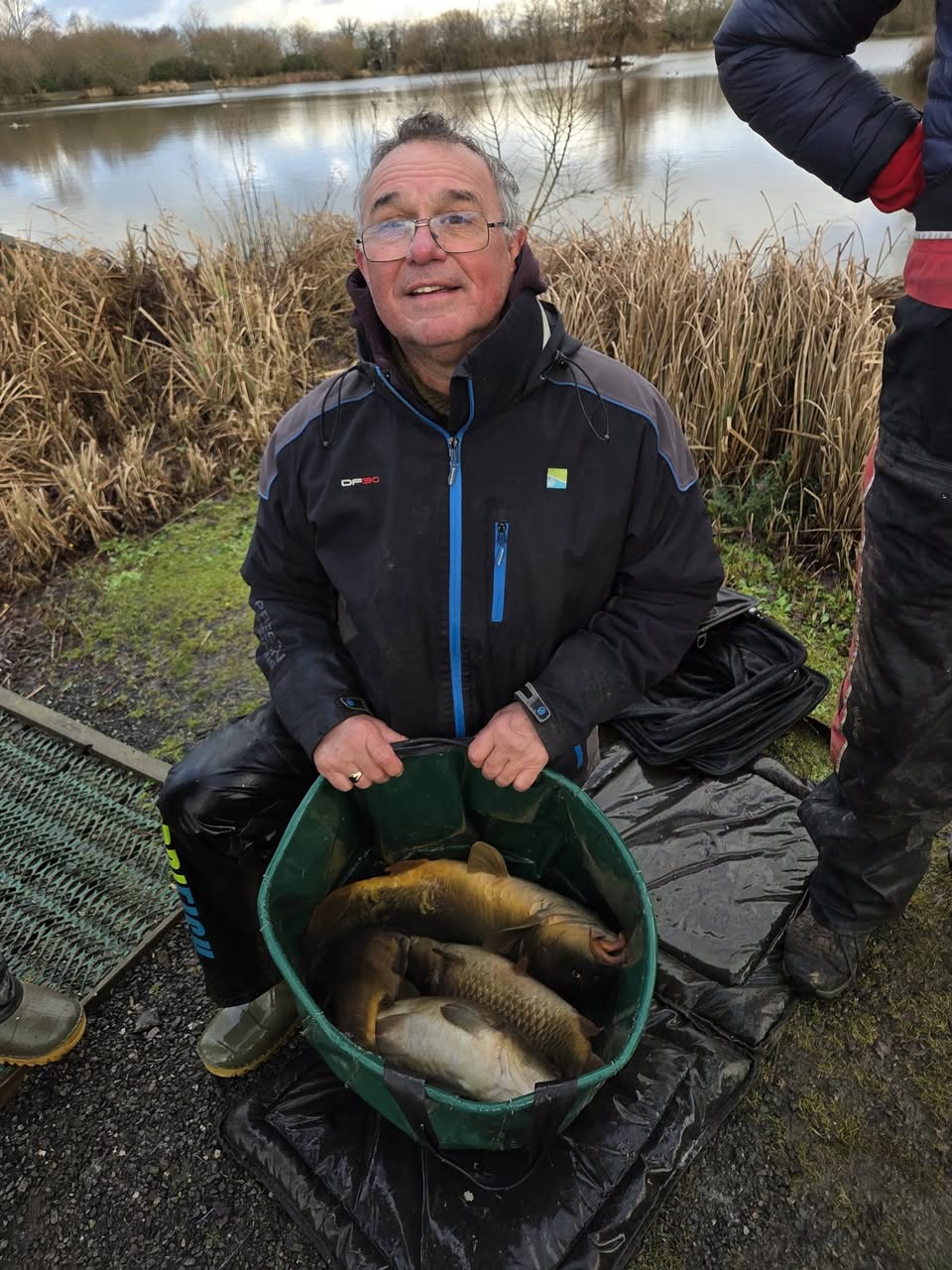
Richard Dennis won Bideford and District Angling Clubs latest match on their home water Tarka Swims with a bag of 31lb 4oz. Martin Turner was runner up with 25lb 8oz and Paul Elworthy third with 20lb 12oz. Pole tactics proved most successful with members catching carp, silvers and tench.

Richard’s success came close on the heals of victory at Stafford Moors Open match on the Saturday when he clinched top spot with an impressive 153lb 5oz.

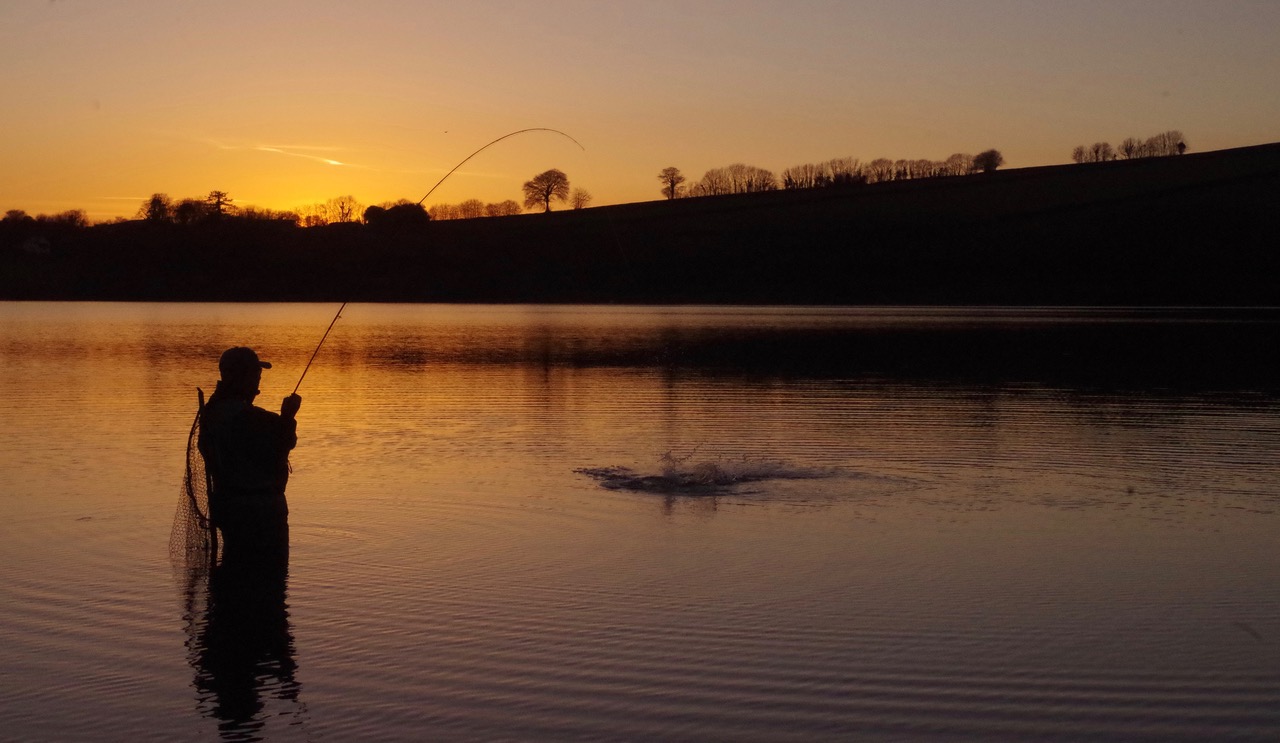
            Hard to believe but its just over two weeks before the start of a new salmon fishing season on North Devon’s rivers and there should be plenty of water in the river systems ensuring that the winters kelt’s have descended to the sea. Whilst the salmon fishing scene is plagued by the all too real stories of their decline anglers are eternally optimistic and there will those who take a rod to the water and try for that elusive springer one of angling’s greatest prizes. The fresh air and warming sun will certainly lift the spirits on those daffodil lined river banks.

On Sunday, February 22nd South West Lakes Trust host their popular Fly Fair at Roadford Lake. The event is always well attended as a curtain raiser for the coming trout and salmon season. There will be casting demonstrations and talks from top anglers and organisations including Charles Jardine, World Champion Fly caster Hywel Morgan and Shaun Leonard, Director of the Wild Trout Trust. South West Lakes Trust’s Head of Fisheries, Leon Fisher, said: “This year’s Fly Fair is set to be an amazing event with lots of activities on offer for the whole family. We have some fantastic guests lined up with world class knowledge of the sport. Attendees are in for a real show, whether you are an experienced fly angler or you are just starting out”.

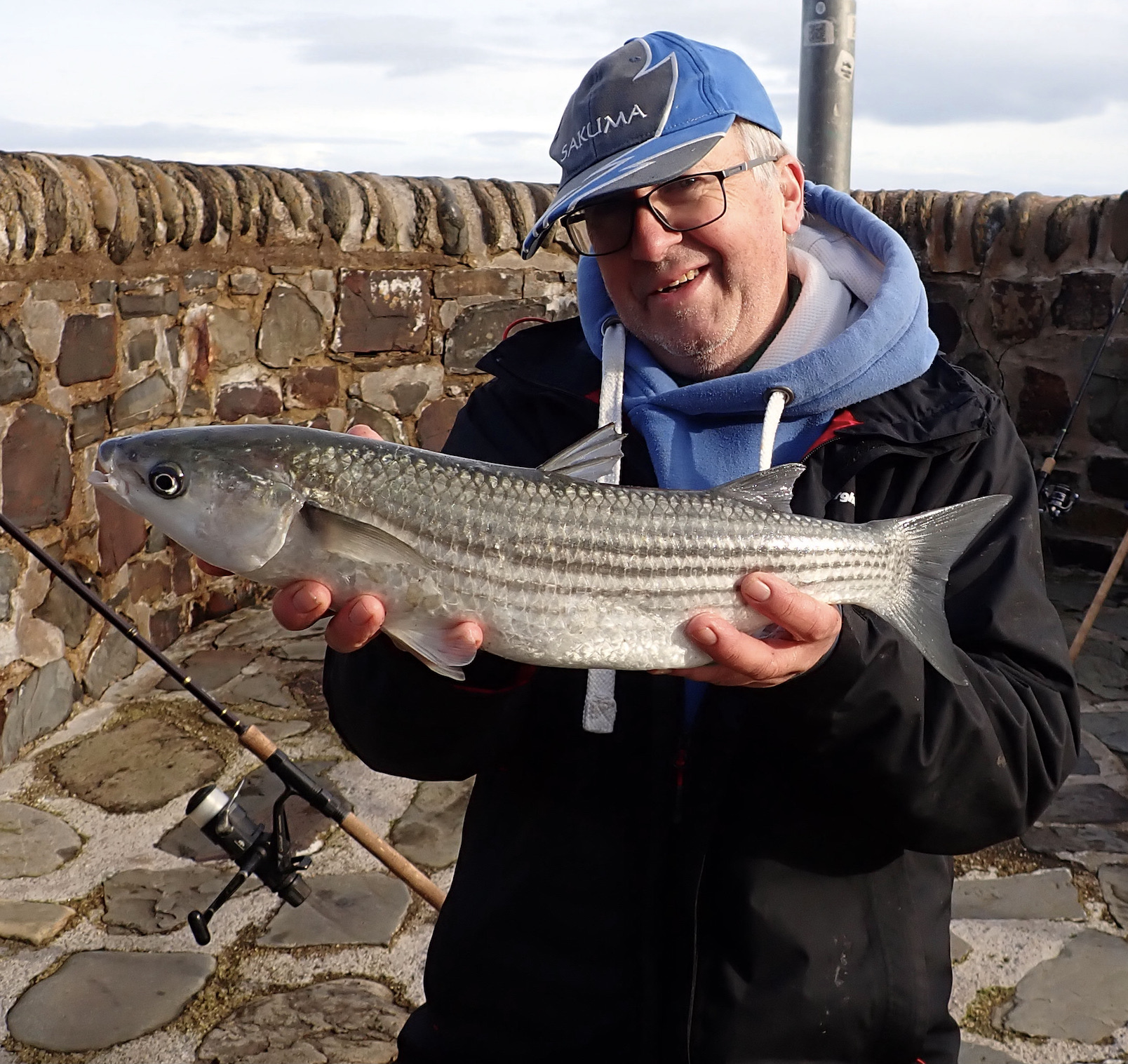
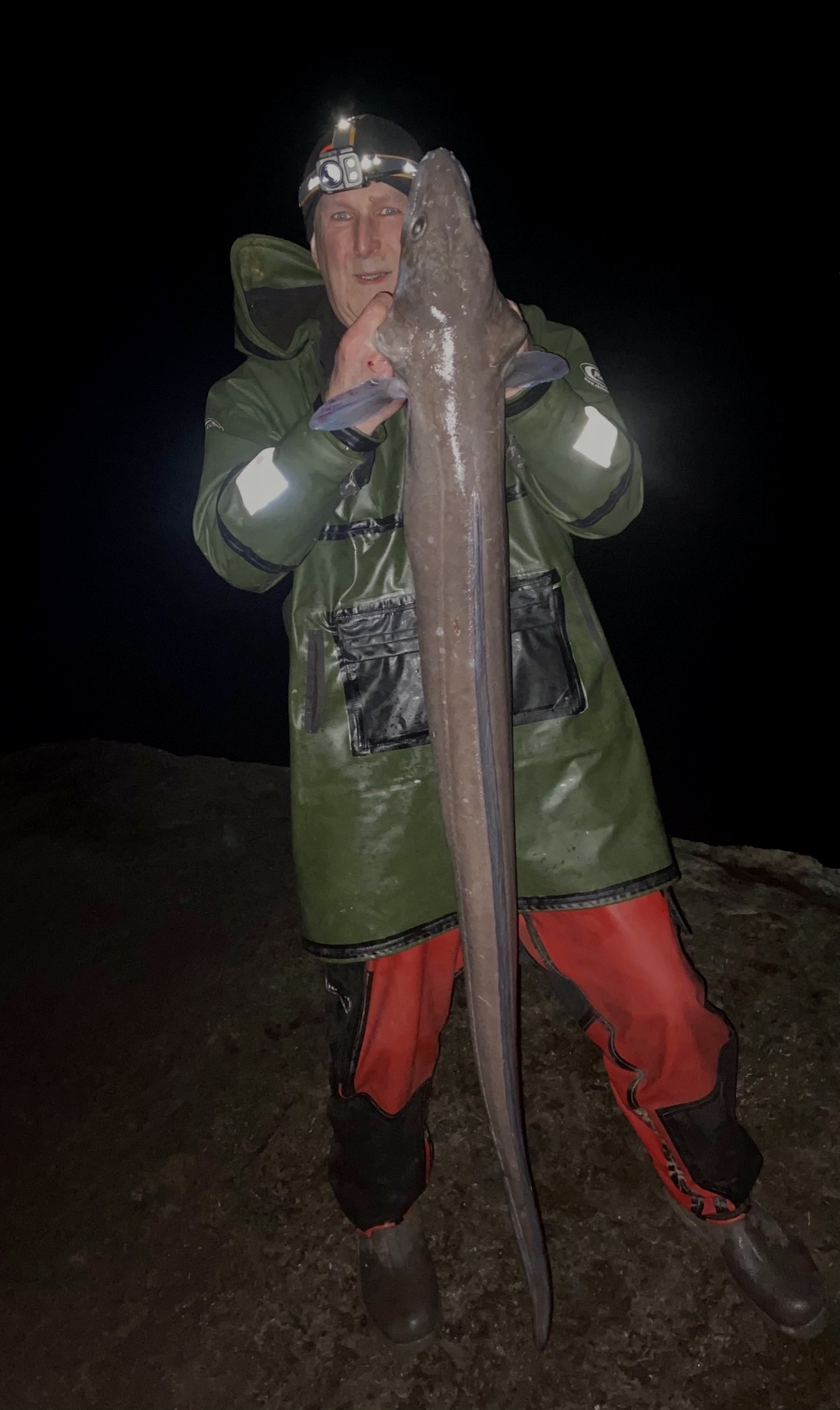
I won Combe Martin SAC’s winter rover with a thick lipped grey mullet scaling 3lb 5oz. Kevin Legge was runner up with a conger of 16lb. Members caught conger, dogfish, rockling and bull huss.

Anglers are on the front line in witnessing the changes brought by climate change. It seems that frogs are spawning far earlier with spawn seen across the Westcountry from mid-January. Spring Flowers are also abundant with many daffodils and primroses already in bloom. The relentless rain is swelling rivers and will undoubtedly impact upon salmon and trout spawning areas.

Carp anglers are perhaps reaping the benefits of a warmer climate as carp continue to feed all year and pack on the pounds reaching weights that would have seemed incredible just a few decades ago.

It is perhaps at sea that the greatest impacts are being seen as fish populations fluctuate. During the winter months cod once considered the main quarry of sea anglers have all but disappeared with hardly any reported from the Bristol Channel this winter. Bass are now being caught on a regular basis from our estuaries throughout the year. Grey mullet once deemed a fish of the warmer months are now caught by enthusiasts fishing in the depths of winter.

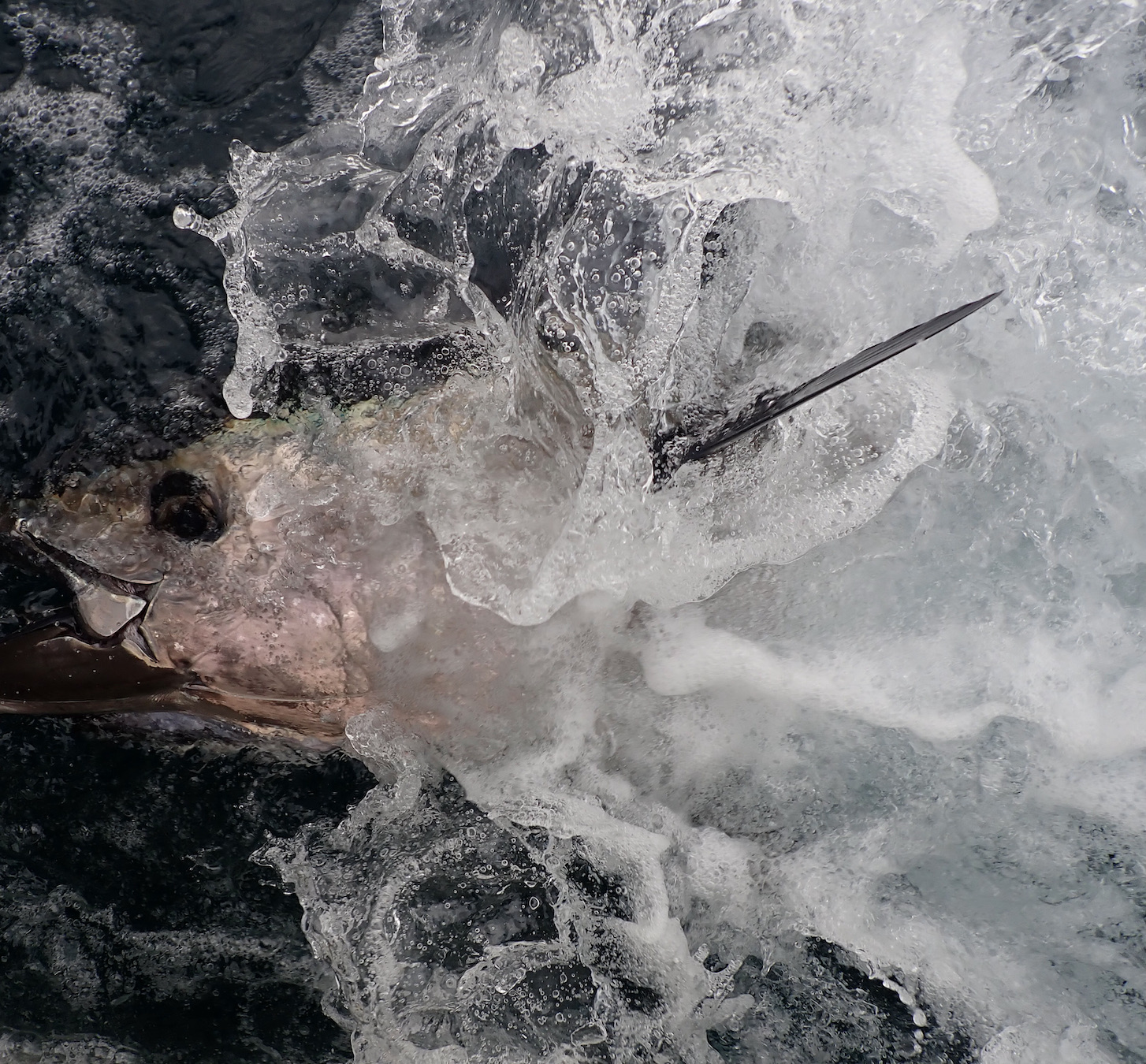
The influx of tuna, bonito and gilthead during Summer and Autumn months are also cited as being the result of climate change. In truth nature is complex and only time and scientific data will bring greater clarity. As anglers we can explore exciting possibilities and adapt our tactics to exploit these new opportunities.

ANGLING REPORT – February 1st -2026

ANGLING REPORT


BIG BROWN TROUT AT BULLDOG


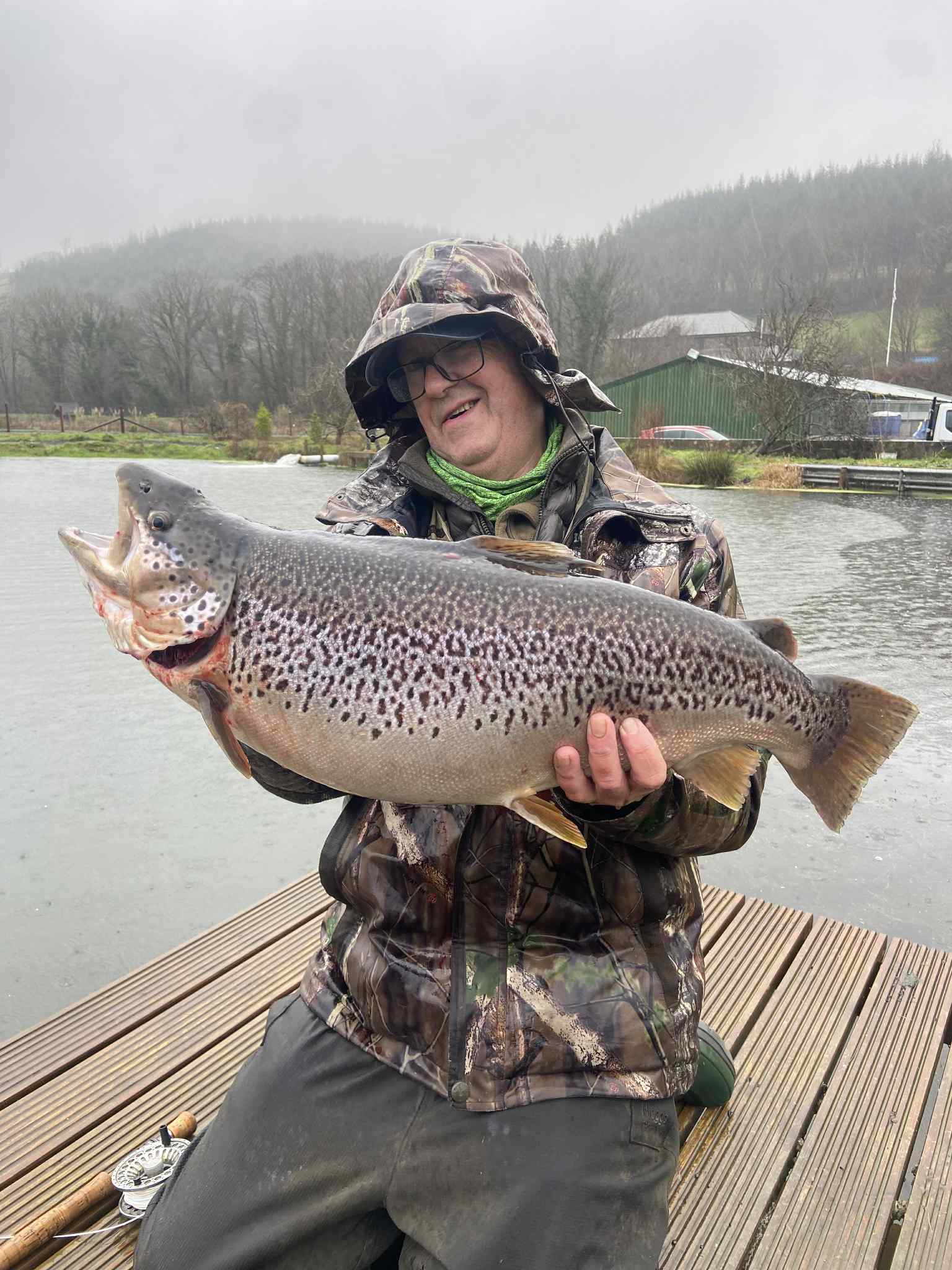
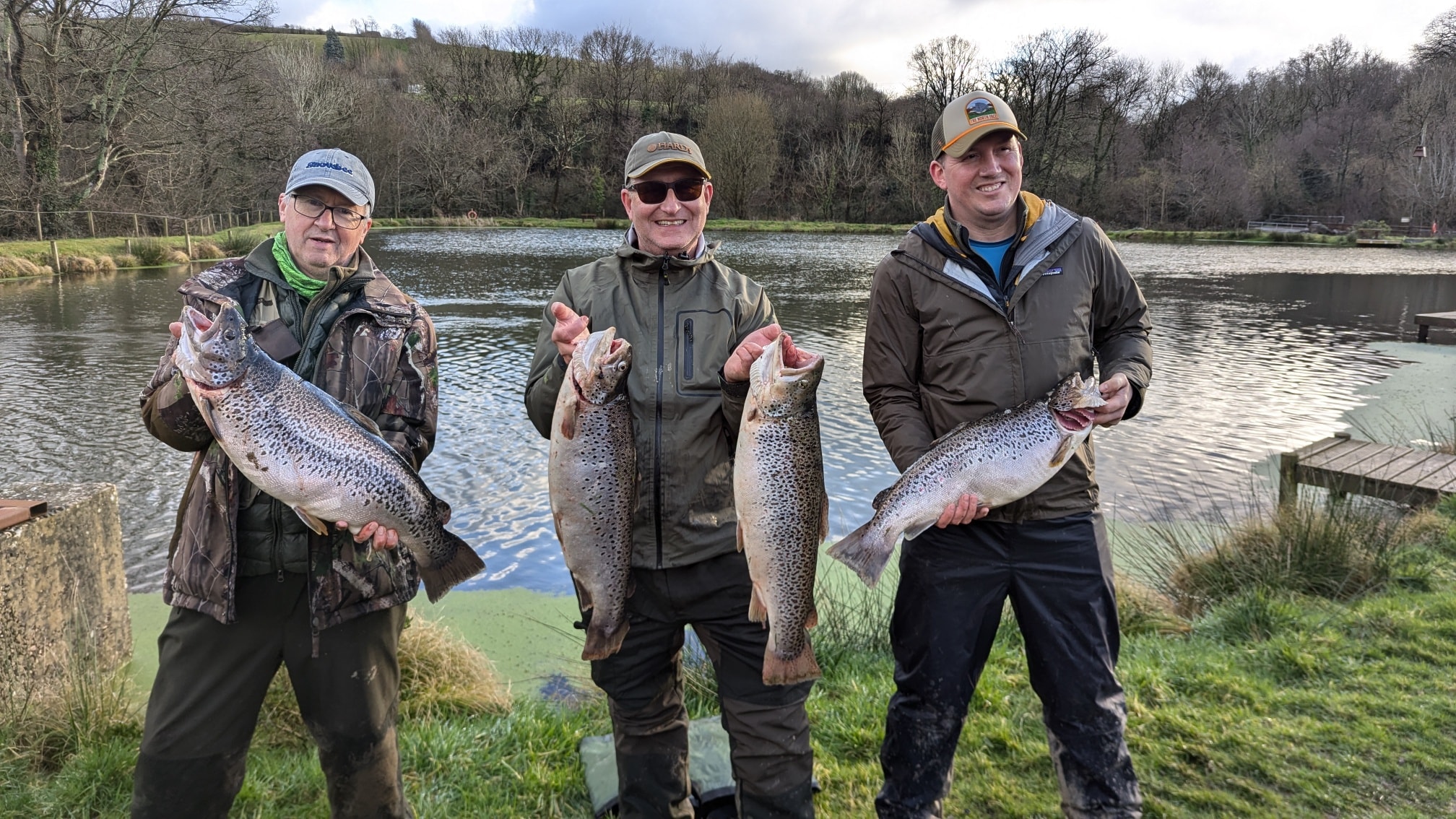
Big brown trout were the highlight of Bulldog Fisheries February Trout Open Competition with three double figure brown trout gracing the scales at the days end. The top angler was Andy Facey who tempted a fine brace of brown trout weighing 10lb 12oz and 9lb 2oz which when added the other three fish he caught gave him a winning weight of 29lb 4oz. Runner up was Dave Chapman with five trout for 23lb 10oz a bag that included a fine brown trout of 11lb 1oz. Third was Chris Dunn with six trout for 22lb 13oz and fourth myself with five trout for 22lb 2oz. I was fortunate to tempt the biggest fish of the day; a stunning brown trout scaling 13lb 7oz. All competitors caught fish including good numbers of rainbow trout and spartics of 5lb 7oz and 6lb 2oz.

Combe Martin SAC held their AGM and presentation night at the Mariners Arms, Braunton. Members reflected upon a successful 2025 during which some superb specimen fish were recorded. Shane Pavio Hookway won the clubs specimen league with five specimen fish that included a shore caught tope of 43lb 6oz and a pouting of 2lb 2oz. Best specimen fish from the shore was a gilthead bream of 5lb 10oz to the rod of Ollie Passmore. David Brooke won the clubs top Medway Cup for best caught specimen boat with a gilthead bream of 6lb 4oz. Daniel Welch was awarded the clubs Merit Award for his outstanding contribution to the club invigorating the boat sector of the club via his boat fishing enterprise Predator 2.

SPURDOG PACKS ON THE HUNT
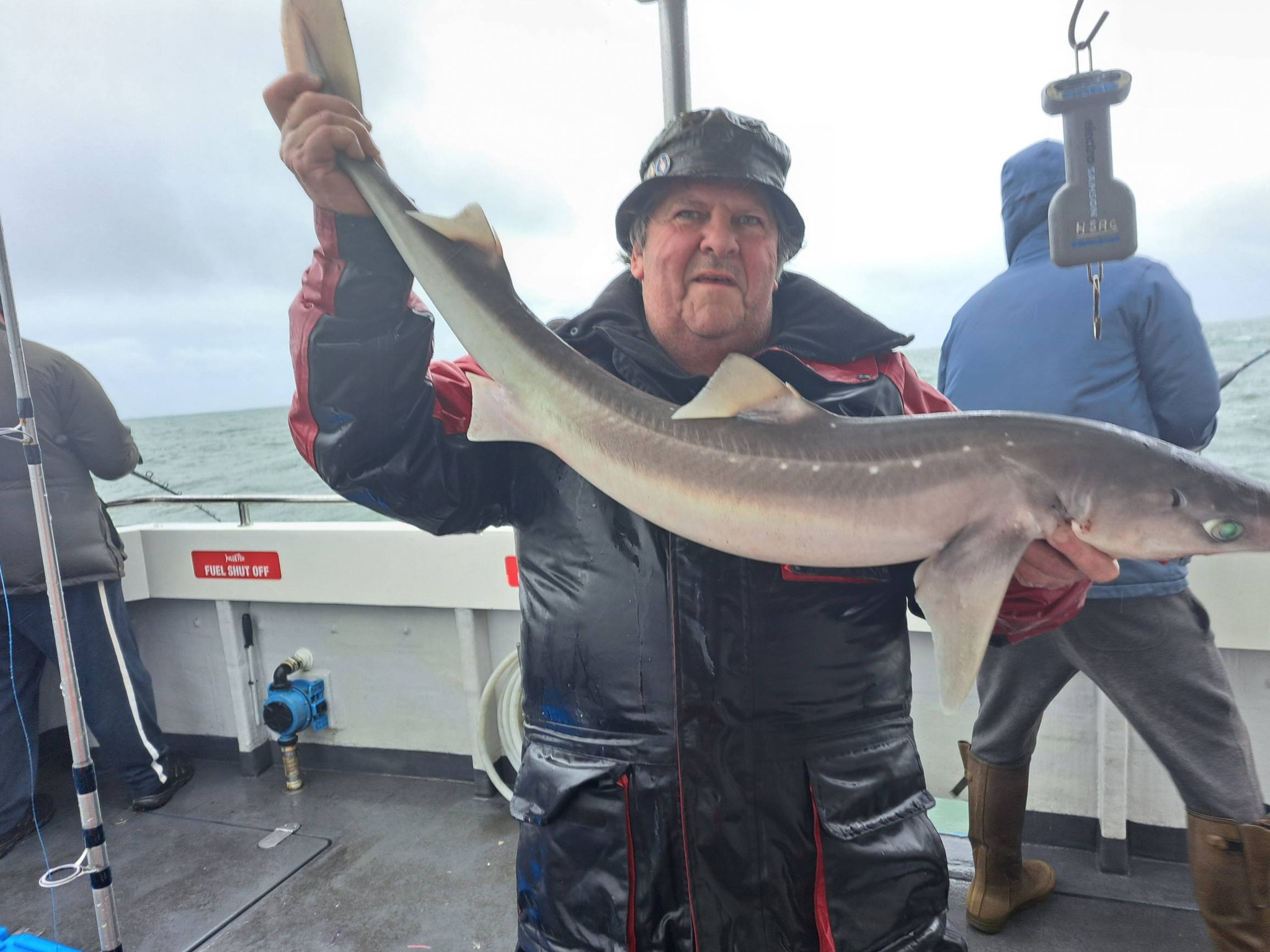
John Barbeary’s Charter boat Blue Fin is now back in the water at Ilfracombe taking anglers to deep water marks where huge packs of spurdog are on the hunt. A party of anglers fishing last weekend caught an estimated 150 spurdog to almost 20lb. They also boated conger, bull huss, dogfish and rockling.


Nathan Clements won Bideford Angling Clubs monthly sea rover with a dogfish of 2lb 3.25oz.

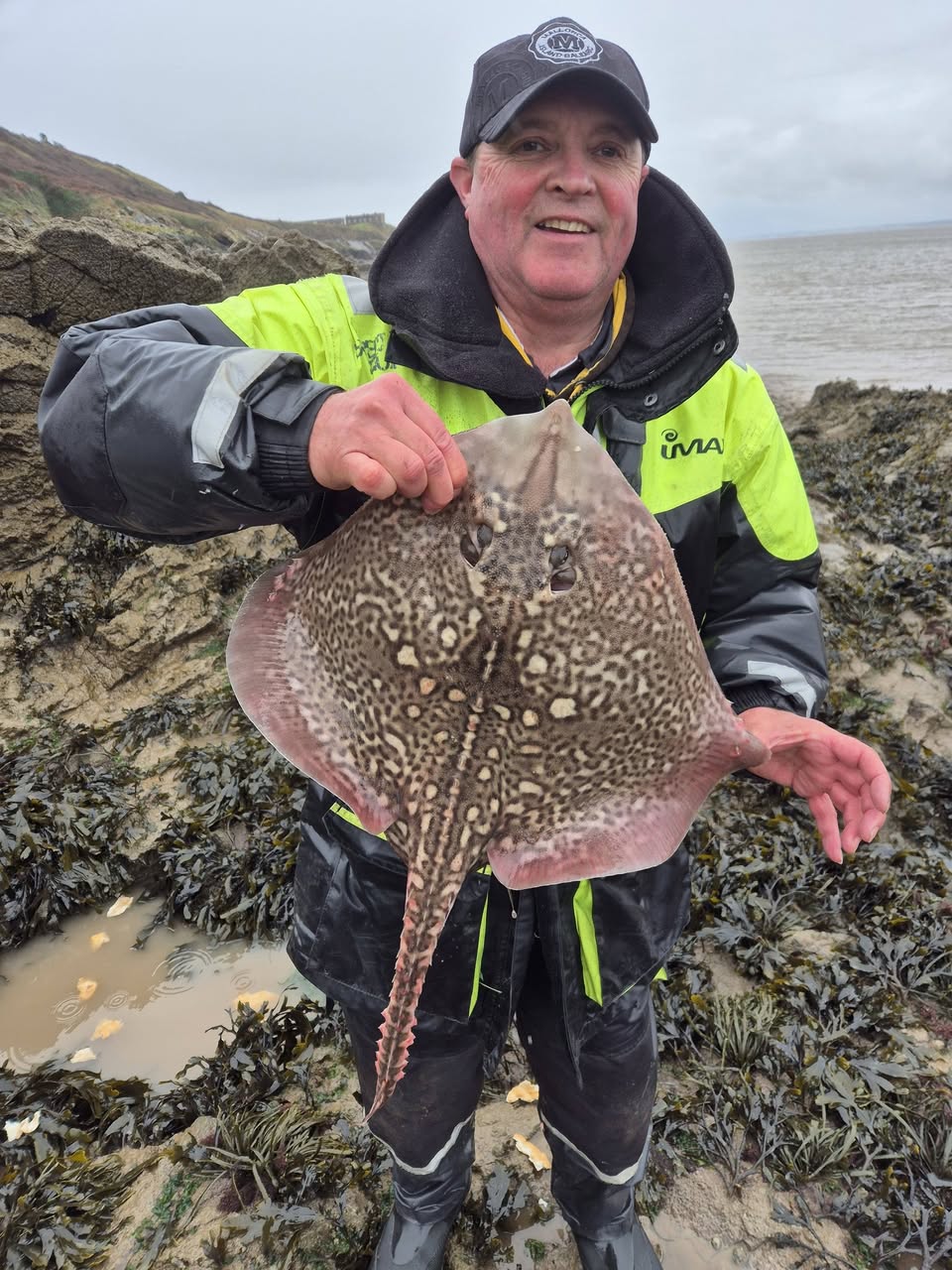
Michael Hammett won Appledore Shipbuilders monthly sea rover with a thornback ray of 7lb 6oz. Jack Sharrock was runner up with a small eyed ray of 6lb 13oz and Andrew Atkinson third with a thornback ray of 6lb 10oz.

North Devon Match Group fished their latest Match at Stafford Moor saw good catches for members on both Tanner’s Lake and Woodies. Roger Ackroyd was top rod on Tanners with 116lb 14oz and Dave Stockton winner on Woodies with 101lb 1oz.


Reports from lockdown

posted in: At the Waters Edge, Sidebar | 0

For those who don’t buy the Journal here are a couple of recent angling reports written during lockdown. With a reduction in angling news it’s been liberating to have the freedom to write something different beyond the normal catch reports.

ANGLING REPORT – January 11th 


FISHING IN LOCKDOWN

            The Angling Trust have done a sterling job in lobbying government to allow angling to continue within the present strict lockdown rule. Angling can be practiced locally as daily exercise and whilst angling would not generally be considered as cardiovascular exercise it is undoubtedly beneficial for mental health. Anglers must make their own judgement regarding the ethics of fishing during the lockdown and whether it is within the spirit of public good. Angling is without doubt as COVID safe as is possible the only issue could arise if an accident arises whilst fishing or travelling to the water’s edge. This could of course impact upon the busy emergency services as can virtually any activity.

As a result of the lockdown angling reports are few and far between so I will take this opportunity to look back at angling in North Devon during the past. It is generally accepted that fish stocks have declined dramatically in recent times and I would certainly concur with this view. I would however add that the picture is not always as bleak as it is painted.

I have over recent years raised serious concerns regarding the all too frequent pollution incidents that impact upon our local rivers. Fortunately I feel that there is a ground swell of concern across society for the health of the planet that could bring renewed hope. Since I have been casting a line in North Devon’s rivers I have seen a dramatic decline in salmon numbers. There are many reasons for this but it is not the first time in our history that salmon have been endangered by human activity. During the Victorian era many rivers were dammed for water mills and effluent was frequently discharged into the regions rivers that were treated as open sewers.

I came across an old newspaper cutting recently that reflects upon fishing the Upper Teign. “ When I called, in the dim light of a December evening, Mr Perrott was putting the finishing touches to a red Maxwell. He last went fishing on April 5th 1930, but as the water was very high and the weather very cold he only got two trout. On his eightieth birthday he walked eight and a half miles and caught eighteen. “Trout are not so numerous as in the good old days” said Mr Perrott. “They were more plentiful when the lead mines at Christow prevented the salmon from getting into the upper reaches. I on one occasion killed one thousand trout in ten days and one day one hundred and twenty-two. I started at 5.00am and finished at 2.00pm. It is not necessarily the neatest fly that kills. The modern fly is too small. Fish rise to them but do not take.”

The above extract from the Western Times Newspaper, January 1st 1932 raised several interesting facts. The first observation is that whilst the River Teign was considered a top class salmon fishing river in recent times it was not always so as pollution from mine workings undoubtedly had a significant impact upon the rivers migratory fish population. The apparent abundance of wild trout is on the other hand quite staggering.

The book ,Exmoor Streams By Clave.F.Wade published in 1903  has many mesmerising tales of tumbling streams with abundant wild trout and salmon. The author recalls  “They are at times so plentiful that I remember a boy once catching between seventy and eighty in the same pool fishing downstream with flies. I admit I have eaten them and they are even better and sweeter than the trout.” To my horror I realise that he is referring to salmon parr! That the River East Lyn survived such overfishing is testimony to the resilience of the salmon.

ANGLING REPORT

Mysteries of the past

The lockdown has inevitably impacted heavily on angling with travel restricted in line with national lockdown guidelines. There has been widespread debate regarding what is deemed local with angling permitted as daily exercise on a local basis.

This is perhaps the quietest time of year for angling with most looking forward to the Springtime that will bring longer days and hopefully an easing of the COVID situation.

I once again take this opportunity to reflect on angling in North Devon in the past. In 2019 I was privileged to have a book published entitled; “ I Caught A Glimpse” that includes a mixture of my own recollections and those of others.

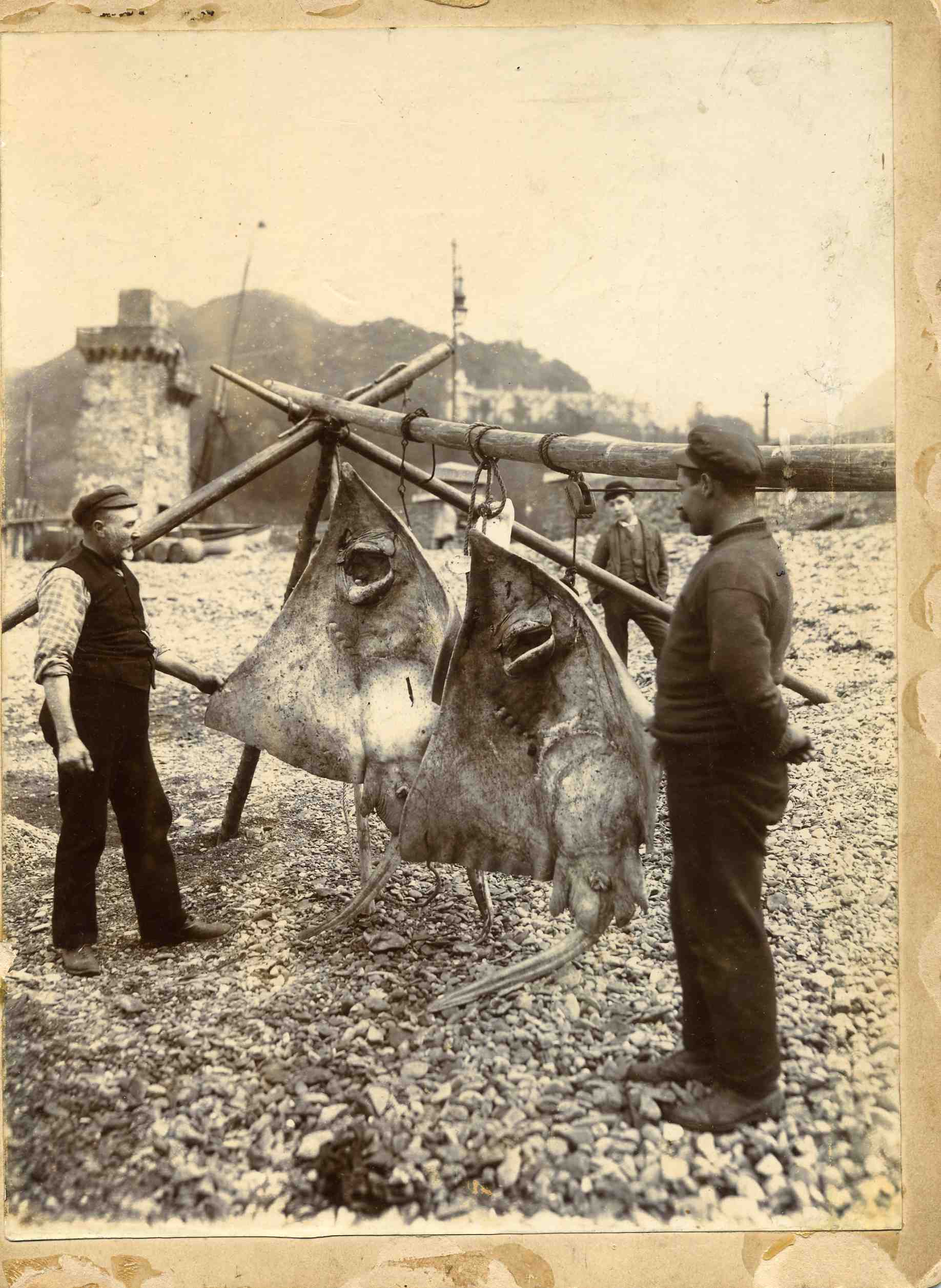
The Bristol Channel was once the home of huge common skate that were frequently landed from deep-water marks. The largest of these weighed in excess of 200lb and were boated using tackle far inferior to that available today. Earlier this Winter Combe Martin SAC member Jamie Steward was fishing from a shore mark near Weston-Super-Mare when he hooked a rare blue skate. Whilst the fish was not large in skate terms at 8lb 3oz it confirmed that these fish still swim within the murky waters of the Bristol Channel. The reason the large skate disappeared was undoubtedly as a result of overfishing in past decades. These huge fish support a recreational fishery off the West Coast of Scotland where a strict catch and release policy has resulted in a thriving population. Perhaps these fish could re-populate North Devon’s local waters if conservation measures were introduced.
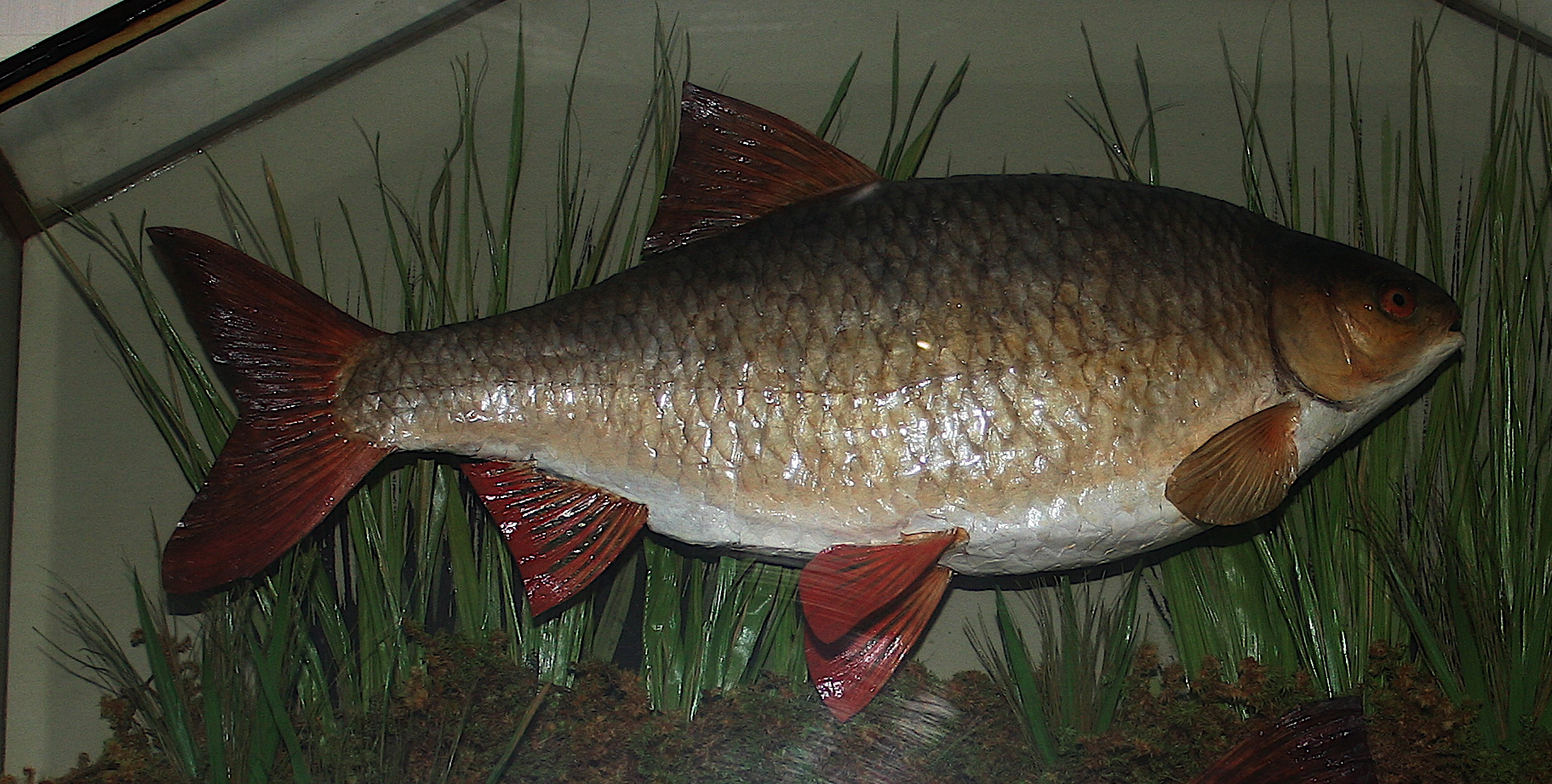
It is not just off the coast that species have disappeared as North Devon has also lost freshwater species. The River Taw renowned for its game fishing also has a population of Coarse fish including roach and dace. Whilst dace  still abound the specimen roach that were once abundant have all but vanished. These fish were caught to over 3lb and interviewed anglers who caught these fish on a regular basis up until the late seventies when the population appears to have collapsed. The reason for this is unclear as the water quality enables a thriving population of wild brown trout that are generally considered to be less tolerant of poor quality water than roach.
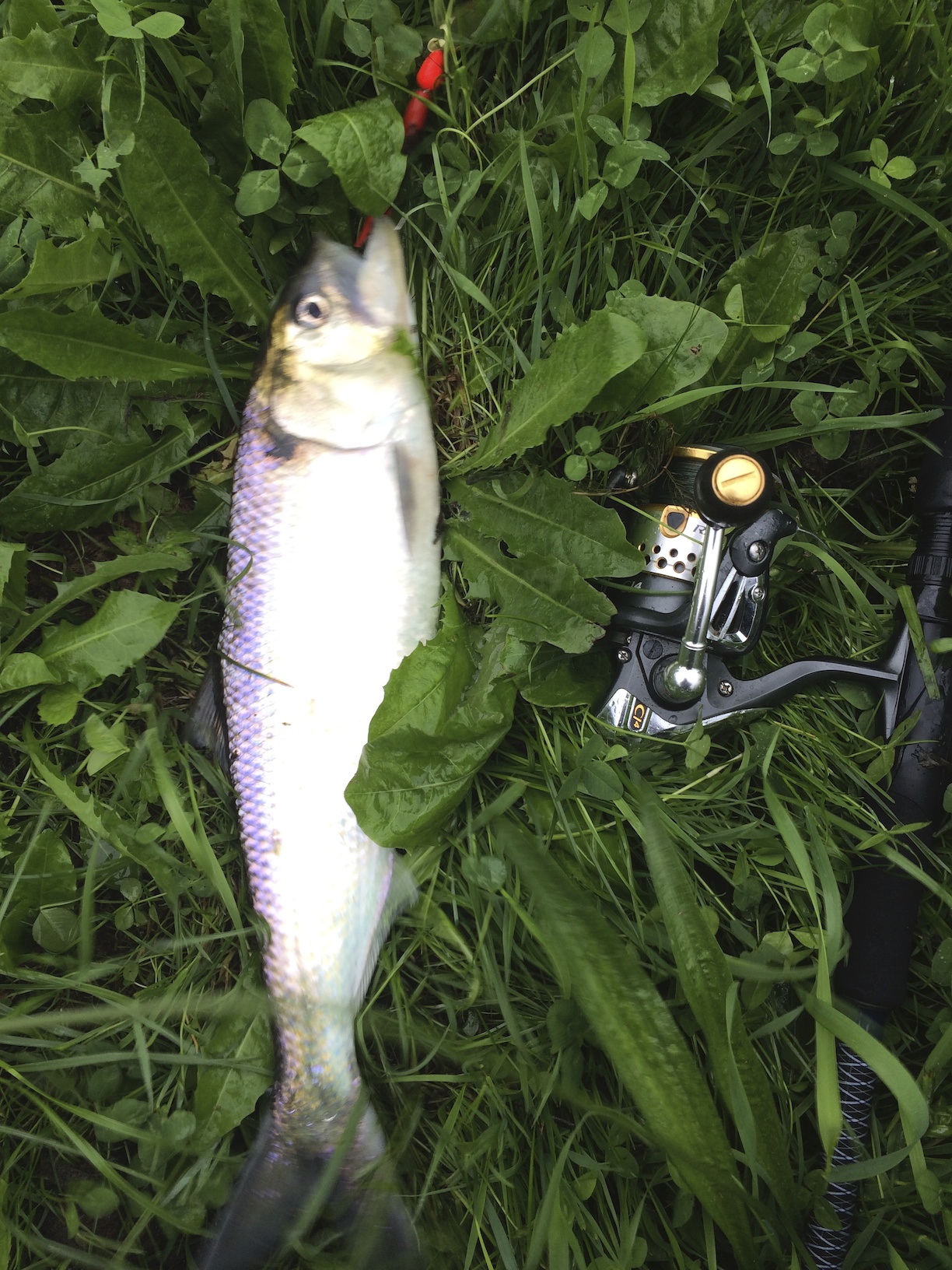
It is likely that other species of fish once swam in the Taw and Torridge including perhaps mighty sturgeon that have become extinct across the UK.  There are occasional reports of twaite shad caught from both the Taw and Torridge during late spring. These fish are protected by law and must be returned immediately to the water. Large shoals still migrate up the River Severn and Wye each Spring seizing lures intended for trout and salmon.
It is testament to man-kinds disregard for the natural world that many species of fish have swum into the history books. As we witness the dramatic decline in salmon and sea trout stocks I worry that future generations will reflect upon the treasures that we have allowed to dwindle and die during our watch.


ANGLING REPORT. A Long Closed season

The COVID-19 outbreak has probably stopped some of you buying the Journal so he is this weeks column.

North Devon’s angling community are waiting patiently until they can return once again to the water’s edge. Close to three weeks of lockdown have passed it is likely to be several more weeks before the chance once again cast a line.

The lockdown will have had a devastating impact upon many businesses that rely upon angling. Fisheries have lost their income at the busiest time of year with Easter normally a bumper time for both coarse and game fishing. Many fisheries incorporate holiday accommodation and are often fully booked throughout the Easter period. Those fishing tackle shops that have an online presence will continue to do some business as anglers stock up for future times but bait sales will have ground to a halt.

Early April is a time when many anglers renew their Rod Licences in line with the historic financial calendar. I suspect many anglers will have delayed purchasing a licence until fishing resumes. This will have had a significant impact upon funding for fishery work and habitat work throughout the country.

The charter boat sector will have lost a significant part of their season and will be hoping for fair weather to allow a return to fishing grounds when normality returns.

The rivers are now running low and clear so runs of migratory fish will be at a minimal until we have substantial rainfall. Strange how just a few weeks ago the rivers were raging torrents.

The lockdown is in effect similar to a closed season. The older generation of Coarse anglers will remember the closed season that prevented fishing for coarse fish from March 14th until June 16th. The glorious sixteenth was a day to celebrate with anglers often casting their lines into lakes and ponds across the land at the stroke of midnight. It is to be hoped that all anglers can share in the magic of a new season when this tragic pandemic ends.

Nature will have enjoyed a reprieve with many waterside paths untrodden. Birds will have nested undisturbed; grass snakes will have basked in the warm sun upon the banks where anglers normally contemplate their luck. The friendly robins will wonder where the anglers have gone with their handfuls of juicy writhing maggots. The large carp in many of the region’s lakes will perhaps miss the angler’s high protein baits. Will the fish be easier to tempt when we return to the water?

The longer term impact on angling will be hard to predict. A long lay-off could hopefully encourage an eager return to the water’s edge and a greater appreciation of the great outdoors. There is of course the fear that some will get out of the habit and not return.