Data is vital in telling a story it’s not exciting, entertaining but it can be depressing and in the case of salmon and sea trout it’s a horror story. I caught my first salmon from the River East Lyn back in 1981 a year when 22,190 salmon were landed by rod and line anglers in England and Wales. Most of these fish were killed and taken for the table.
In 2022 the total rod catch for England and Wales was 6,388 of which 6.111 were returned. I doubt if 2023 will reveal any improvement in catches. The most alarming part of this is perhaps the steep decline in stocks since 2017 with catches plummeting from 13,571 to 6,388.
I am no mathematician and I know that data can be manipulated to some extent but this is stark.
To some extent the data is impacted upon by changing fishery regulations and fishing effort.
I am often asked what is the cause and I reply its complex.
An imbalanced eco system, Survival at sea, pollution, consequences of intensive farming, habitat loss, sewage, predation, poaching, salmon farming, overfishing, climate change, pollution, disease.
Beneath each heading there are many variables but I would hazard a guess, no lets google it. The world population in 1981 was 4,524,627,658 (around 4.5 Billion) it now stands at 8,045,311,447 ( just over 8 billion). So, the common denominator is likely to be a rapidly increasing population and an obsession with increasing GDP.
Where on the political agenda is the environment?
Salmon are of course just one iconic species that anglers take pleasure in catching but they are surely an indicator of a wider decline / collapse in the natural worlds eco systems. There is a growing awareness of nature’s decline as marvellous films like Planet Earth bring nature into our sitting rooms where we watch entertained as the splendour of the natural world is revealed and tales of its demise exposed in an unfolding horror story to surpass any Hammer Horror production.
As a young angler in 1981 I thought that salmon would always be present throughout my lifetime. If I am lucky enough to live another twenty years I could witness the extinction of these magnificent fish in UK waters. “Don’t it always seem to go That you don’t know what you’ve got ’till it’s gone”
DATA MAKES FOR GRIM READING
Research and analysis
See Link Below
Salmonid and fisheries statistics for England and Wales 2022
Published 5 December 2023
Figure 1: Salmon stock status in England 2022
Risk value Number of rivers Percentage of total
Not at risk 1 2%
Probably not at risk 5 12%
Probably at risk 6 14%
At risk 30 71%
Is it too late? Maybe not for as nature and its demise climb up the political agenda there is a chance that those who care will do what needs to be done to address the many issues that impact upon salmon and the wider natural world. They say that where there is a will there is a way and there are some clever people out there and if given a chance nature is resilient and can recover.
Main UK population of Atlantic salmon moves to endangered
In the species reassessment released today by the IUCN Red List of Threatened Species, the main UK population of Atlantic salmon is reclassified as endangered – meaning they are threatened with extinction. Global populations are reclassified from least concern to near threatened.
Here in the UK, we are set to lose this incredible species before anyone else unless urgent action is taken.
IUCN’s reassessment indicates that the mechanisms in place to protect Atlantic salmon are not working. The regulators responsible for their protection are failing both the species and the habitats on which they depend.
The main threats to the UK populations of Atlantic salmon come as no surprise and include declining water quality, in-stream barriers, salmon farming, exploitation and climate change.
In response to today’s announcement, our chief executive, Nick Measham, said this:
“Thanks to the money raised by our supporters, we commissioned IUCN to reassess the status of Atlantic salmon stocks across the world. The outcome, although not unsurprising, is very grim. The UK population is in crisis thanks to our government’s and its regulators’ failures. We need the government to give our regulators the mandate and resources to act urgently to save our Atlantic salmon and their rivers”.
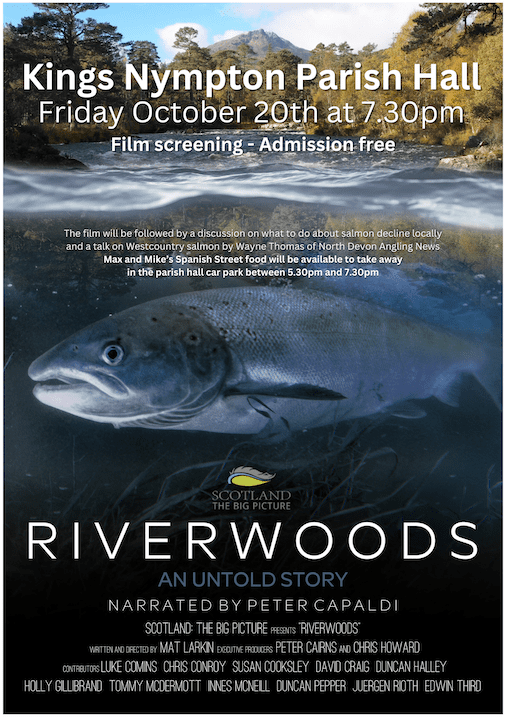
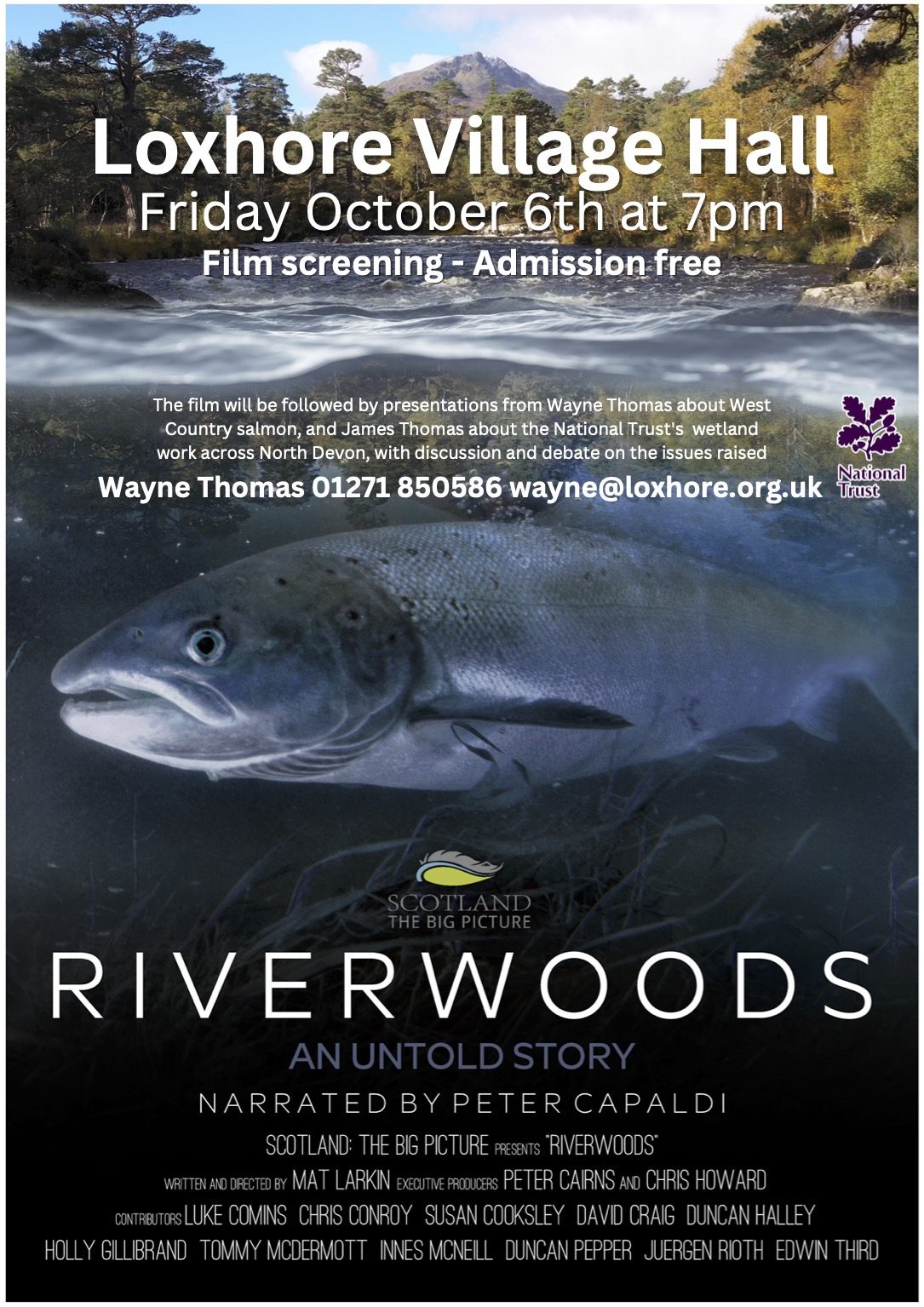
The film Riverwoods is to be shown at Kings Nympton Parish Hall on October 20th. Admission is free I will be doing a short presentation after the film.
Many thanks to those who attended our screening of Riverwoods at Loxhore Village Hall on October 6th. It was good to see over thirty assemble in the Village Hall a healthy mixture of Villagers, National Trust Workers and Volunteers, Anglers, Conservationists, Canoeists the intrigued. The film was followed by a presentation by myself and James Thomas a wetlands ranger with the National Trust. Special thanks to Adrian Bryant who organised the film and set the whole process in motion.
More showings of the film are planned and I will update as and when I receive dates and venues. Healthy debate punctuated and followed the presentations none of it too hostile or contentious. Answers to the natural disaster we are witnessing are complex and answers driven by good science are required along with willingness for those in society to listen and guide those in power. Not easy in a democracy where politicians crave votes. I will at some point try and put together a feature on the issues but I will need time to get my head around that one.
I will be hosting the film Riverwoods with the National Trust at Loxhore Village Hall on Friday. October 6th at 7.00pm. Tbe film will be followed by presentations and discussion on rivers salmon and wildlfe. A very relevant evening in light of the latest news highlighting the dramatic declines in nature. I look forward to catching up with a few of you on the night. Tea, Coffee and biscuits will be provided.
Inspired by tales of the past gleaned from old fishing books, the author sets out to fish those same waters, to cast the same flies on the same pools, to explore how fishing the streams of Exmoor might compare with fishing them over a century ago, whether those streams have changed and how they might be faring today. Exmoor rivers and streams appear pristine, barely changed since Claude Wade described them in his 1903 book Exmoor Streams, yet the numbers of trout he and other long-ago writers reported catching seem unbelievable today. Those streams must once have held an astonishing abundance of fish.
Modern problems affect even upland streams, yet many good folk are dedicated to their restoration and there is much we can do to help. River conservation work can be fascinating and rewarding as we develop a deeper understanding of river habitats through, for example, managing a balance of light and shade, monitoring aquatic invertebrates and cleaning riverbed spawning gravels then watching for their use when migratory salmon return home from the sea.
Those nail-booted, greenheart wielding fishermen of the past have gone but the streams still run on their wild ways, singing their endless songs to the moor. This book is for all who share concern for the wellbeing and conservation of our rivers and streams as well as those entranced by the rise of a trout to a well placed fly.
Many thanks to Richard Wilson for once again sharing his writing on North Devon Angling News. This months article is more than a little sobering as we can see the drama unfolding on our screens each day. These are indeed interesting times to live in and the symptoms are to be seen all-round.
Sweet memories: The high-summer days as July drifts into August. Cole Porter’s lazy, hazy, crazy days as time sprawls soporific in the warming sunshine. The beer and wine on ice and all gently fusing in the company of old friends. A river burbles nearby while an occasional splashy fish shows midstream. What could be better?
So that was going to be my theme for this article: Chilled booze, cool friends and throwing the dog in (there’s no more enjoyable way to catch summer fish – more on dogs below). A comforting vision of an unfolding August caressed by warm nostalgia.
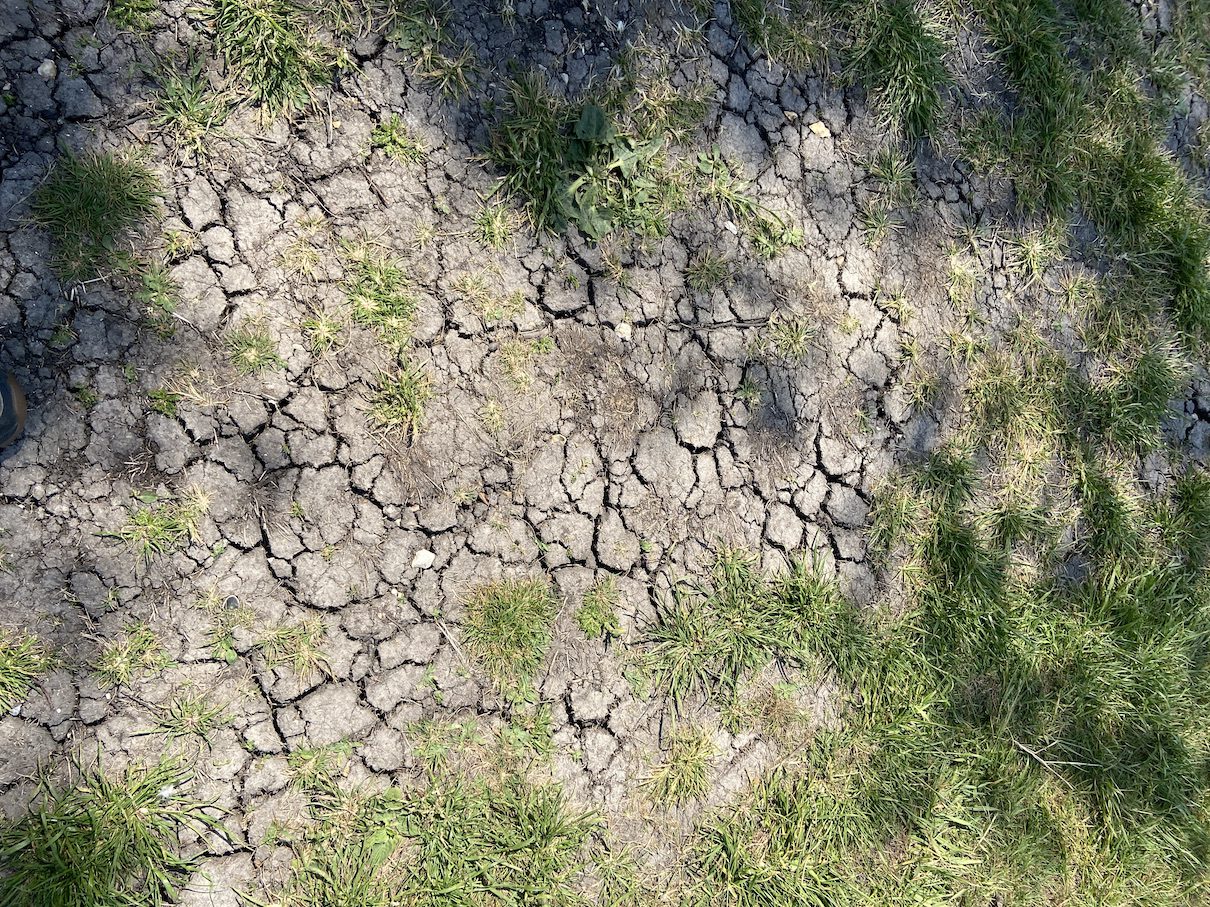
Then a lot of other stuff happened pretty much everywhere and all at the same time. Canada’s forests caught fire and New York choked in the smog, the US south and west and most of Europe wilted in record-breaking heat, the North Atlantic and the seas around Florida simmered, a lot of places flooded and England’s rivers became fetid, drought-stricken trickles of raw sewage. And, meanwhile, algal blooms suffocated seas and lakes worldwide. These events are global, national and in my garden. So writing a piece romanticising warm rivers and slow, soporific summer afternoons suddenly seemed clumsy.
Instead, an old curse rings in my ears: ‘May you live in interesting times’. Because, it turns out, I do. In the first week of June and in the far north of Scotland, these interesting times came to get me. Fishing was stopped on my trip to the River Oykel because the water temperatures were too high. In early June! This is a time of year and latitude when spring should be alive with bird song, wildflowers and new beginnings. Instead, we sweltered. And as we did, more bad news arrived from abroad as El Nino started flexing its muscles. It’s arriving this autumn and, by all accounts, is a bad one. And bad in this context means trillions of dollars will be lost and a lot of people will die.
We now have a lethal mix of weather and climate change, each piling misery on top of the other. As a brief aside, weather is what happens and we have climate change because if we fill the atmosphere with 200 years of industrial-era pollution it will get warmer and choke. Just as our rivers choke on shit if we keep dumping long after we should have stopped. Some people still have trouble with this idea.
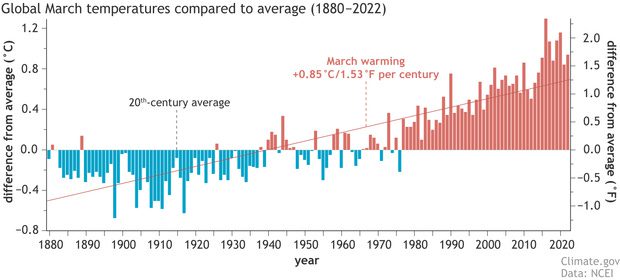
NASA graphic showing warming since 1880. The baseline is 1950-1980, so for readers aged 40-70, this is the before and after of your early years. 2023 will be the hottest yet, NASA predicts 2024 will be even hotter.
That most stalwart conservative publication, The Economist, reports that a heatwave is a ‘predatory event that culls out the most vulnerable people’ – the poor and the old. They add, “It slaughters silently, snuffing out more American lives each year than any other type of weather”. It used to be cold that killed the most. Climate change, says The Economist, is deadly. I find it strange that some of the most at-risk social groups are the most strident climate change deniers (a predominantly 65+ demographic).
There are 2 possible explanations for what is happening this year, and they’re both deeply worrying. It might be a blip that fits within the warming new-normal we live with or, perhaps, a more alarming acceleration in the underlying rate of change. Whichever it is, we’ve arrived in uncharted territory. Agriculture and everything we think of as modern humanity started about 10,000 years ago and has thrived during a period of climate stability. The Earth was last this hot 125,000 years ago. So while an extra degree or two might look to some like a small twitch on the global-average temperature gauge, it isn’t when you look at the increasingly wild regional climate fluctuations – as can be seen by anyone who follows the news. And so far the scientists have been right; recent temperatures and their consequences are as most climate models projected, albeit at the hotter end. What happens next is less certain.
Life is unlikely to come to a juddering halt, but it will get a lot more difficult. As ever, there’s a caveat: Reputable research published this month suggests that the deep Atlantic circulation (AMOC), which is associated with the Gulf Stream, could fail within 3 years, altho’ that’s most likely to happen mid-century (Copenhagen University). This would indeed be catastrophic.
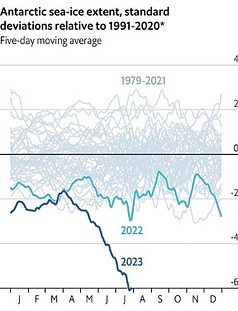
Antarctic ice drives the deep ocean currents that set weather patterns worldwide. Is this a blip, or the early arrival of a predicted collapse? The Economist
And look at the language we’re using. A phrase that used to hover in the margins of the climate debate has gone mainstream: the positive feedback loop. Forest fires release CO2 which warms the planet causing more fires. The same applies to methane release from thawing tundra. There are also more frequent sightings of the words runaway positive feedback loop and tipping point.
In the face of this year’s extreme weather and its major economic impacts, kicking these issues down the road in the hope that something good will happen looks increasingly futile. That thought is from the Chatham House think-tank, which isn’t given to hyperbole.
At this point, I’d like to interrupt myself briefly to ask you a question or two: How many days fishing will you lose this year because our rivers and lakes are too warm? Will next year’s fishing be better or worse? How are the redds faring?
It might seem a bit of a leap from global catastrophism to a riverbank with rod in hand, but we’re all going to have to adapt (I wrote about mitigation HERE ). Call me Nero if you like, but we humans are really good at adapting. And we’re going to have to get a lot better at it in all sorts of ways.
So, this may be me fiddling while Rome burns, but I’m hoping the rate of change is going to be at the slower end of predictions. If so, I’ll need that dog I mentioned earlier. Because the simple truth is that even in the good old lazy-hazy days you couldn’t do proper slow summer fishing without a dog and, one way or another, the dog had to go in. And where once this would have happened in late July or August, nowadays May and June are the new dog-days of summer. So the dog is my consolation; a small adaptation I can look forward to and that will keep me on the bank.
Here’s how it works: The writer Ed Zern, a man of quick wit and impeccable unreliability, told of an old timer he knew back before the Second World War. A man who claimed that, if fishing a summer pool with not a salmon to be seen, would turn his attention to catching a couple of trout for the pot. His approach was unorthodox. He would tie a 6ft leader, a dropper and a couple of wet flies to his dog’s tail, and then throw a stick across the pool. The dog, of course, was thrilled to be in the chase and the angler scored two wins: The dog stirred up the salmon and improved the fishing, and also brought back a brace of equally agitated trout for supper. What happened if the dog got into a 30lb salmon is not recorded. American salmon, according to Zern, think dogs are seals. And the caveat? As said, Zern was a very unreliable witness and the trout part of his story is unusually fishy.
This also works at night, which is another cool advantage in our brave new world. Indeed, it was at night that I discovered just how effective a dog can be and why this works (even though no dogs were involved).
Late one summer’s evening, shrouded in the gloaming, I headed out on foot for a night’s Sea Trout fishing. It was that magical hour when day hands over to night and the owls, small scurrying creatures and chuntering water replace the daytime clamour. The river was low, as is the new normal (when not flooding), but Sea Trout, as they say, will run up a wet sack. The night was charged with promise.
I moved slowly up the bank, careful to arrive at my pool without spooking the fish, and then settled down to wait for darkness to wash over the river. Only once all is crow-black, bible-black, (Dylan Thomas-black) would I start to fish.
This night was different. Through the half-light, I could see a pair of otters playing exuberant otter-tag and working their way upriver towards me. Once in my pool, they started the serious business of hunting and I had a ring-side seat as two of nature’s most beautiful creatures plundered my fishing. Time flowed by and I don’t know how long I sat enchanted and uncaring that my night’s sport was being trashed before my eyes. This was already among the most memorable of fishing nights, and I was still on my backside.
Eventually, they picked up my scent and in an instant were gone. The pool stilled and the darkness settled back around me. My senses strained, but nothing moved.
I gathered myself, my rod and my minimal kit and stepped down to the river to cast a line. It felt like a futile gesture, but it was a beautiful night and I was reluctant to leave.
The line kissed the water and the pool burst into a mid-summer’s night madness. I caught an 8lb sea trout with my first cast and another of 6lb with my third. These were big fish for this river – much bigger than the expected 1-2lb schoolies. The otters had disrupted the pool and I had reaped the benefit by dropping my fly into the chaos.
And then, just as suddenly, the fish turned off. There were no fishy splashes on the margins of my senses. Just nothing – the pool had died. The fish frenzy had lasted for the 30 minutes or so it took the remaining sea trout to slough off the otter terror and revert to their normal, elusive behaviour. It was as though the otters had never existed
How long was I there that evening? I don’t know. Time had frozen into the very essence of slow fishing, which was mostly no fishing at all. The next day I told the riverkeeper my story. He smiled and said, ‘When all else fails, throw the dog in’. It’s an old saying that happens to be the just about only piece of fishing wisdom that actually works – and climate change will have to get worse before it fails.
In the UK, dogs are otters. In Canada maybe they’re bears. Zern says they’re seals.
And climate change is global, so if we keep going the way we are there will be no salmon to throw the dog at.
______________________________________
Thank you for taking the time to read my work. It really helps me if you can do some, or even all, of the following:
Tell others I’m here: via sharing on social media.
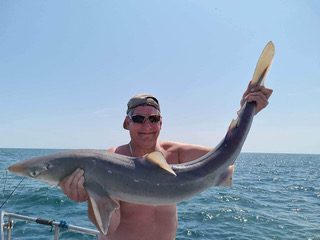
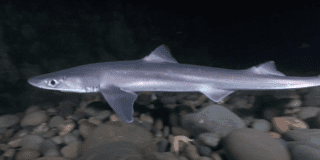
I had a call from John McMaster who has worked extensively to collate data for the Pat Smith Data base. John is working with the Angling Trust and Charter boat skippers to raise awareness of plans to extend the commercial spurdog fishery. Spurdog numbers had increased over recent seasons providing a useful recreational fishery particularly during the winter months. Anglers in North Devon have enjoyed great sport from boats out of Ilfracombe especially during the winter months. The fish have also provided a target for shore anglers since the demise of cod. John has put the case for protecting spurdog below and is asking anglers and charter boat skippers to fight for the spurdog and the need for conservation.
We all want long term viable fish stocks and the boom and bust fishery policy is no use to anyone in the long term.
Earlier this year Defra reopened the UK Spurdog fishery to commercial fishing. Recognizing that the female breeding stock needed to be protected to give the fishery longevity they restricted the slot size to 100cm.
To understand the significance of this you need to know that female Spurdog do not reach sexual maturity until they are around 15 years old and that their pregnancy lasts for up to two years. The younger female Spurdog have smaller pups which have a low survival rate but as the females get older and larger, their pup sizes increase and so does their survival rate. A 100cm female Spurdog is around 20 years old whereas a 120cm female Spurdog is around 40 years old and her pups have a significantly increased survival rate.
We were therefore very surprised when we heard recently that Defra are now considering a request from the commercial sector to increase the maximum landing size to 120cm.
The recreational angling community regularly access the smaller shark fishery on a catch and release basis and it represents a revenue stream which our recreational charter skippers and coastal communities rely on.
The situation was discussed at a recent Pat Smith Database trustee meeting where it was agreed unanimously that our smaller sharks (Spurdog, Smoothound, Bull Huss and Tope) need our protection as much as their larger cousins (Blue, Porbeagle, Thresher).
Our sport has a seat at the Fisheries Management table but if we don’t use this opportunity to make our views known we will be sidelined by the other players so as a first step we have decided to send a letter to the Fisheries minister signed jointly by as many charter skippers, angling clubs and angling related organizations as possible.
If you would like to be a signatory and help protect the fishery from future closure, please get in contact with the Pat Smith Database at [email protected]
Many thanks to Richard Wilson for allowing me to share his thought provoking prose on North Devon Angling News. This month Richard’s focus is climate change and the deniers and what we can for for our local rivers. For my part I spread the word and try to raise awareness of the threats to rivers from industrial farming, sewage discharge and over abstraction. I also undertake River Fly Monitoring, CSI Monitoring and volunteer with the National Trust assisting with wetland creation and conservation initiatives.
Once upon a time, back in the day, just about all online mentions of global warming provoked CAPS LOCK outrage:
“HUMAN-CAUSED GLOBAL WARMING IS THE BIGGEST HOAX EVER FORCED ON OUR PEOPLE. IT HAS NEVER BEEN ABOUT GLOBAL WARMING. IT HAS ALWAYS BEEN ABOUT CONTROL. GLOBAL WARMING IS THE LIBERAL’S ULTIMATE VEHICLE FOR CONTROLLING EVERYTHING EVERYONE DOES.” 1
My response to this sort of behaviour has been to hunker down. I don’t want to be heckled – who does? So I’ve been watching from a safe distance … and I think I’ve spotted a change in key-banger behaviour. Maybe you’ve noticed it too?
I wonder if they’re going a bit droopy – like that toy rabbit on TV with the wrong brand of battery? I’m talking sotto voce for now because I don’t want to wake them, but do you think they’re getting – old?
Musk has turned their Twitter volume up to 12, which hides some of the decrepitude, but it’s increasingly clear that a generation is thinning out. Back in their pomp they stood proud among friends, bonding over beers and howling at bogeymen. It was fun, the company was good and they felt like an unstoppable force. The world was theirs for the taking. Heck, they could even get laid. Those were days!
Then, over time, the group frayed and faded. Familiar faces moved away, some died and a lucky few retired to sunbeds by the sea. Now, depressingly, the headlong rush of young lust is a dim memory, and wearily beating a caps lock key won’t bring it back. Age has got their number.
So while I think we should feel some sympathy towards our denialists (we all get old), we should not be surprised by their plight. They are the original stay-at-home globalists, persecuted by malign world forces. This miserable everybody-hates-me-nobody-loves-me mindset also happens to be the signature trait of almost all conspiracy theories, so people who buy into one are predisposed to have a bucketful. If you know for a fact that George Soros and his glove puppet Greta can fake all the climate data everywhere, you also know that wherever you stash your cash The Global Elite will sniff it out (it happens all the time!).
It’s carnage out there in conspiracy land: Innocent bystanders are killed by 5G death rays, chemtrails, vaccines and fluoridated water, or abducted and raped by both real and false-flag aliens. The last generation of conspiracists had scary Reds under their beds and would be horrified to learn that today’s have Reds in their heads. Stalin was satan, Putin is a buddy, Kennedys won’t die and some Americans want a breakaway Red State Caliphate. I hope you’re keeping up.
Then there’s The Fear:
“GLOBAL WARMING/CLIMATE CHANGE, CALL IT WHAT YOU WANT. IT'S YET ANOTHER WAY FOR THEM TO FEAR-MONGER AND REDISTRIBUTE WEALTH.” 1
In contrast, statistics and fact-checking are inherently dull – but they can make a succinct point 2&3. Globally, most people believe that climate change is both a crisis and an emergency, echoing the language used by climate change campaigners. In the US, about 80% say climate change is happening, outnumbering those who think it isn’t by a ratio of more than six to one. In the UK, 90% think it’s real. And another fact: 99-100% of climate scientists say it’s real and deadly serious. That’s a slam dunk (for people who do facts – but not so good with voodoo).
Other forces also conspire to undermine our deniers, not least their own eyes. There are only so many decades you can fish the same river and not notice something’s wrong. And is there anyone for whom freak weather isn’t the new normal? So, according to the liberal wokesters at Forbes, hardcore denialist numbers have fallen to just 6% of Americans, which is still well above the global average of 4%. All of them hammering away at Twitter. Thanks again, Elon.
This climate data is, of course, all red-mist-inducing heresy for our remaining jihadi denialists, for whom an attack of heresy-rage is about as exciting life gets.
“THE DEPARTMENT OF DEFENSE SAYS THAT ‘GLOBAL WARMING’ IS A ‘NATIONAL SECURITY THREAT’. WHAT A JOKE. ANY EXCUSE TO STRIP CITIZENS OF RIGHTS.” 1
It’s a level of victimhood that‘s a hard sell among younger generations. More youthful movements offer rewards like happiness, cupcake recipes, glowing good health, a ripped body or, in Gwyneth Paltrow’s case, fragrant orgasms. Tik-Tok thrills mostly meet educated opinions. In contrast, conspiracy theories are gloom, doom and misery. Incels excepted, who’d double-click on that?
Back in my world, climate science is fact-based, measurable, progressive and has an off-ramp. We can slow down and change course. And for the hard-core miserabilists, all is not lost. You can also get utterly despondent about the science of global warming. The so-called climate-doomersprobably outnumber the deniers by a lot, and I suspect their roll-over and die mentality is as damaging to planetary well-being as the cranky deniers. Maybe there’s some misery-laden itch deep in the human psyche that we’re desperate to scratch?
Nevertheless, I’m going to puncture the glum-fest because we can do something about climate change. There is salvation in the denialist’s climate heresy.
Here’s how: There’s no shortage of great organisations committed to mitigating the impacts of climate change. Some of these actions need the power and deep pockets of government, while others are small and local. That means there’s a level of contribution to suit us all. We can volunteer &/or donate, big or small and as best we can. For example, I support organisations that work on conservation and legal protection for rivers and their catchments. And because most of us think this is now urgent, most of us can surely do something, no matter how small, because every little bit counts.
So, please, let’s all get involved. And let’s do it for our future generations because they’re going to have to live here. Maybe Gramps and Grandma will donate if it’s for their favourite river and their own family? Would their peer group really cancel them if they funded some research into migratory fish?
And last, please say hi to Gen Z and the Millennials. It’s their planet now.
I have a request: Who do you donate to or volunteer for? Feel free to give your favourite good causes a plug in the Comments below … let’s share some constructive actions and tell the kids we care. Good ideas are infectious, so let’s spread some.
Andrew Burt Chairman of the National Mullet Club is urging anglers who have benefited from the netting ban in estuaries across the South West to express their thoughts regarding the significant benefits in extending the current bylaw that has undoubtedly protected stocks that are valuable to the recreational angling community who largely practice catch and release.
Below is an explanation of the current situation with information that can be drwn upon when drafting a letter or email.
Devon & Severn Inshore Fisheries and Conservation Authority (D&SIFCA) Netting Permit Bylaw Review, Benefits and Implications
The D&S IFCA netting bylaw, D&S IFCA MCRS and Bylaws (see page 20 for netting), came into effect on the 1st March 2018. After 5 years it is now up for review and the process will start shortly.
D&S IFCA introduced this bylaw to protect salmonids, bass, grey mullet and other species that use these inshore areas for migration, as nurseries or for refuge. In doing so D&S IFCA recognised the importance of protecting these areas from commercial fishing and the benefits to recreational fishing and local communities. It is worth noting that many of these areas now fully protected are BNAs (Bass Nursery Areas) and are ecologically sensitive.
The bylaw as it stands only allows for seine netting for sandeels. This offers complete protection of all other species using the estuaries and harbours.
The Environment Agency pushed for a complete ban due to the poor ecological status of salmonids particularly Atlantic Salmon. The financial benefit to local communities of thriving salmon and sea trout is huge, not only getting local rods out fishing again but attracting anglers from other parts of the country to return.
The harbours and estuaries are home to all three native UK grey mullet species, particularly thick and thin lipped. These two species use these areas throughout the juvenile stages and then adulthood. It can take a thick lip mullet 10 – 12 years to reach maturity before they can breed for the first time. Often aggregating in large shoals and demonstrating a high site fidelity (often returning to the same places) they are particularly vulnerable to overfishing. During winter months they are known to aggregate in particularly large shoals prior to spawning; this makes them extremely vulnerable to commercial exploitation at the time when they are most in need of protection.
As previously mentioned, many of the areas protected are already BNAs, however this does not protect bass from unscrupulous commercial fishing or mortality when caught in nets set for other species and outside of months when bass nursery regulations apply, see link for current regulations,D&S IFCA Bass Nursery Areas and Regulations . Like grey mullet species they are spiky and easily caught in gill nets of any mesh fished tight or slack.
These inshore areas are important not only for the fish but for recreational angling as they offer good access as few anglers have boats and fishing from the open coast is often not possible or safe. Thriving inshore fisheries are of huge benefit recreationally and financially to local communities where anglers can fish for species such as grey mullet, flounder and gilthead bream that are of low importance to commercial fishing as well as bass. Further up the rivers anglers and communities benefit from increased salmonid stocks.
It should be noted that much of the recreational fishing is catch and release, it is estimated that over 95% of grey mullet caught recreationally are returned alive (who would want to eat a fish that has spent 10 – 20 years eating detritus including raw sewage anyway?). Some species more commonly retained such as bass (bass may not be retained if caught from a
boat), impact is extremely low and recreational anglers are severely restricted as to how many bass may be retained.
To sum up, the bylaw has little impact upon commercial fishing but huge positive impacts upon the fish living inshore, the communities and the financial value generated for Devon and Somerset. We firmly believe that there has been a positive impact upon the quantity and size of species since the bylaw was instigated as well as an increase in range of some species such as gilthead bream. During previous consultation landing data from the commercial sector highlighted the low commercial importance of these areas. The protection of these nursery and refuge areas, social and economic benefits to recreational angling, coastal communities as well as those further inland surely highlight that this bylaw should not be changed to weaken it. If you fish in the D&S IFCA region, please take a few minutes to contact D&S IFCA using the details below about the positive impacts and future potential the bylaw offers.