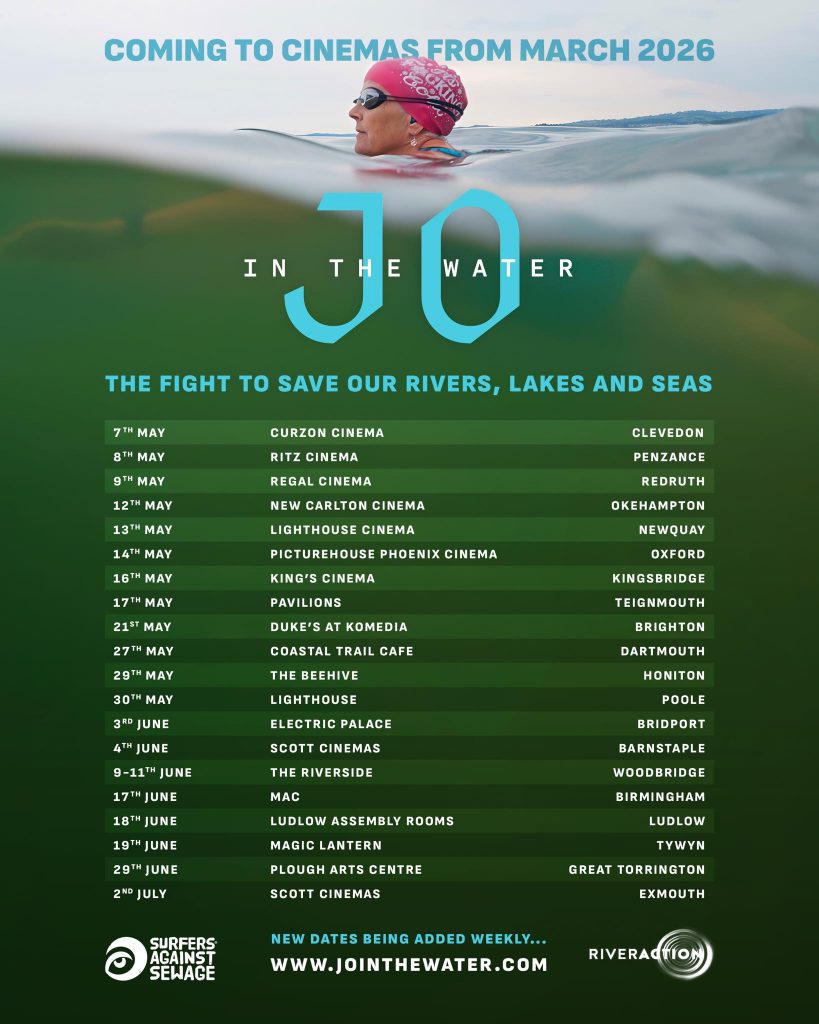
Pauline and I went to Scott’s Cinema in Barnstaple Last night to watch the film Jo in the water.The film tells the inspiring story of Jo Batemans ongoing court case against South West Water.
Sea swimming is Jo Bateman’s sanctuary—until sewage spills threaten the waters she loves.
A passionate sea swimmer turned reluctant activist, Jo Bateman takes on one of the UK’s biggest water companies in a David-and-Goliath battle to protect our oceans from devastating sewage pollution.
As Jo’s courage helps ignite a growing movement, this film exposes the dire state of our water system and asks: who will stand up for our right to swim in clean natural waters, for the species and communities that rely upon them?
Jo in the Water is a powerful, emotional feature-length documentary film. It is not just about water pollution; it is about connection—to nature, to our own sense of place, and to our responsibility for the world around us.
The film is an emotive production that provokes anger at the state of our rivers and the failure of water companies. The evidence is clear that water companies are failing in their duty. But as someone who feels passionate about these issues I despair at the lack of interest shown by the wider populate regarding the environment.
The environment is climbing the political agenda but MPs will only go where there are votes and sadly pot holes and the cost of living get more votes than rivers. Those who swim, fish, surf canoe and walk the rivers and coast have a vital connection but they are not in the majority.
The Environment Agency are generally underfunded and lack the power to regulate and prosecute. They are the environmental police overwhelmed by corporate greed, industrialisation of agriculture and a growing population that impacts upon our precious environment.
Nationalising the Water Industry will not be a panacea to all ills for treating sewage and water is far more costly than many believe. The infrastructure is inadequate and as house building expands the infrastructure is not upgraded adequately. Policing, education, NHS, Social Services, Public Transport, Roads are these all as they should be?
It is vital to raise the tragic decline in river health for as I often say the rivers are the vital arteries of the land. We need the debate, yes we need to campaign and activists are vital in raising awareness of the issues.
Those reading this can help to spread the word. Get involved in water testing, reporting issues and joining organisations that care.
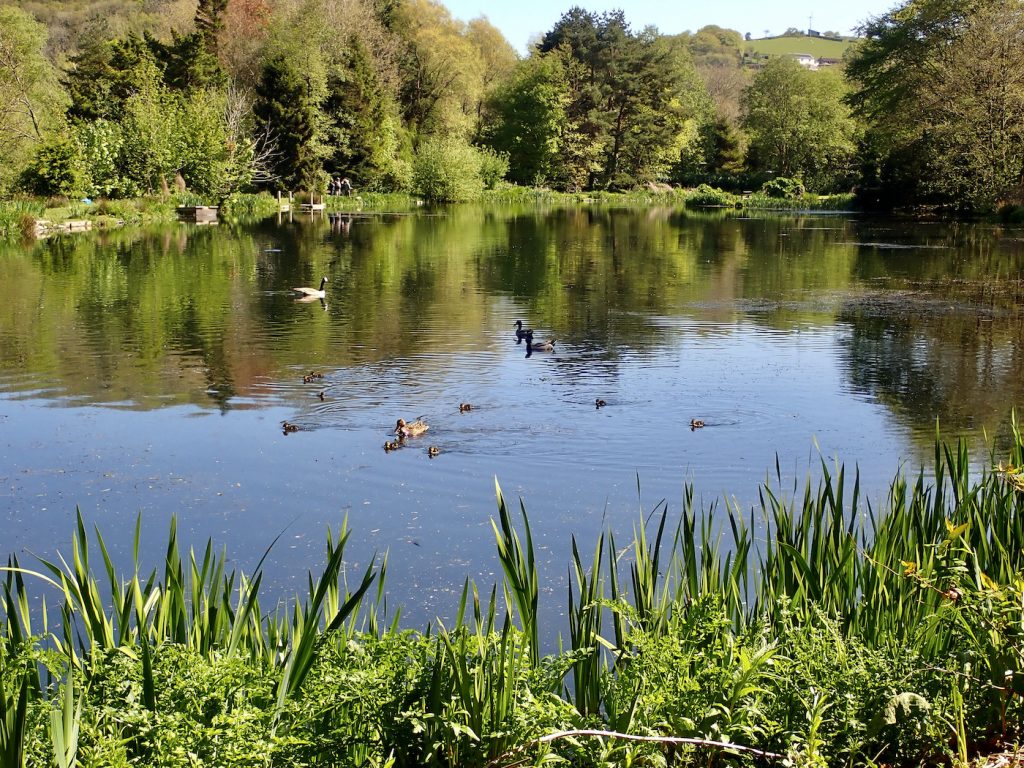
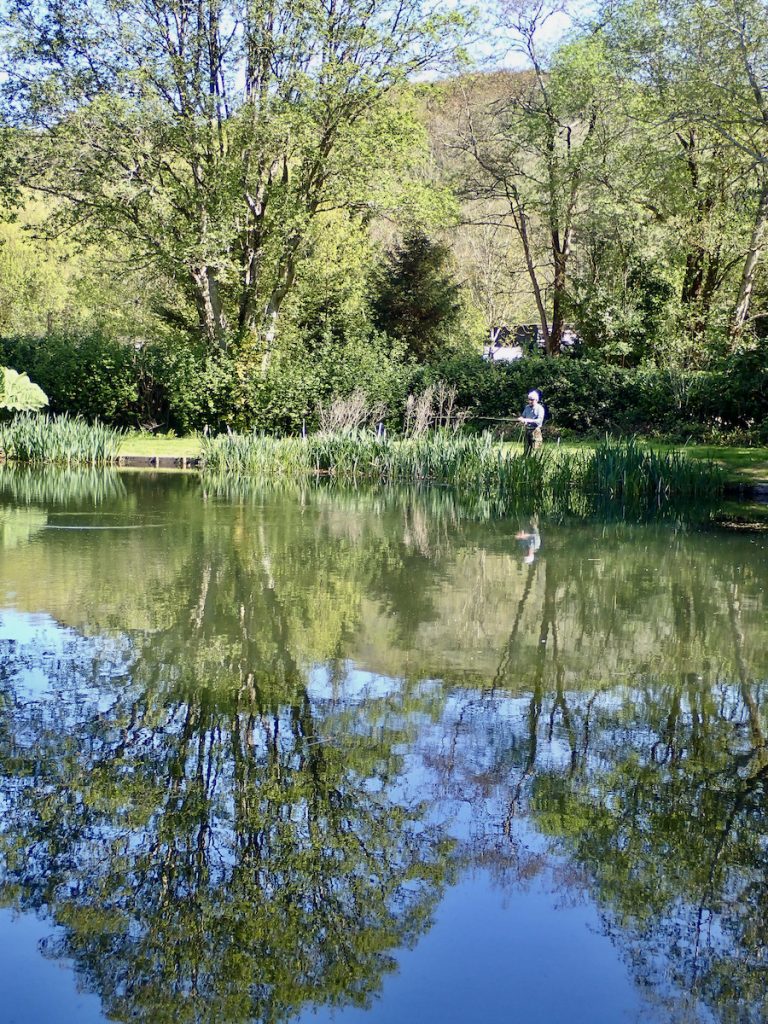
One of anglings greatest gifts is the connection that participants enjoy with nature. As anglers we are privileged to witness many wonders of the natural world. Last week I spent a day fishing on Chew Valley Lake in Somerset. Our target species was pike that grow large in this vast rich lake. It was the hottest May Day on record and not the day we would have chosen but having booked a boat in advance we proceeded ensuring that we had plenty of water and sunscreen. The fishing proved hard going with just four small pike tempted by our large flies.
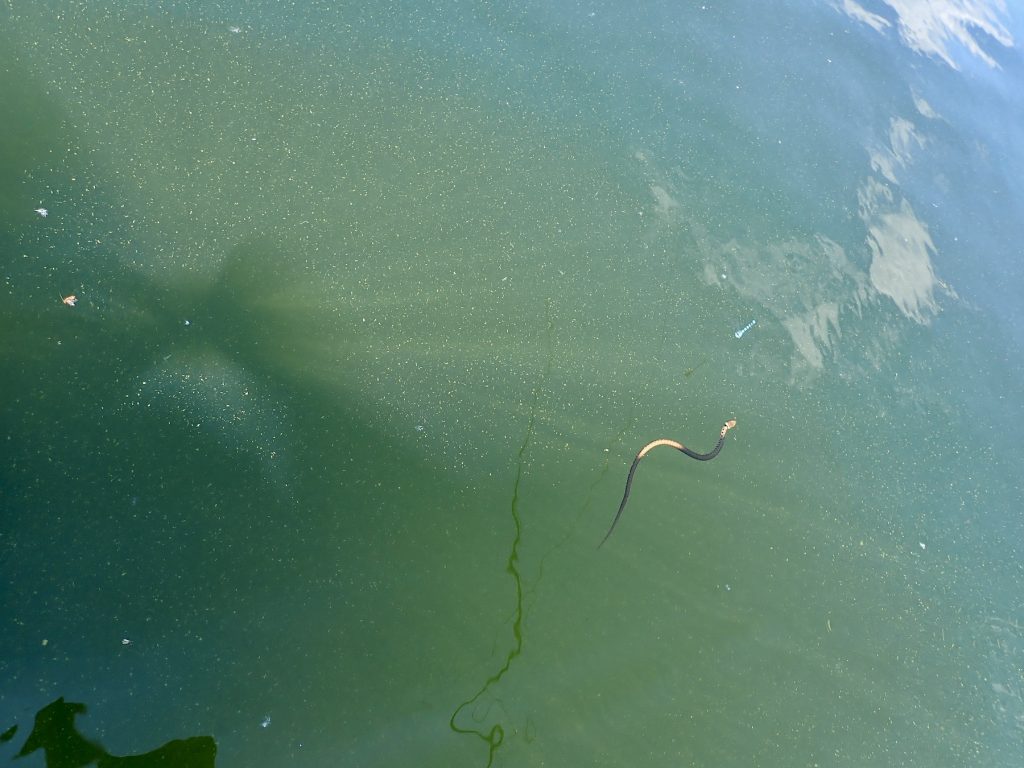
A highlight of the day was an encounter with a juvenile grass snake that was swimming across the lake. I lifted the snake from the water and admired it before slipping it back into the lake hoping it would survive as it seemed to be extremely vulnerable with so many potential predators in the vicinity. Dragonflies and damsel flies fluttered over the mirror calm lake and bird song filled the air.
Each day at the water’s edge has the potential to bring exciting encounters with the world around. I have witnessed whales, otters, kingfishers, foxes, osprey, deer, nightjar, eagles, crocodiles, scorpions, moose, witnessed lunar eclipses, comets in dark star studded skies, spectacular sunsets, misty dawns and many more phenomena. Not to mention the many fish that are the target of the day. Whilst I could have seen some of this without a rod and line it is for me the tactile connection with that unseen world beneath the surface that seals the deal.
It is for this reason that many anglers are passionate conservationists who get involved with campaigns for cleaner rivers and nature friendly farming practices.
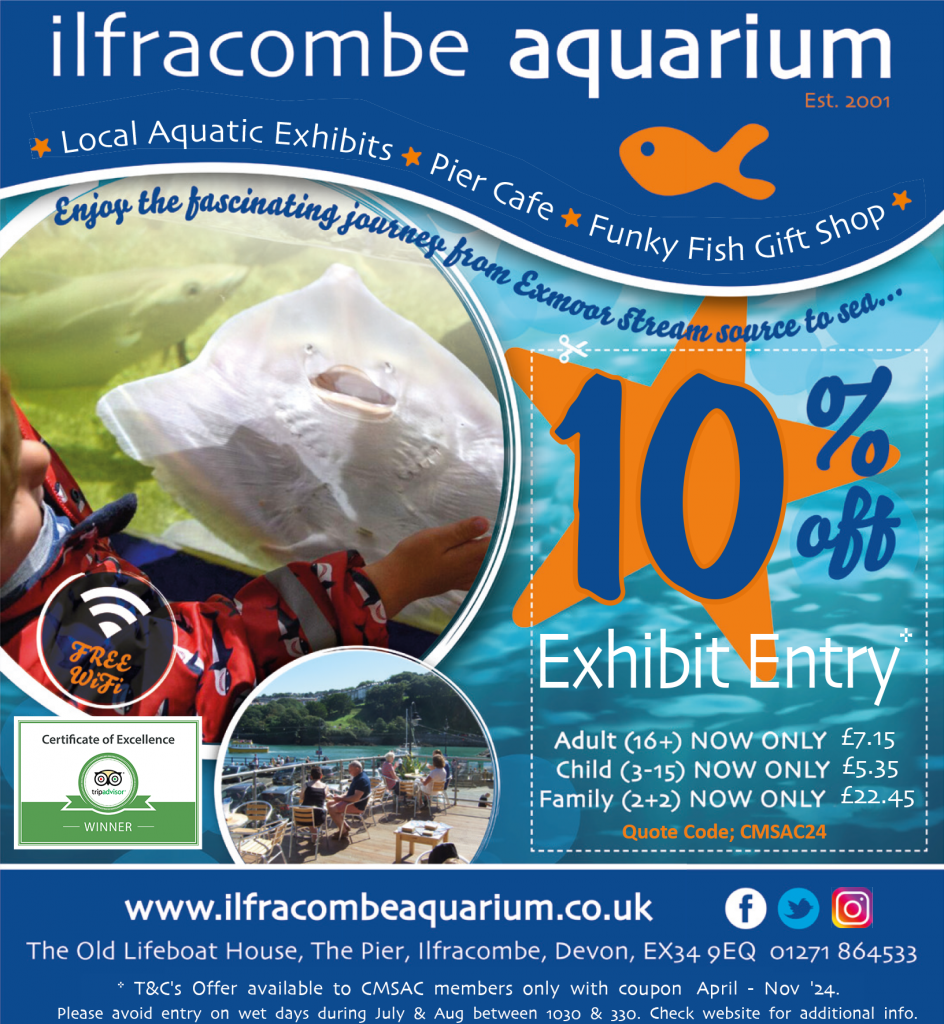
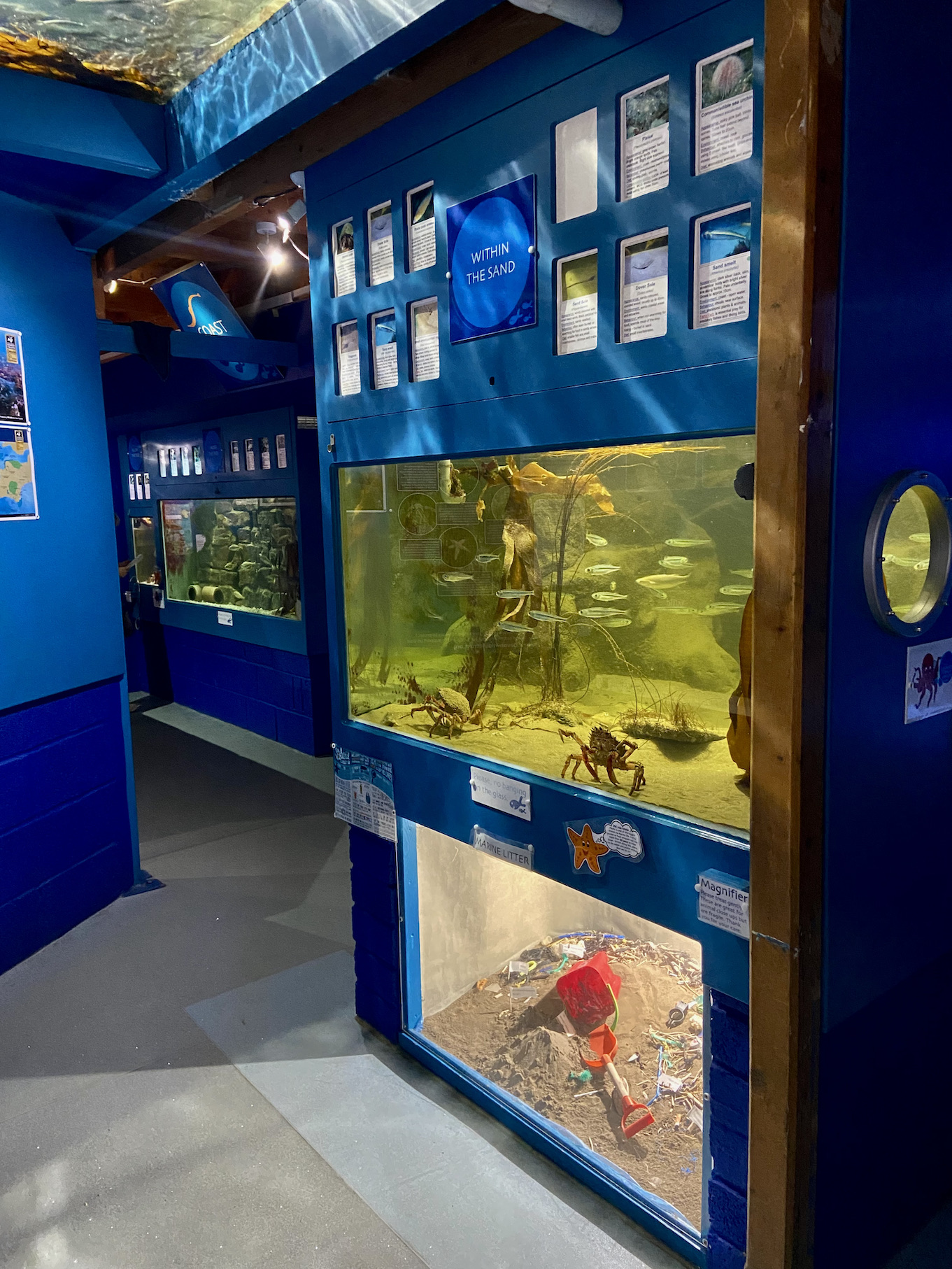
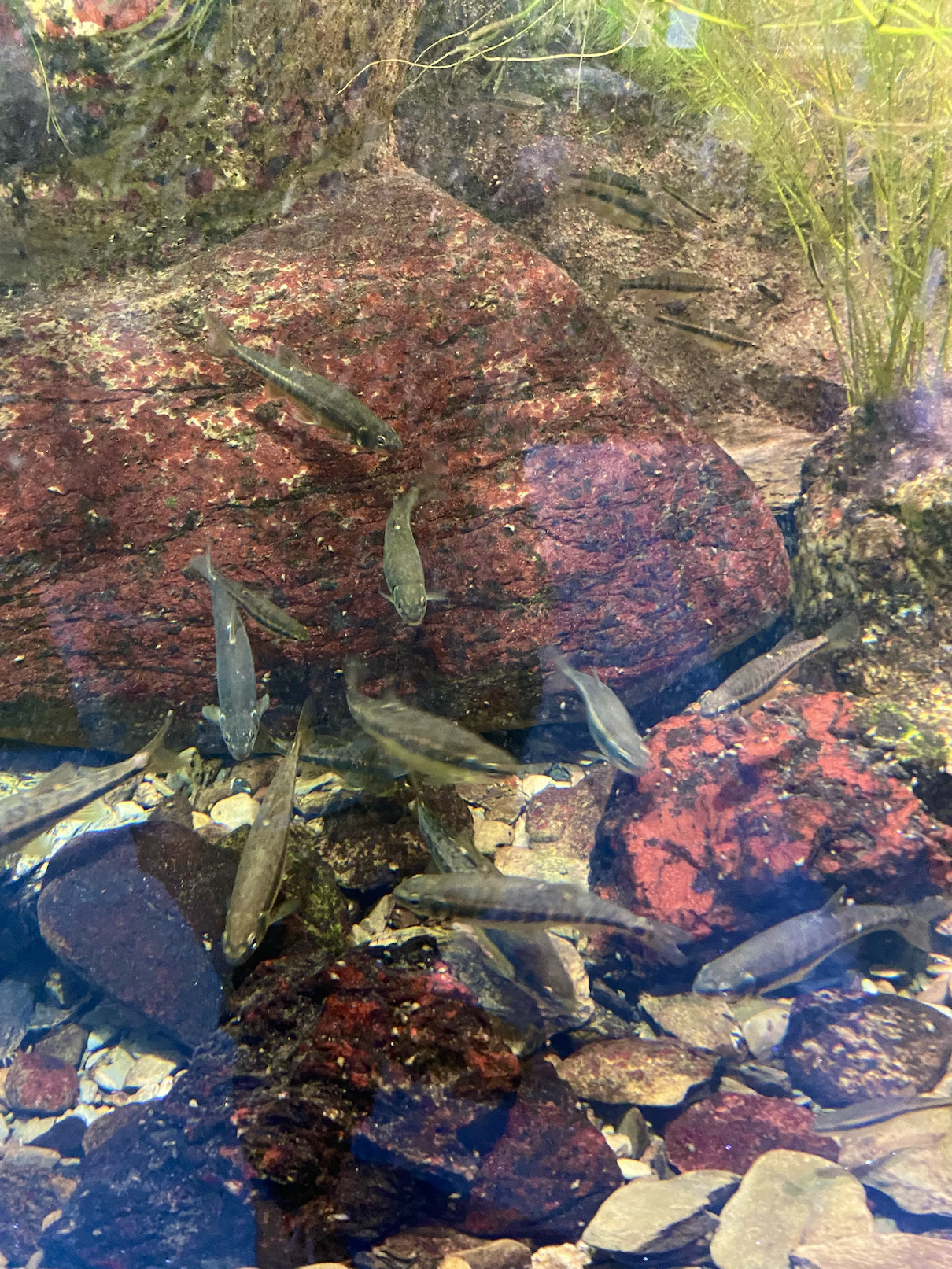
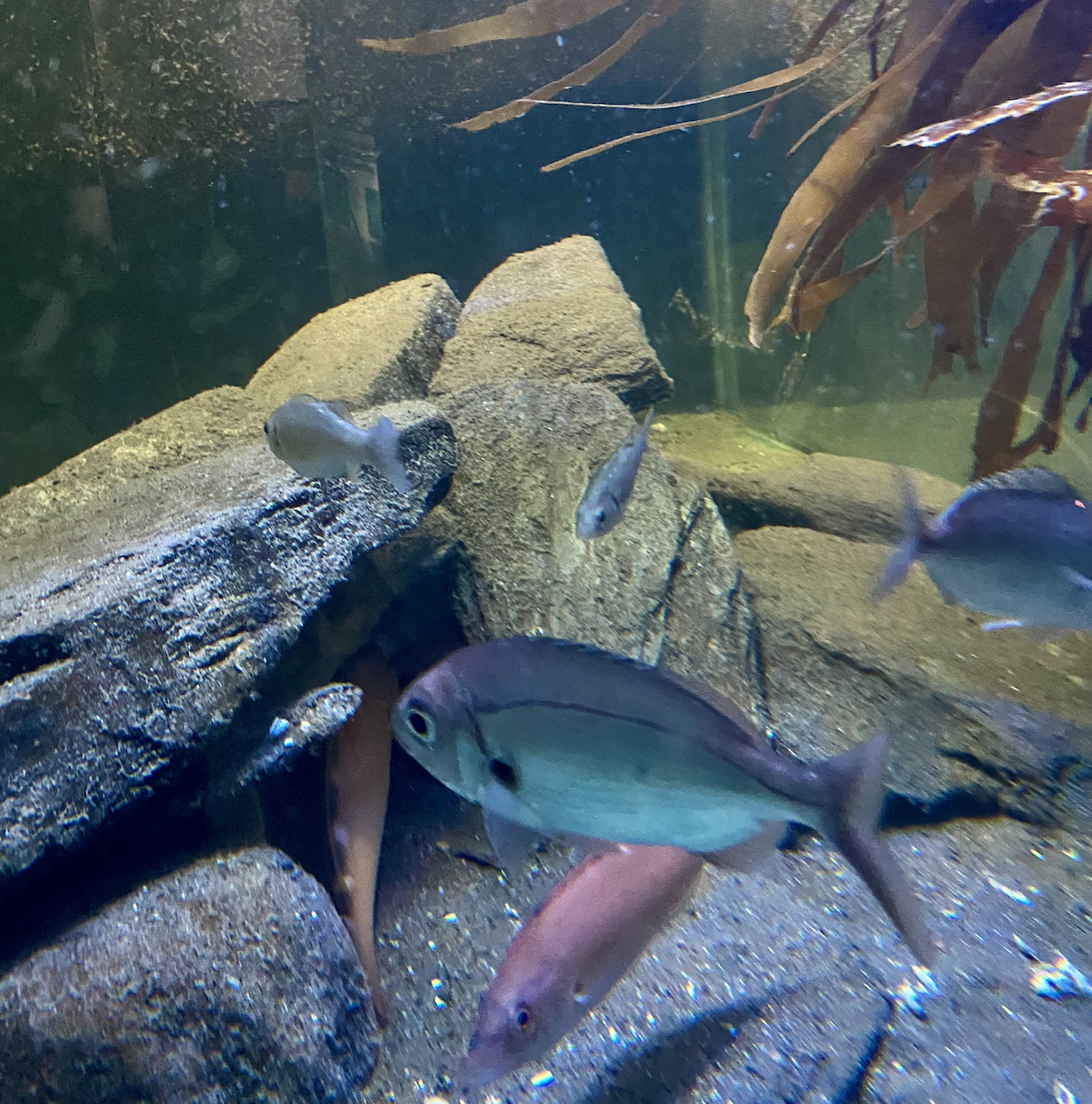
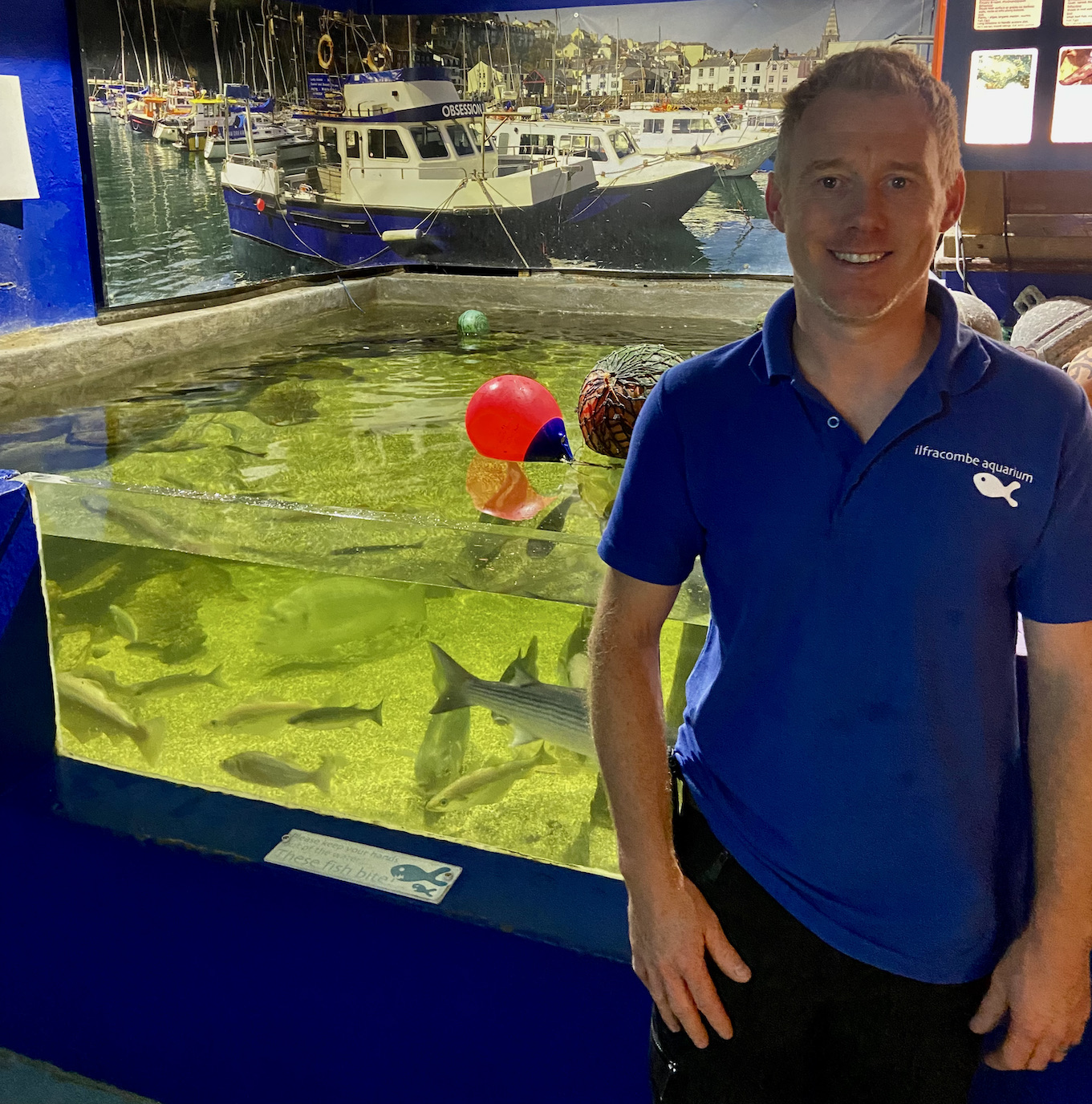
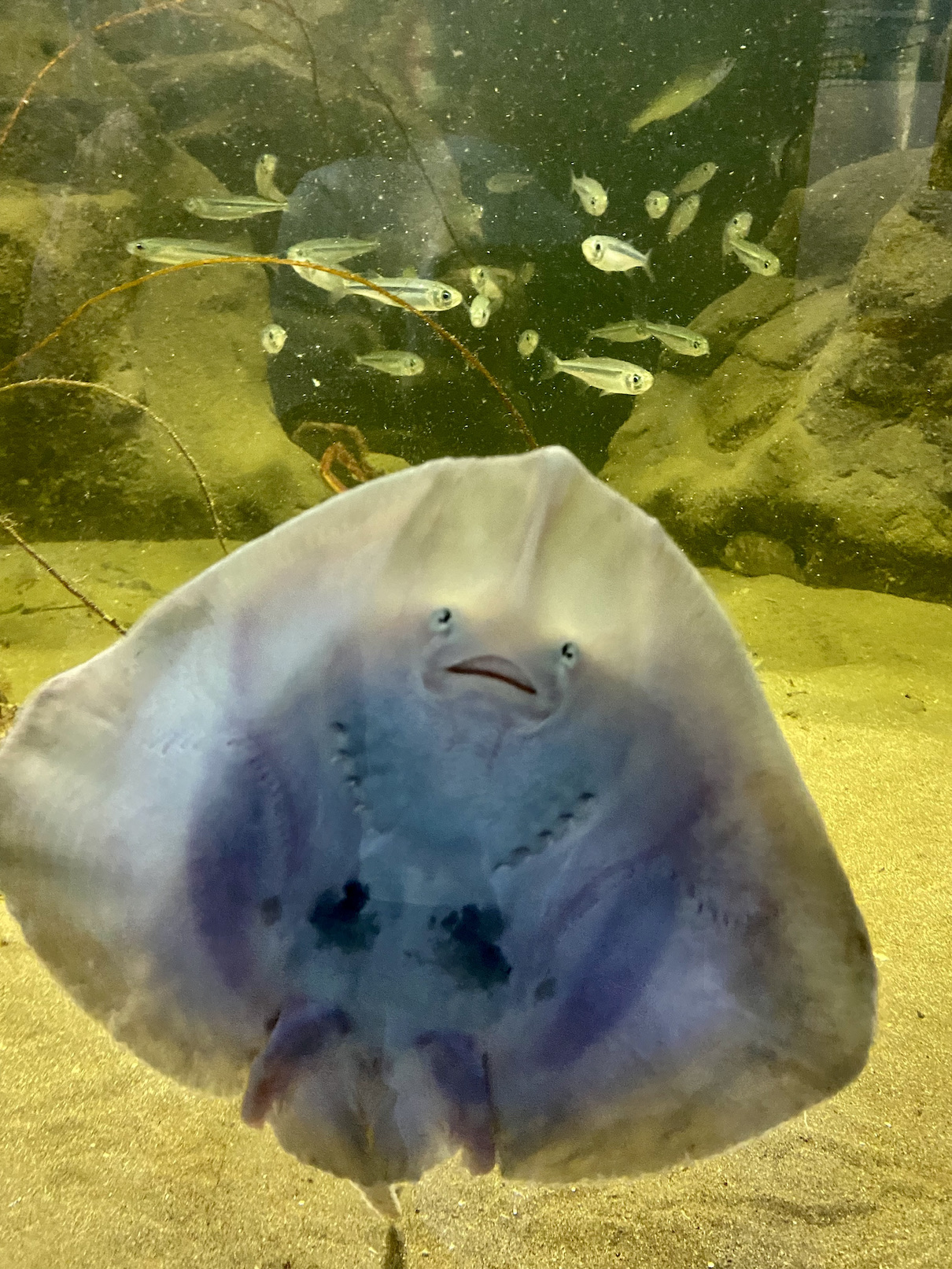
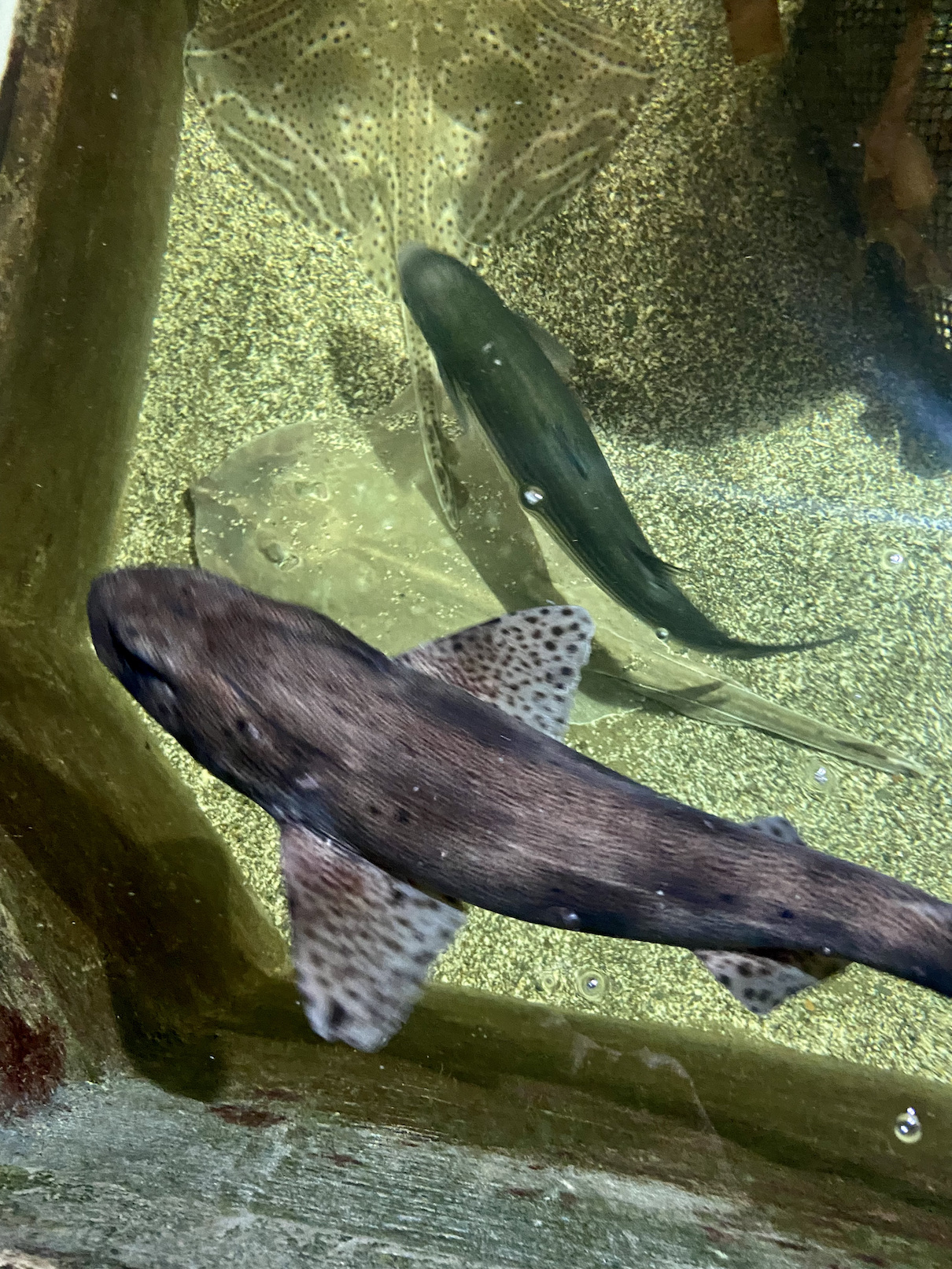
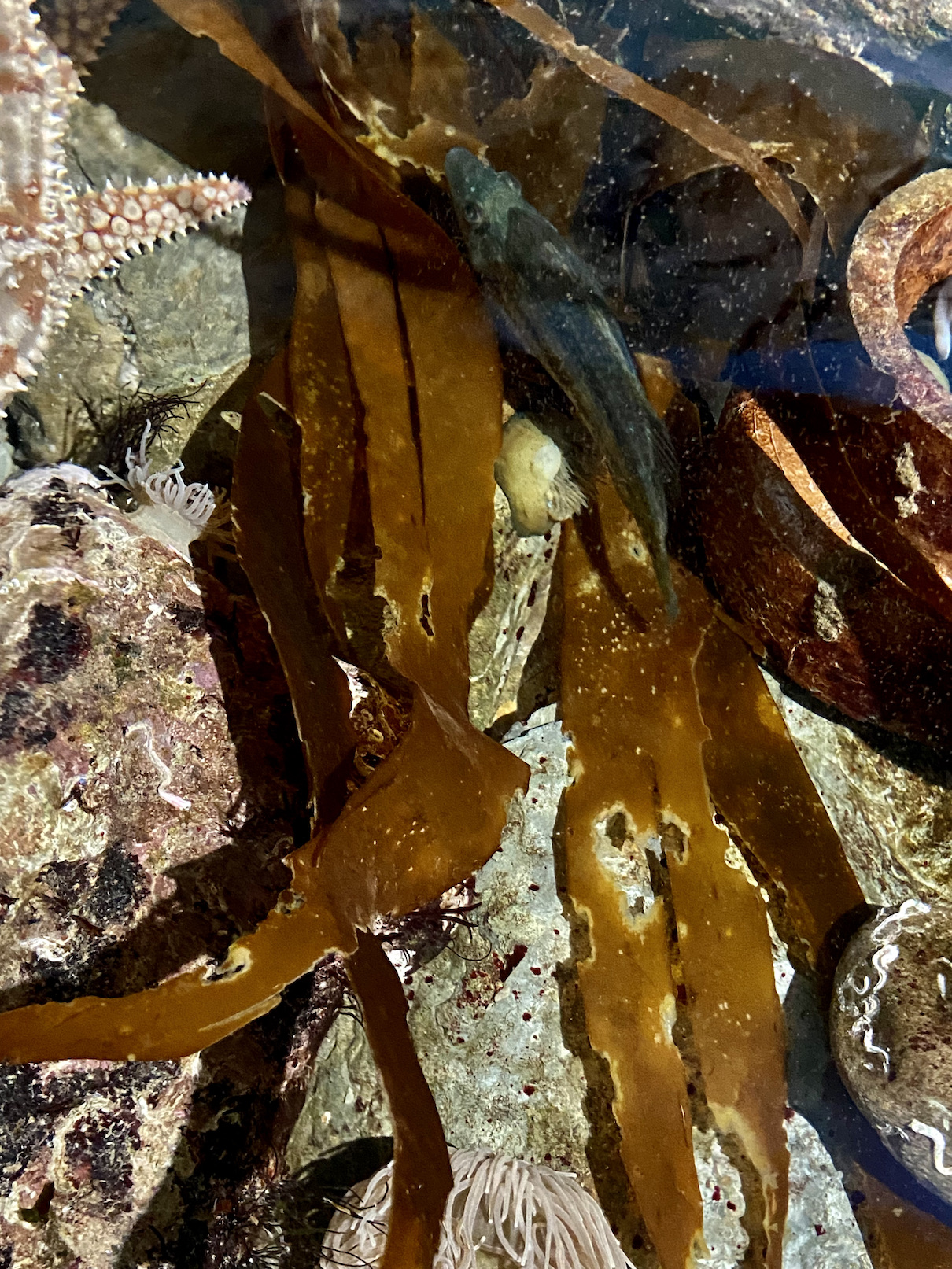
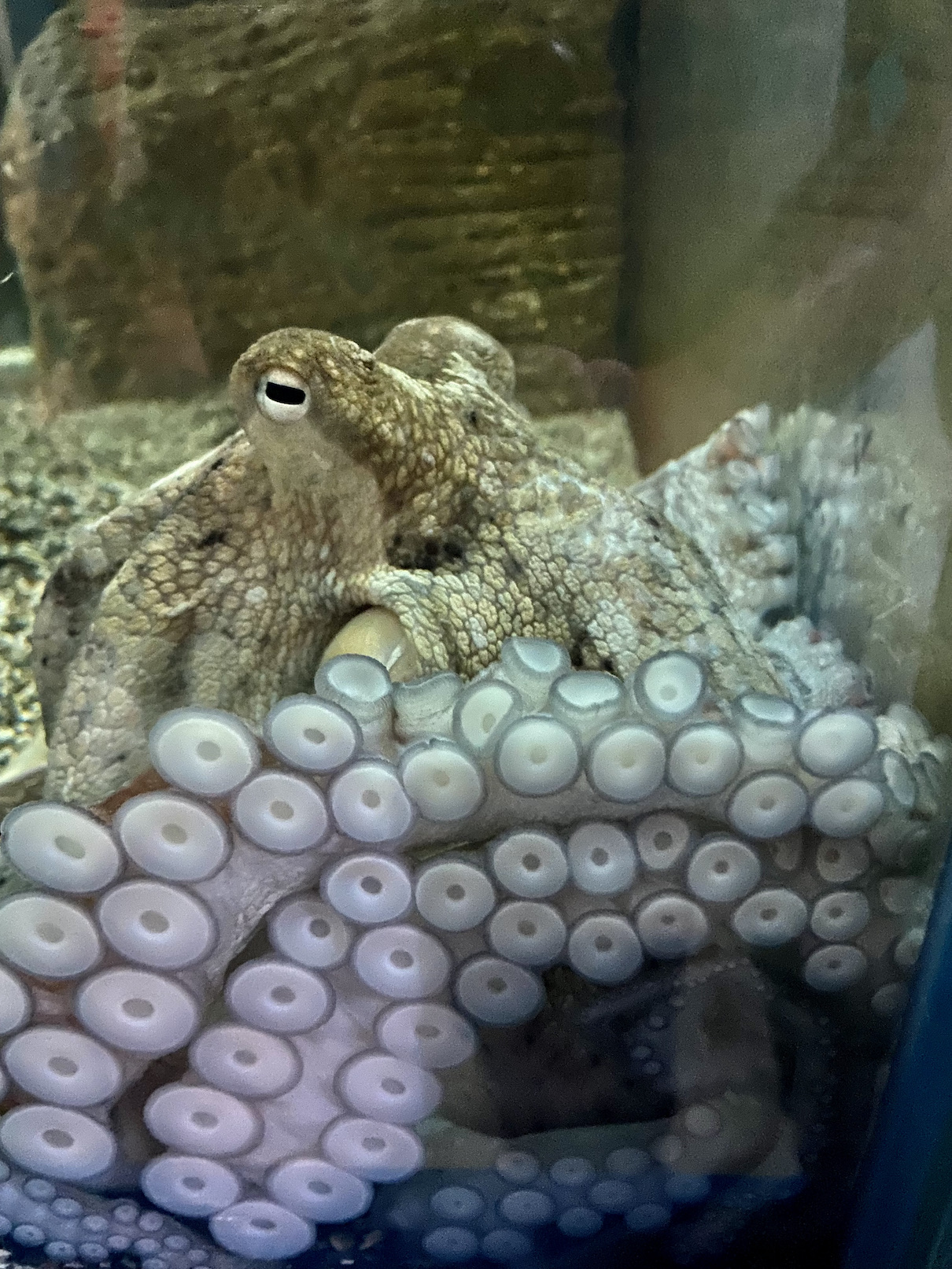
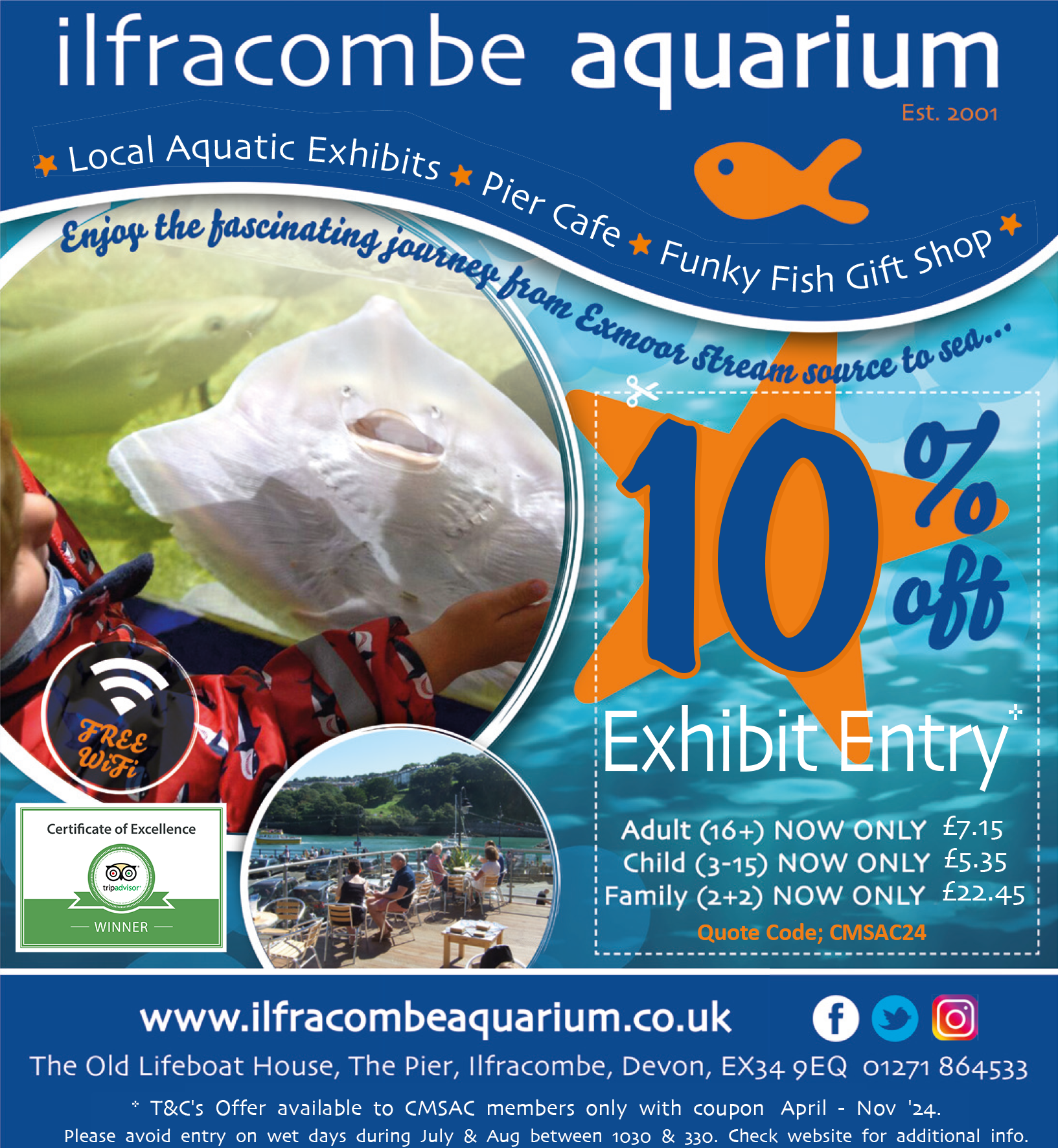
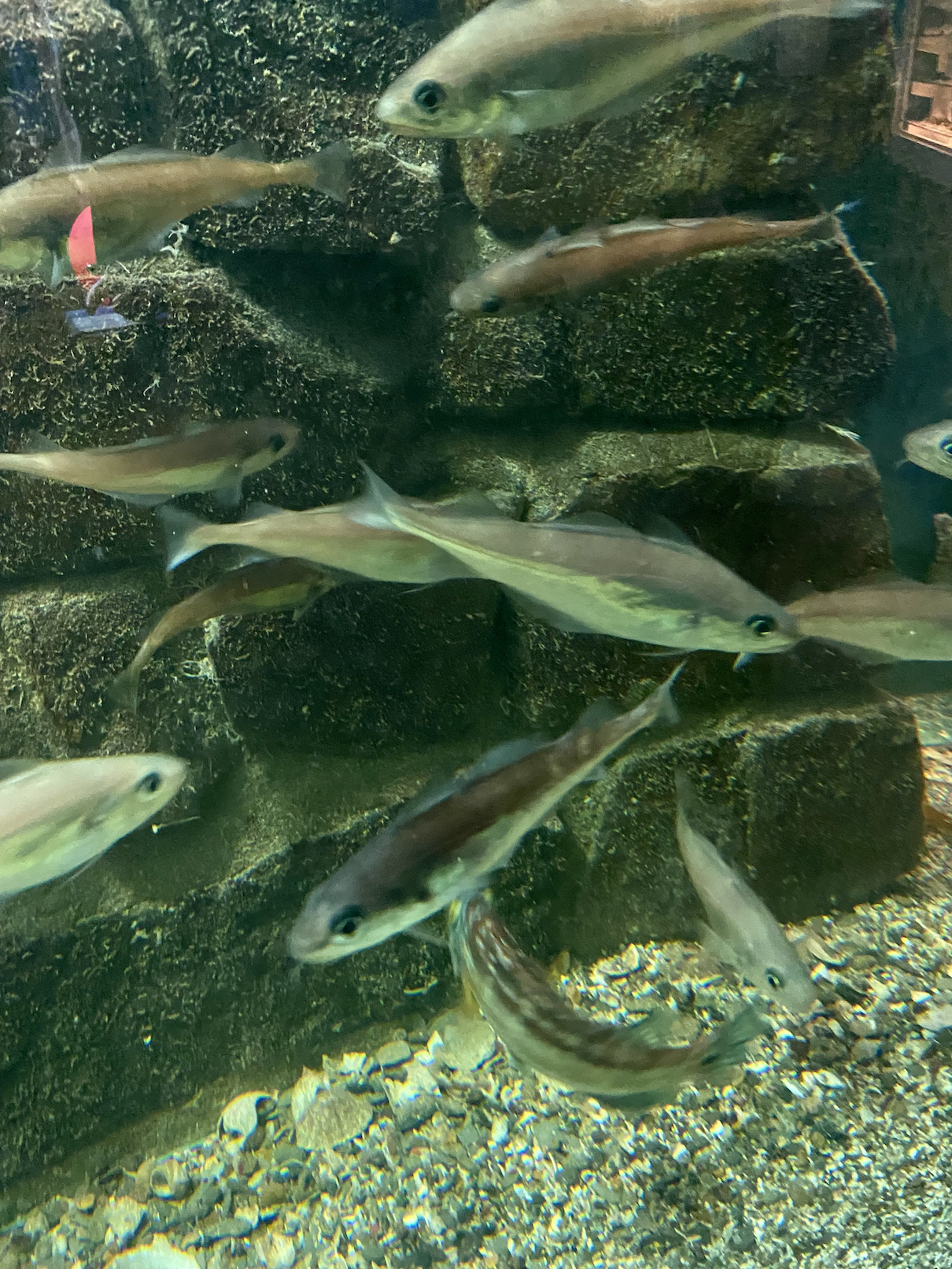
Ilfracombe Aquarium offers an insight into the abundant life that resides in the varied waters of North Devon and Exmoor. Situated in a corner of Ilfracombe’s busy Pier Car Park. Anyone with an interest in life beneath the surface will be fascinated by the abundance and variations of life in our regions waters. The colours of many fish a match for those of far off tropical seas.
Conservation is very much at the heart of the exhibits with information from Exmoor National Park, The National Trust and River Trusts displayed throughout. The Aquarium staff share their extensive knowledge of exhibits with plenty of personal observations to enliven their narrative.
Whilst the venue perhaps lacks the punch of the larger venues it offers a more intimate experience that can be savoured across the generations. I remember my own childhood visits to sea side aquariums with fondness and always relish getting up close to life in that other realm. The magic of gazing into clear rockpools and streams with a child’s eyes is rekindled in these smaller aquariums.
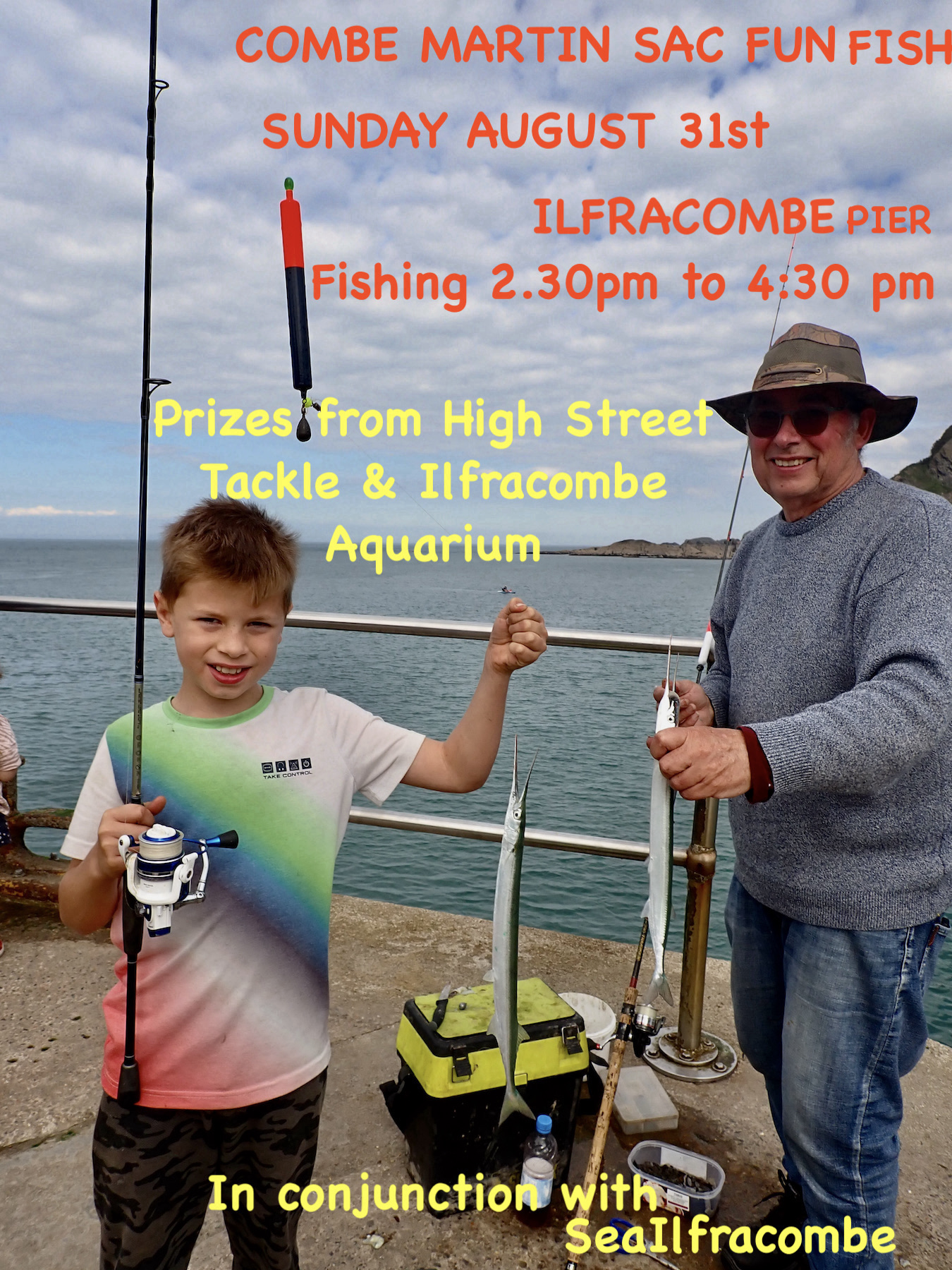
The Aquarium has supported Combe Martin Sea Angling Club’s annual Fun fish over the past twenty or so years and has once again offered a family ticket as a prize in this years event.
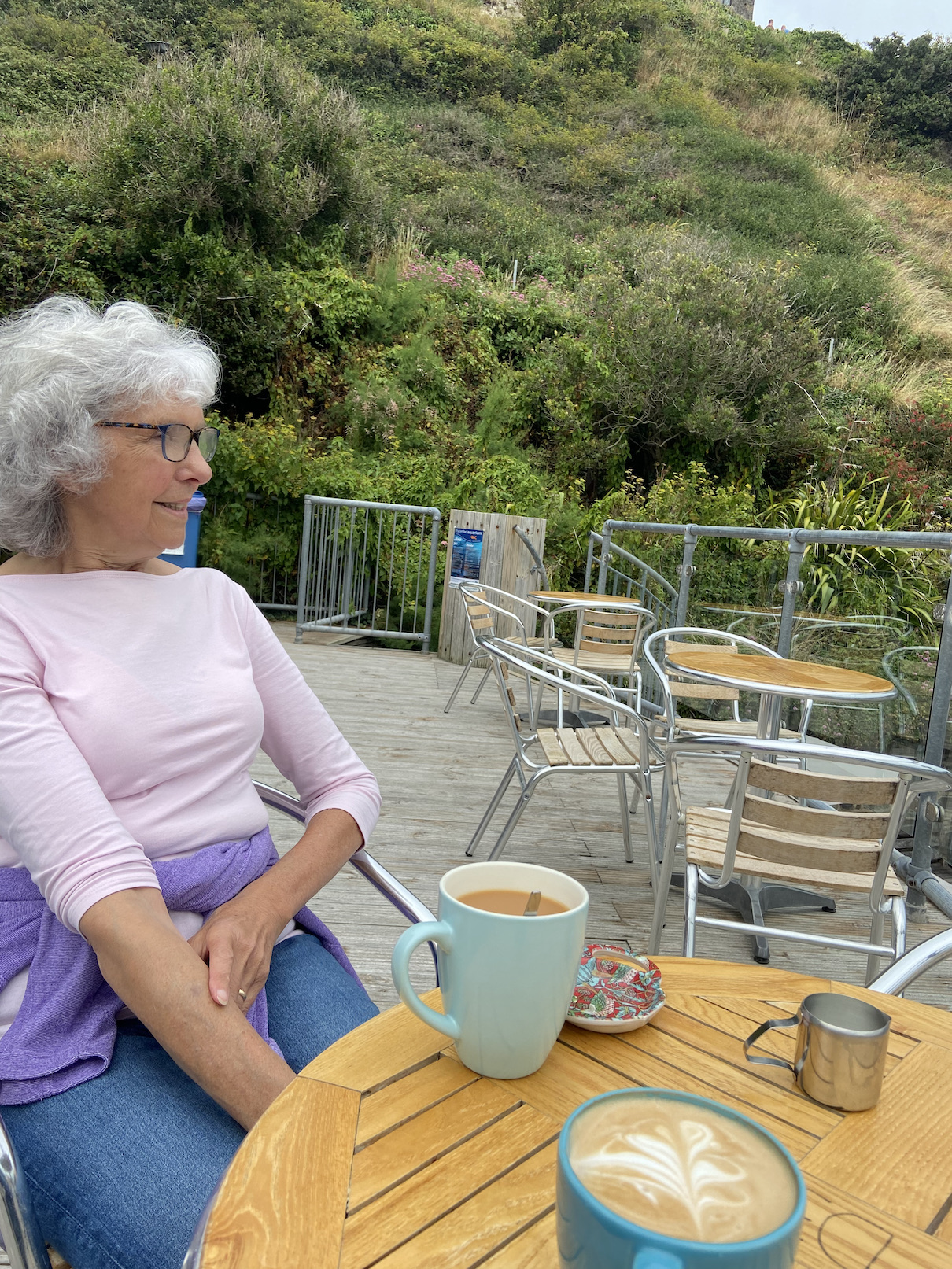
The Aquarium Café offers great coffee and light snacks that can be enjoyed on a warm day relaxing on the elevated decking overlooking the bustling pier and harbour.
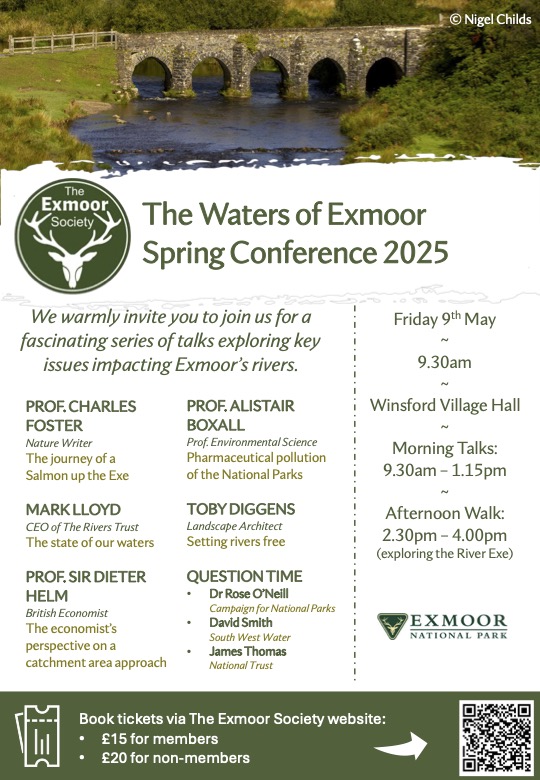
Arriving at Winsford in the heart of Exmoor my wife Pauline and I were delighted to find the Village Hall packed with attendees all assembled for this conference focussing on the waters of Exmoor. Amongst the crowd were many familiar faces all of whom I knew shared a passion for rivers. After coffee and cake we took our seats to listen to the speakers the details of which I have added at the end of this feature.
Kate O Sullivan, Chair of the Exmoor Society welcomed us to the venue and gave a brief introduction highlighting the overall concerns relating to our rivers and efforts and collaborations to address the many issues.
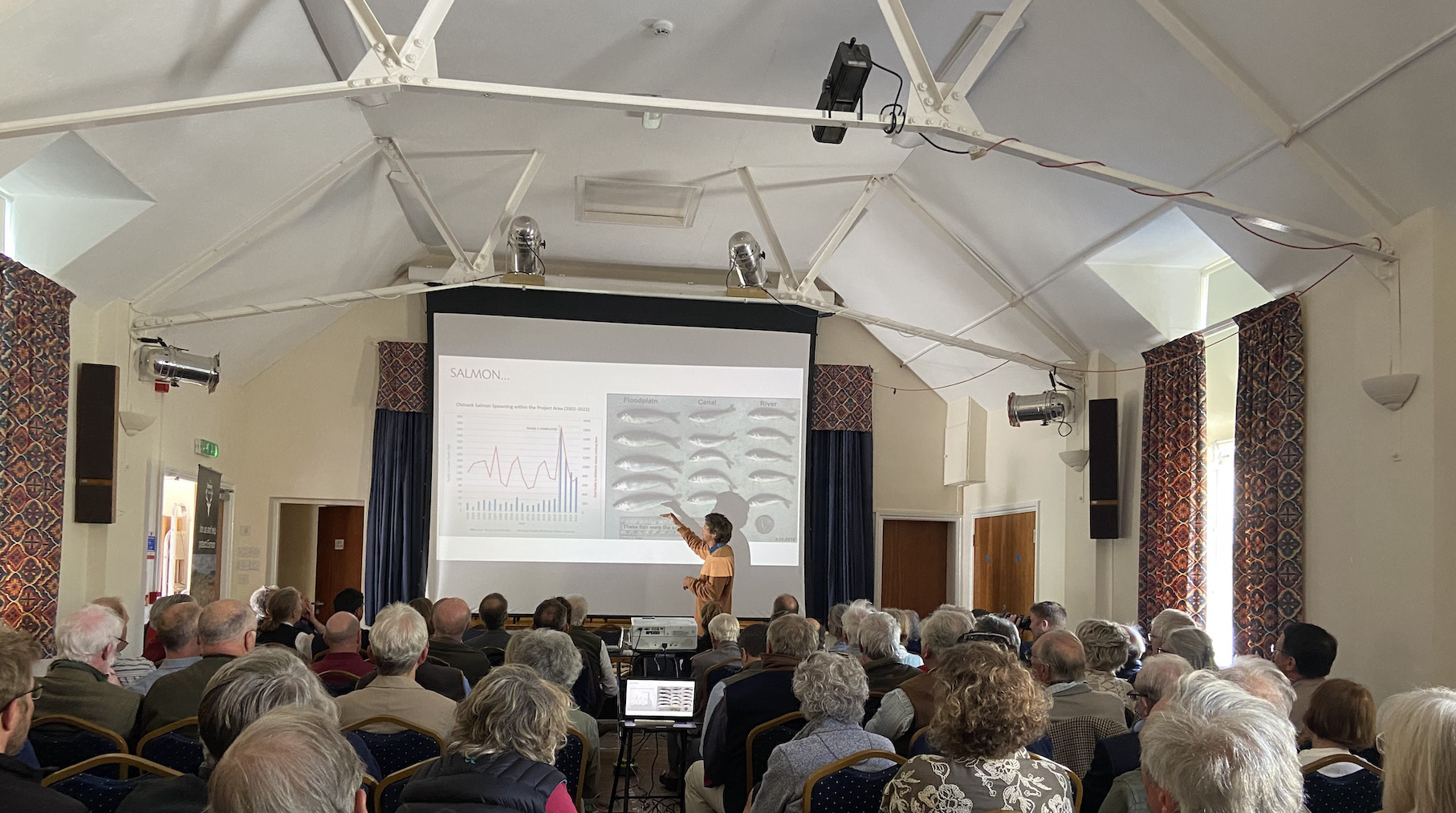
Professor Charles Foster delivered an evocative story of a salmons life journey from its birthplace in the headwaters of the Exe to the sea, to its distant feeding grounds of Norway and Greenland and then its epic and miraculous journey back to its home water. The tale was a master class in story telling captivating the audience without a power-point presentation. The story was punctuated by the multiple perils faced by the salmon at each stage of its life long journey. The complexities of a salmons epic journey were the perfect start to the day’s proceedings in effect setting the agenda to follow..
The salmons strive to stay alive is so strong from birth to death in a constant evolutionary stream of life that has endured for millennia that is today threatened by mankind’s disregard for the natural world.
Mark Lloyd Chief Executive of the Rivers Trust gave a passionate assessment of the state of the nation’s rivers. In brief too much, too little, too dirty, too hot and too little nature. The situation has accelerated since the 1970’s with extremes of temperature and rainfall. Agriculture, Abstraction and urban pollution from sewage outfalls etc all impacting and overlapping to exacerbate the issues.
Mark then highlighted some of the solutions and how working with nature can help to address.
Professor Alistair Boxall delivered a very concerning and thought provoking presentation highlighting the issue of pharmaceutical pollution of the National Parks. Sampling of water across National Parks showed high levels of pharmaceutical residue including paracetamol, metformin, caffeine, carbamazepine, gabapentin and fexofenadine. All commonly used by many in society and discharged into sewage networks that are not designed to remove them. The long term effects on our rivers are not yet known.
Professor Sir Dieter Helm delivered an economists perspective on a fresh approach to how we address the many issues using a catchment based approach. I found his delivery enlightening and inspiring as he pointed out the uncomfortable truth that we are all collectively to blame. He set out sensible solutions to the issues highlighting that what we do is not sustainable. Food production, sewage infrastructure we create the demand yet we do not want to pay. We need to rethink, design, polluters must pay and those who do not should be rewarded for their endeavours.
Question time was skilfully coordinated by Mark Lloyd who introduced the panel.
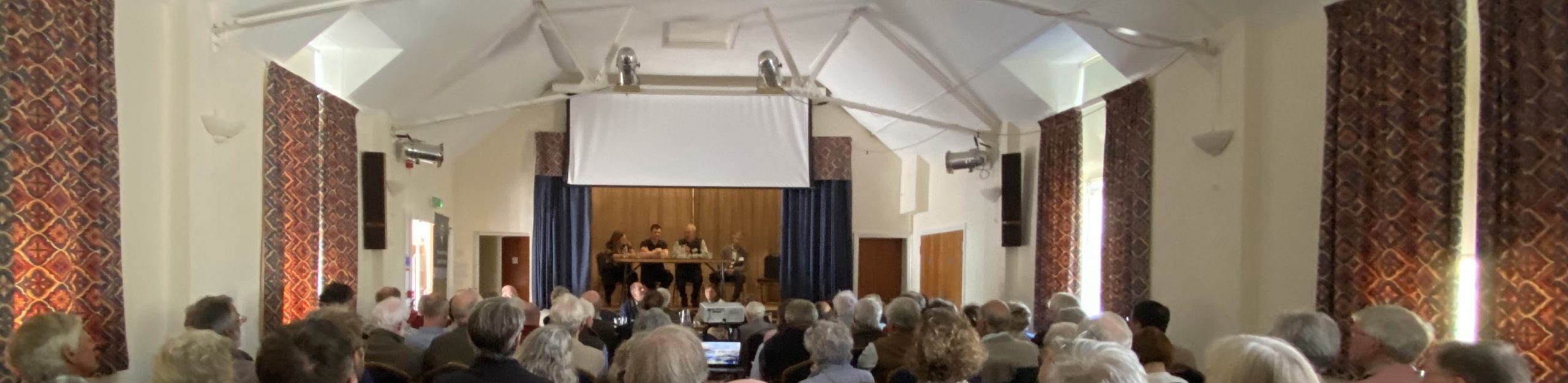
The panel face a packed Village Hall
Each panellist introduced themselves highlighting their work.
Dr Rose O’ Neil talked about the vital importance of rivers that flow through National Parks.
Dr David Smith outlined the work of South West Waters dedicated team who look after the regions catchments and rivers. South West Water are large landowners and invest in invasive species control and many fish passage schemes. Upstream Thinking is one of the company’s flagship projects and focuses on the headwaters that are vital to a catchments overall health. David acknowledged the need for future water storage and told of collaboration between Wessex Water and Bristol Water with the planned construction of Cheddar 2 adjacent to the existing Cheddar Reservoir that will help to preserve Wimbleball for the South West region.
James Thomas delivered an extensive and passionate overview of the work being undertaken by the National Trusts Wetlands Team across North Devon. James explained the historic connections of landscapes to water and how working with nature helps to improve water quality, reduce flood risk, act as carbon storage, improves drought resilience, and boosts opportunities for wildlife both increasing abundance and biodiversity.
Toby Diggens talked enthusiastically and with infectious optimism for setting rivers free using descriptive illustrations and art work to portray the long term benefits of restoring natural meandering flow of rivers.
Toby Diggens talks of the benefits of setting rivers free
A Personal Perspective
Walking out of the Village Hall we were inspired by the passion shared by all the speakers to a receptive audience. The fact that so many came together on this beautiful spring day brings hope for the future.
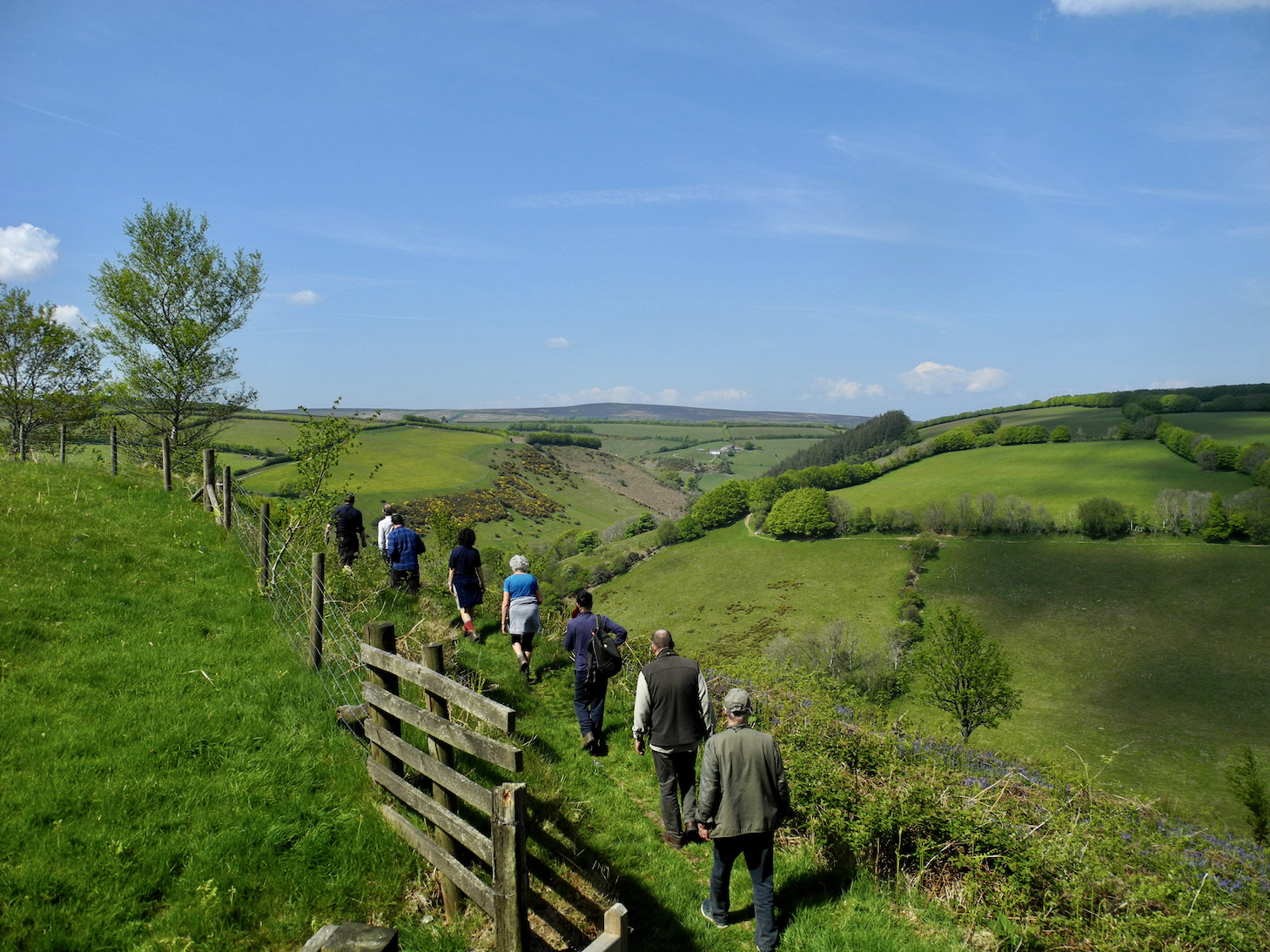
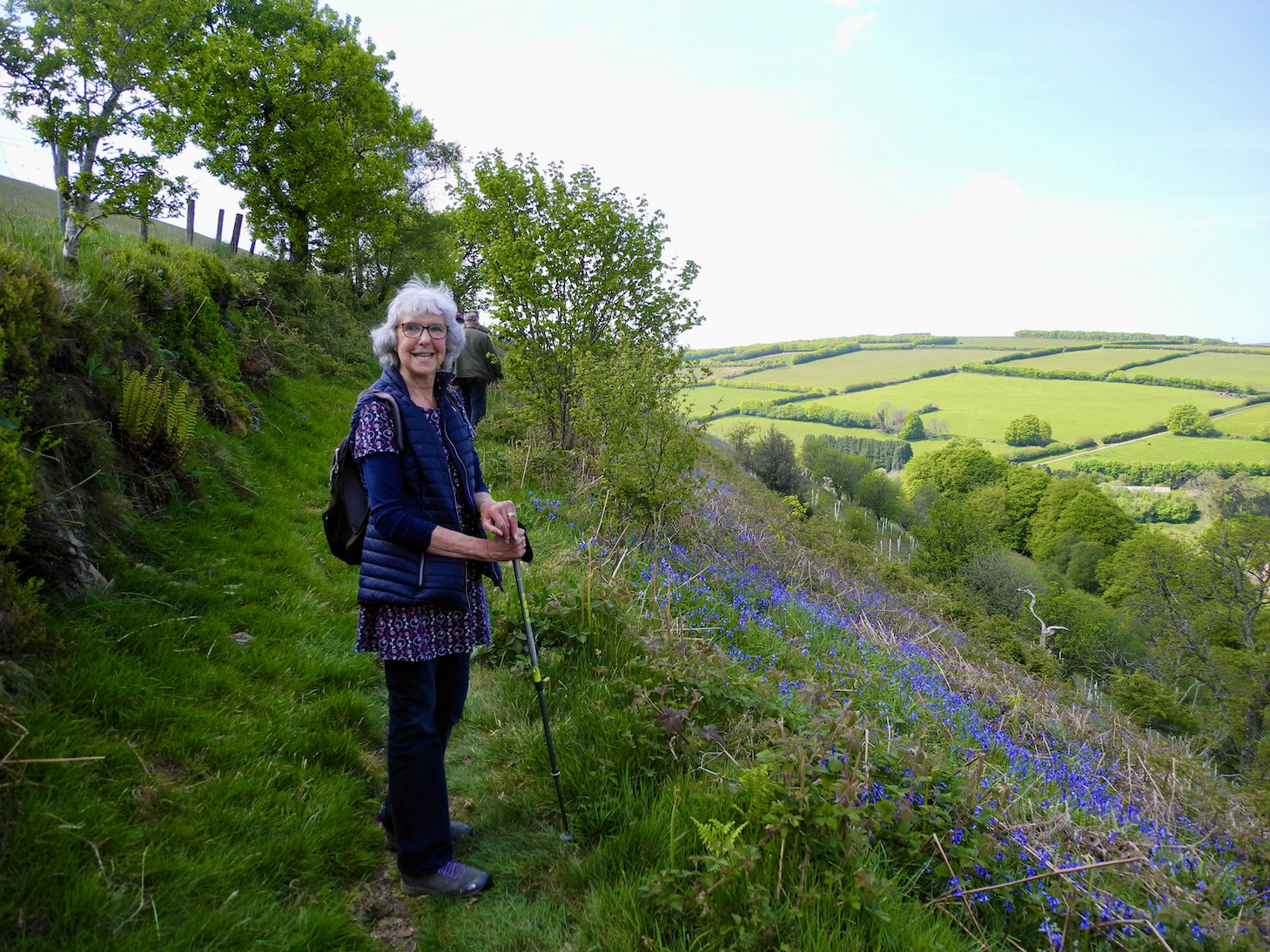
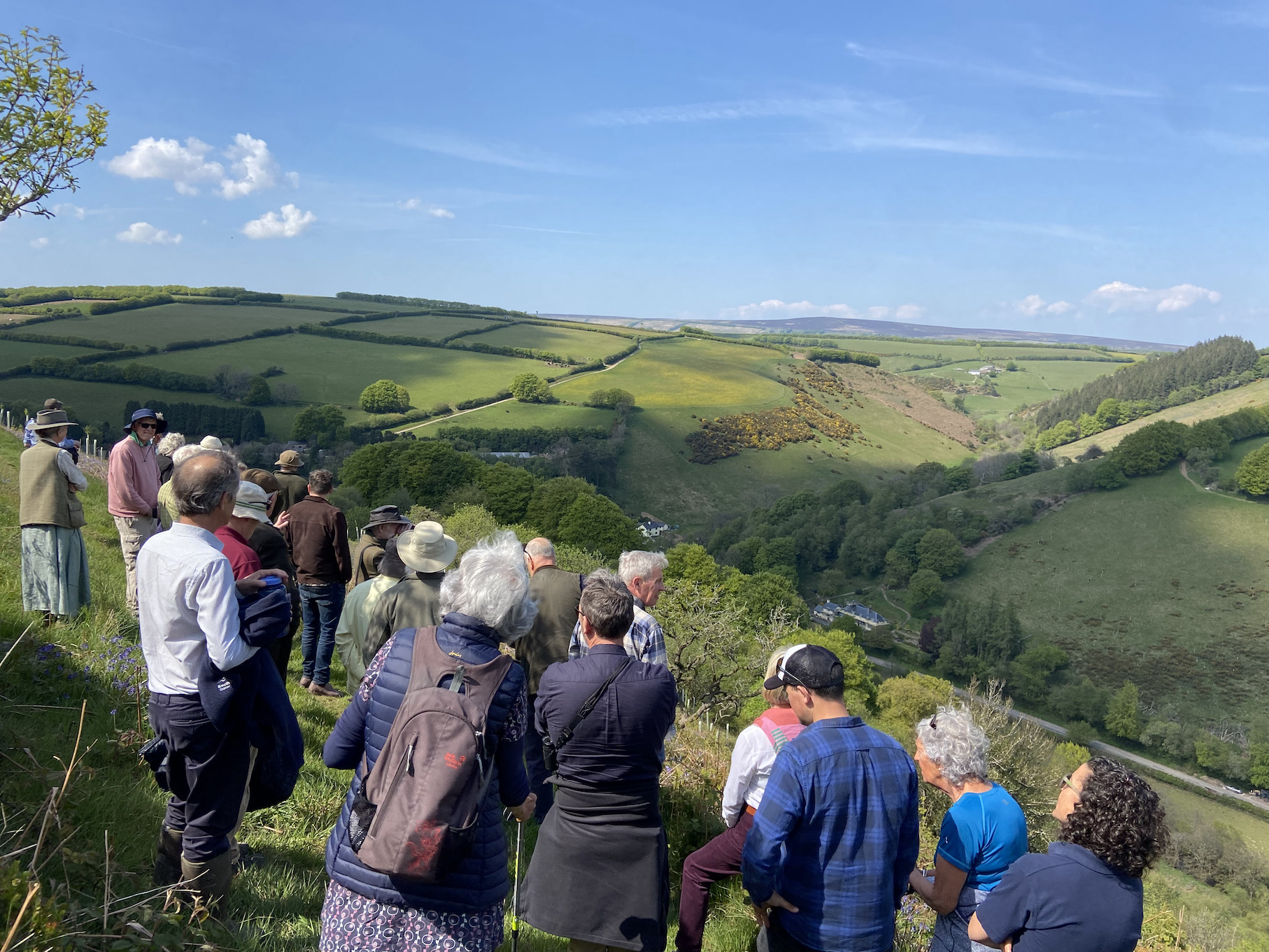
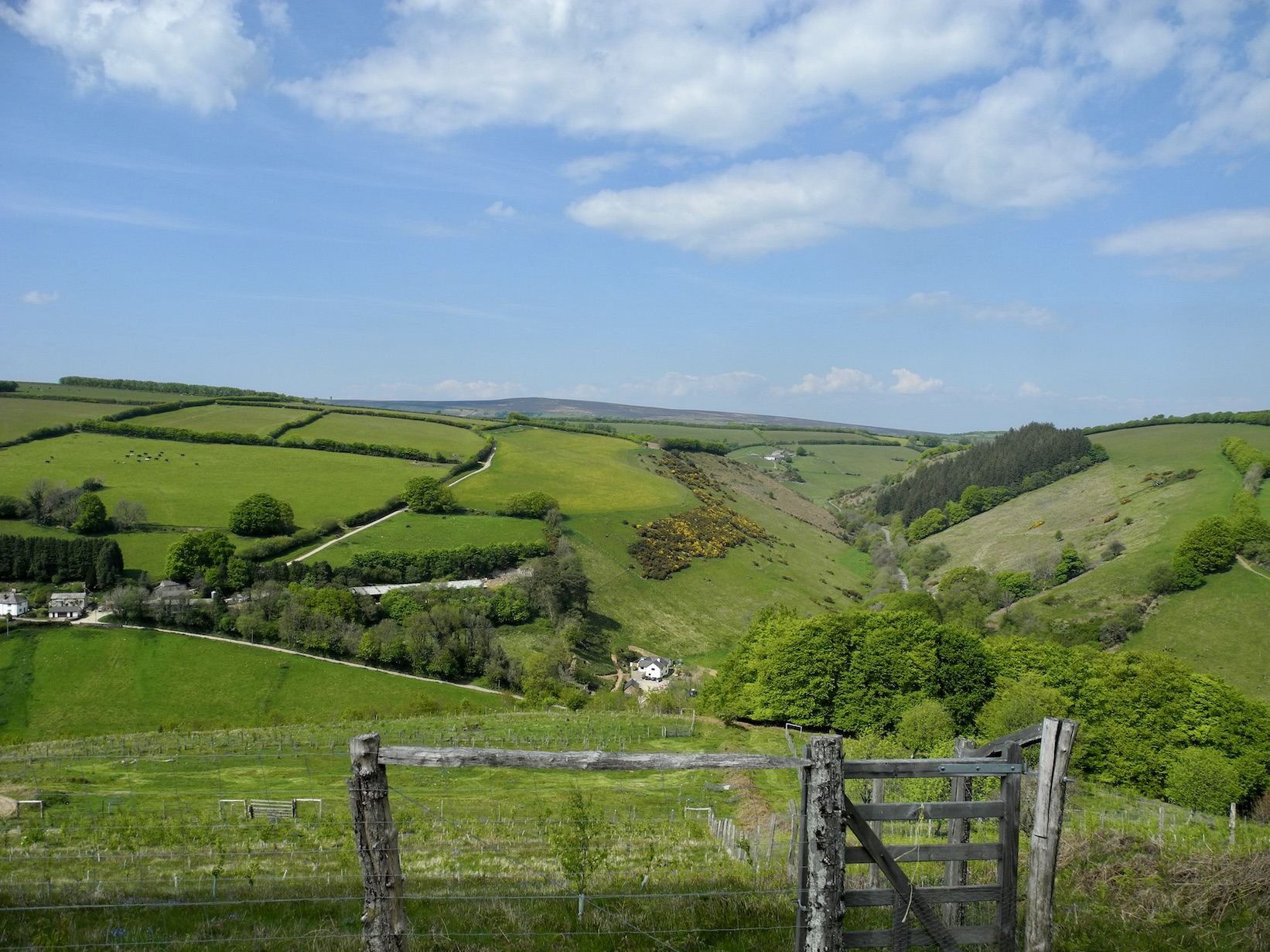
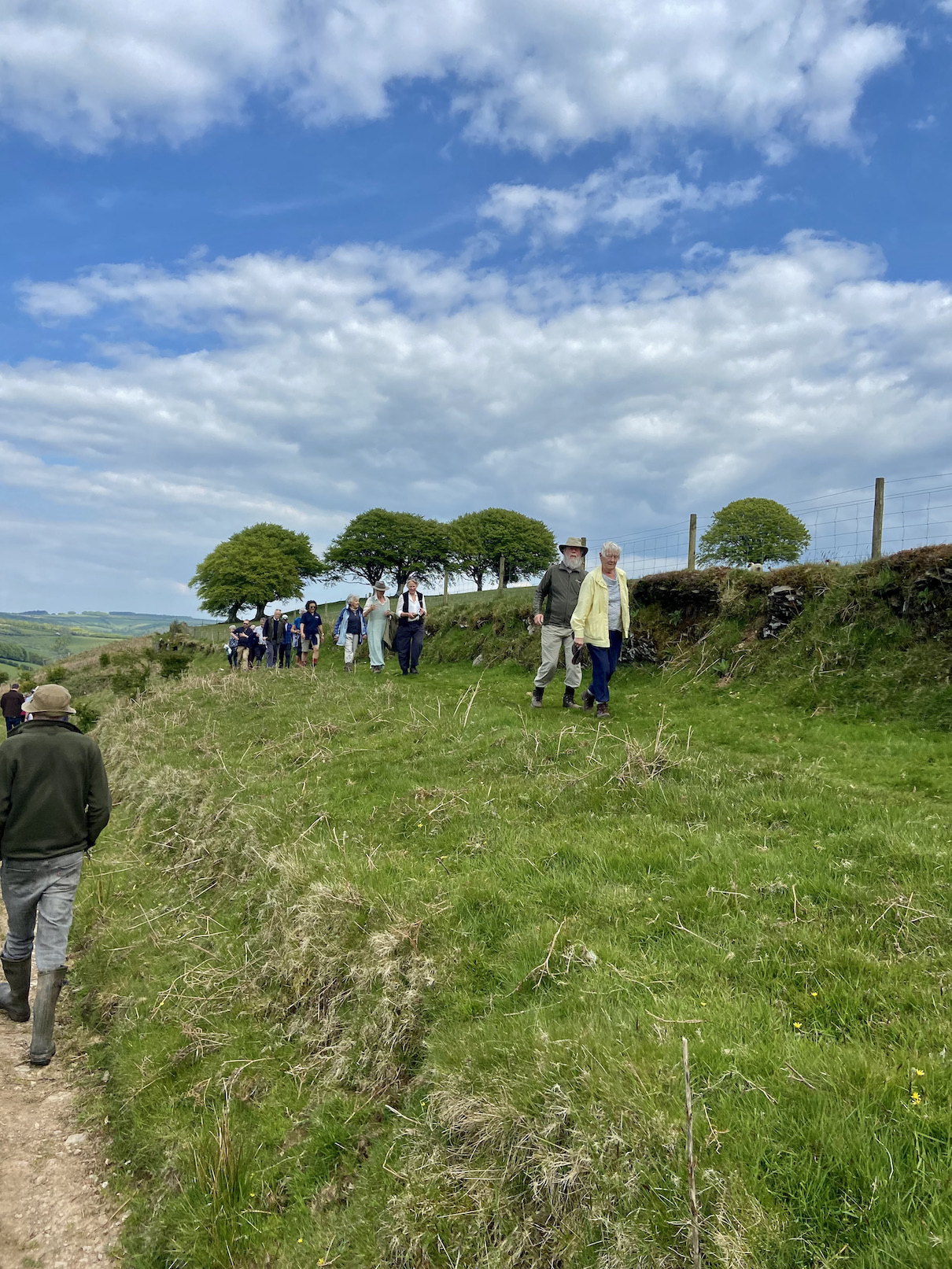
The problems that face our rivers are many and extremely complex. I have long held the belief that rivers are the arteries of the land. As an angler my connection with rivers has been life long and I have witnessed a dramatic and sad decline in my lifetime. I was able to share this story as we embarked upon a strenuous walk that took us to a high viewpoint that enabled us to view the beautiful valley of the river Exe.
Exmoor surely the star of the show…and top of the bill!
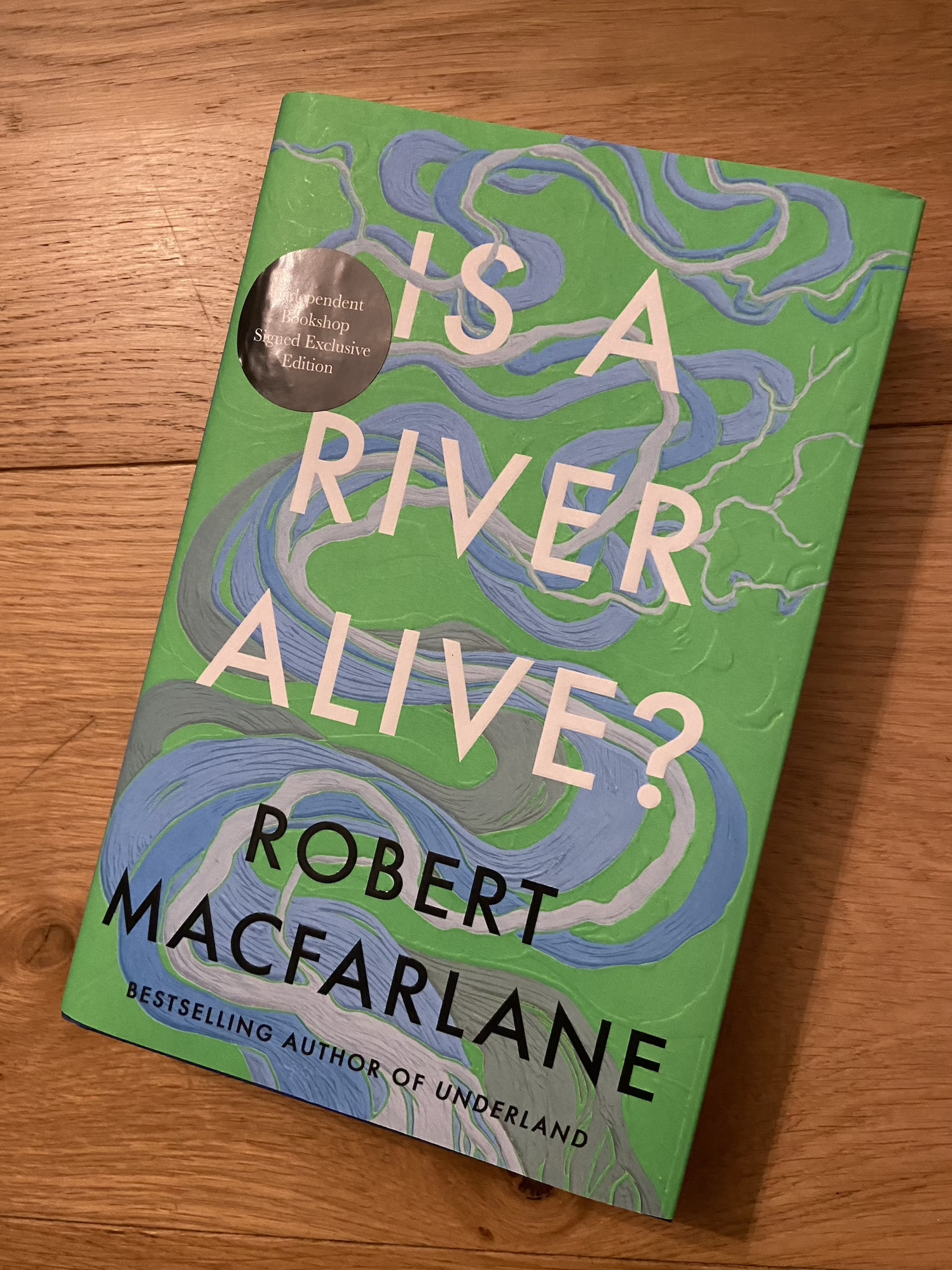
I bought the new book from Seven Fables by acclaimed author Robert Macfarlane who asks the question ‘ IS A RIVER ALIVE’ ? I look forward to reading this tome. But in answer to the question if we consider the entire planet a living entity then is it not sensible to consider the rivers as the veins and arteries that carry the planets life blood for water is vital to life on earth.
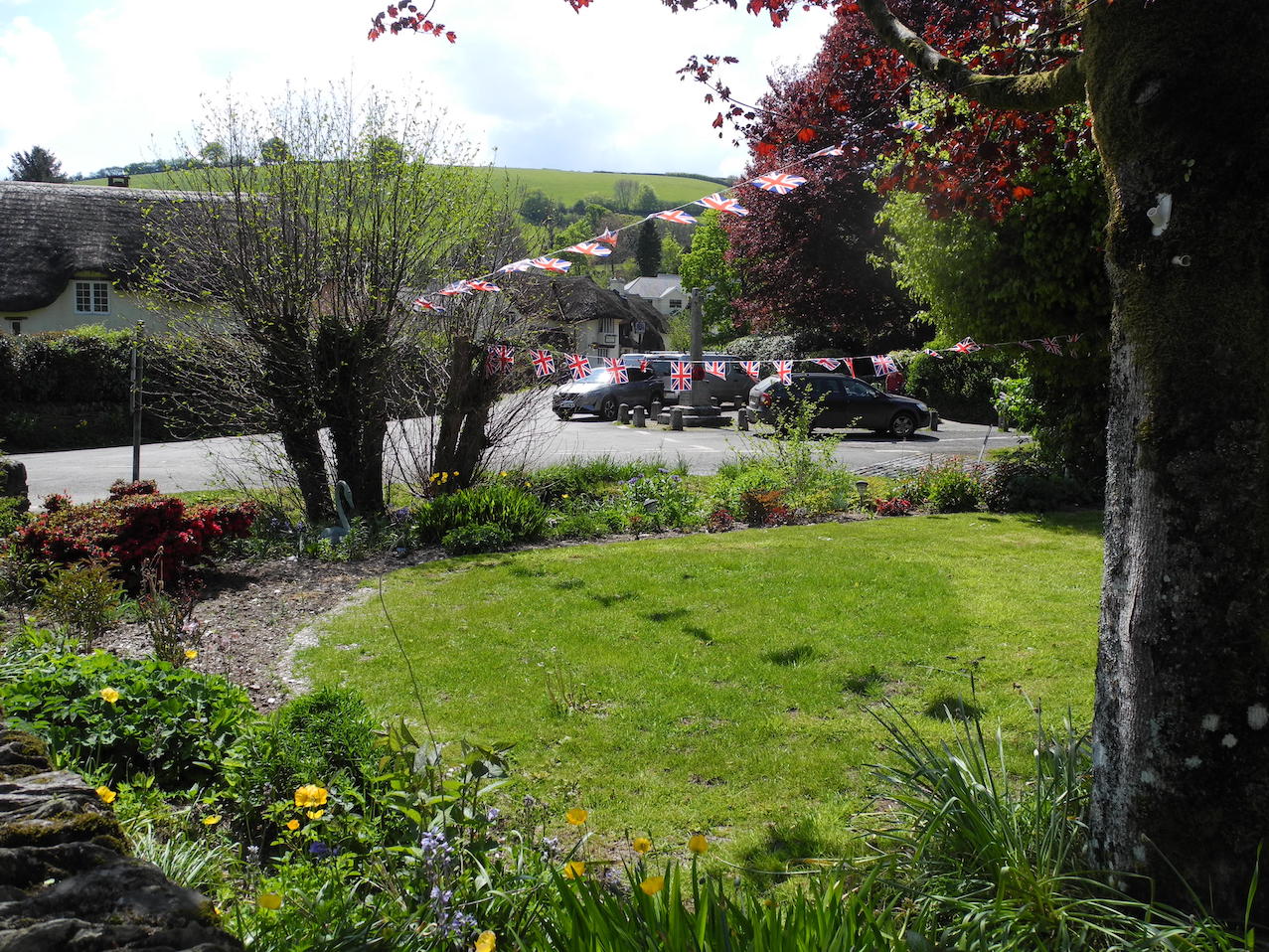
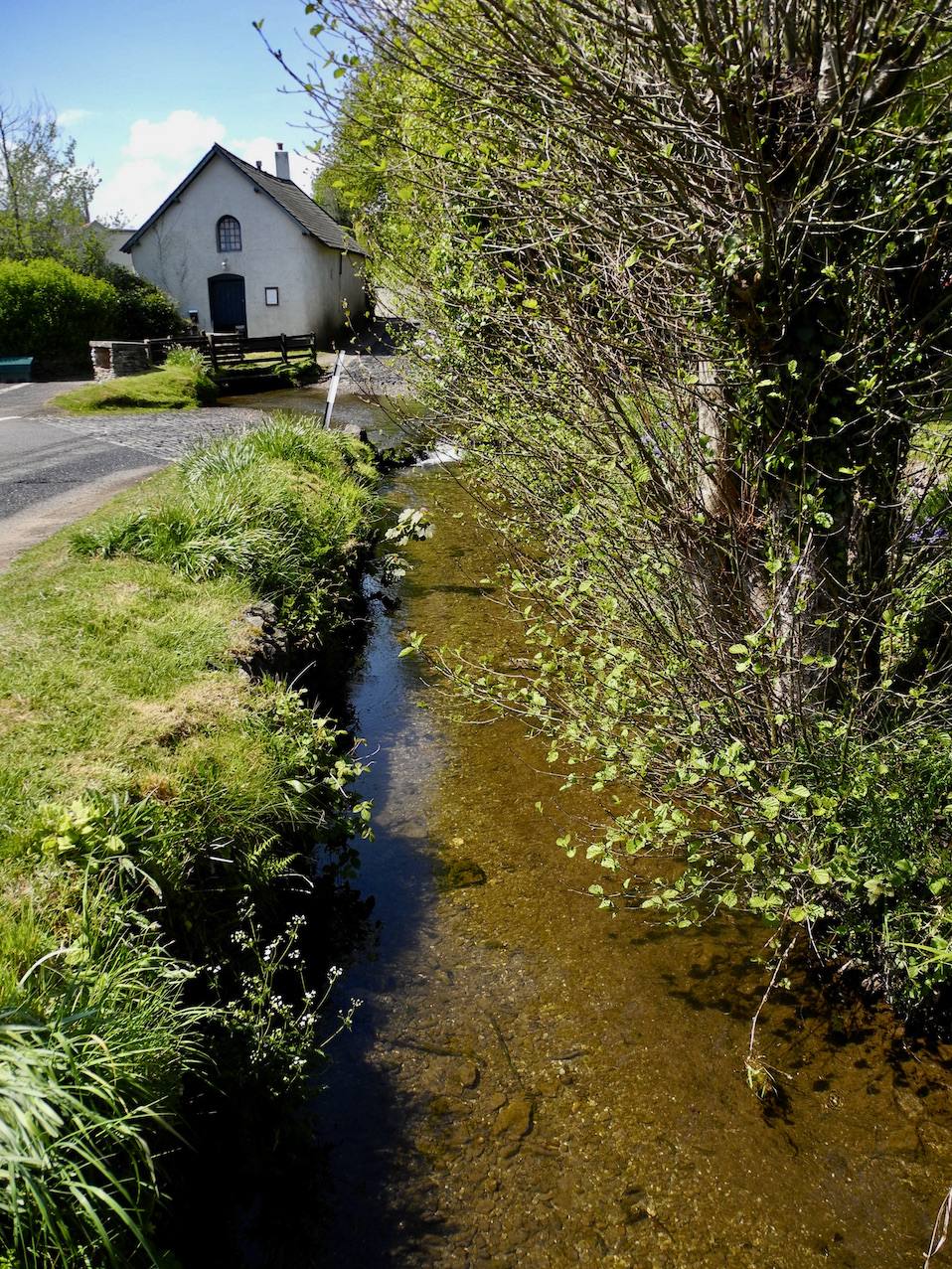
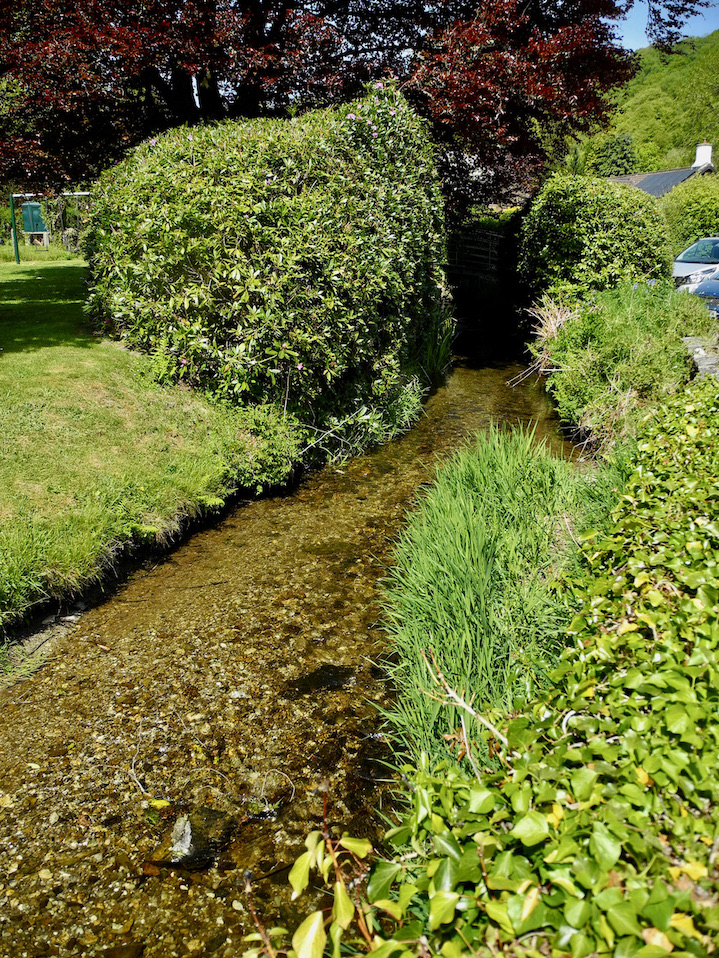
As we paused for lunch between the conference and our walk. I noted the martins swooping to gather mud from the stream, swifts swooping high above quaint thatched cottages their evocative screams of summer drifting through the valley and swallows those birds that are surely the true harbingers of summer. It was easy to be lulled into a sense that all is good. And yet I looked into the stream a tributary of the Exe and noted the sediment and algae in the stream and how this was far more pronounced below the ford where cars frequently drove through washing mud and oil from their undersides.
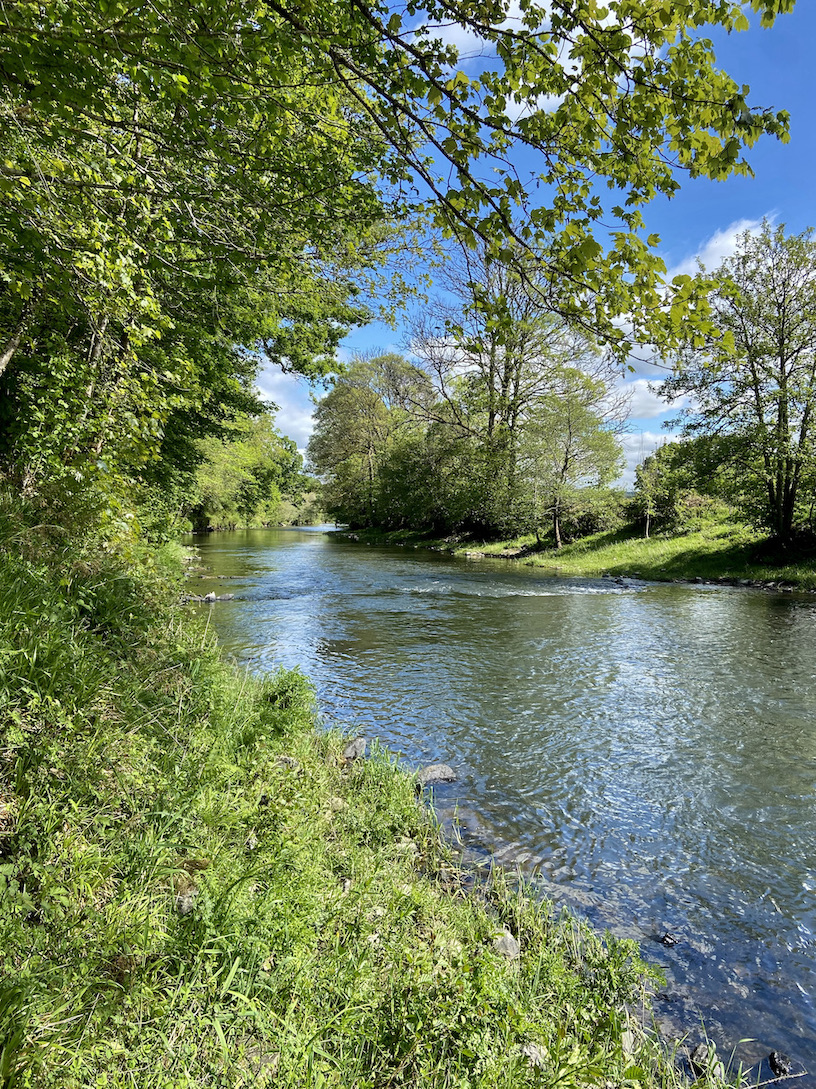
Beneath the fordAbove the ford the river runs clear its gravels less tarnished by sediment
A lady walked her dogs that splashed across the river potentially releasing powerful toxins designed to kill the ticks that are now prolific throughout the seasons, a result of infrequent winter frosts. The lack of rain throughout the spring reduces dilution of this toxic mix that enters the river. All is certainly not as it should be and the insidious invisibility is perhaps the greatest concern.
It brings hope that our eyes are slowly opening to the many issues and yet there are still too many in society who are either oblivious or turn the proverbial blind eye for it is convenient not to see.
On a final word many thanks to the Exmoor Society for all the hard work that is involved in hosting and organising such a thought provoking and informative event.
SPEAKERS PROFILES BELOW
Kate O’Sullivan
Chair of the Exmoor Society
Kate O’Sullivan has been chair of The Exmoor Society since September 2022, where she has concentrated on nature recovery. For many years she worked at the BBC as a science documentary producer, making films for the BBC-2 Horizon series and then at BBC Films. Since moving to Exmoor, she has worked on the family’s farm at Old Stowey to improve the pasture, hedges, woodland, and soil. She has a master’s in the history and philosophy of science from Imperial College.
Sarah Bryan
Chief Executive of ENPA
Sarah Bryan is the Chief Executive of the Exmoor National Park Authority. She has worked on Exmoor for more than 25 years, since joining the organisation as a Conservation Officer (Landscape) in 1992. She has used her roles to engage with landowners and land managers, forging strong partnerships with external agencies and partners, and leading key conservation and landscape projects. She has a degree in Environmental Science from the University of East Anglia, a second degree in Landscape Design from Manchester University, and is a Chartered Member of the Landscape Institute.
Professor Alistair Boxall
Professor, Environmental Science
Alistair is a Professor in Environmental Science in the Environment Department and Director of the NERC-funded ECORISC Centre for Doctoral Training. Alistair’s research focuses on understanding emerging and future ecological and health risks posed by chemical contaminants in the natural environment. Alistair is a past member of the Defra Advisory Committee on Hazardous Substances and past Chair of the Pharmaceutical Advisory Group of the Society of Environmental Toxicology and Chemistry. He regularly advises national and international organisations on issues relating to chemical impacts on the environment and has published extensively on the detection, fate, effects and risks of emerging contaminants (including pharmaceuticals, nanomaterials and transformation products) in the natural environment.
Professor Sir Dieter Helm
Professor of Economic Policy at the University of Oxford
Dieter Helm is a Professor of Economic Policy at the University of Oxford and Fellow in Economics at New College, Oxford. From 2012 to 2020, he was Independent Chair of the Natural Capital Committee, providing advice to the government on the sustainable use of natural capital. Dieter provides extensive expert advice to UK and European governments, regulators and companies on his three specialist areas: Energy & Climate; Regulation, Utilities & Infrastructure; and Natural Capital & the Environment. In his book ‘Legacy: How to Build the Sustainable Economy’, Dieter looks at what the sustainable economy would look like and what it would take to live within our environmental means. Dieter is a Vice President of the Exmoor Society, a Vice President of Berkshire, Buckinghamshire and Oxfordshire Wildlife Trust, and Honorary Fellow, Brasenose College, Oxford.
Toby Diggens
Landscape Architect
Toby is the founder of Digg & Co. Studio, an ecological landscape practice which focuses on large-scale nature recovery projects and ecosystem and landscape master planning. He is also on the committee of the River Exe’s dedicated habitat and in-river restoration and improvement group – RETA (River Exe and Tributaries Association). Toby and his team oversee and design projects where ecological uplift, enhancement and revival are core principles. Their work spans river restoration, farm and estate designs and urban projects which prioritise wild self-willed systems to proliferate with people at their heart. He lives near Exmoor, where he and his wife Bella holistically graze 500 acres of mixed natural farmland and wilderness with their herd of pedigree Red Devon’s.
Professor Charles Foster
Writer and academic
Charles Foster’s books include Being a Beast (a New York Times Bestseller), Being a Human, Cry of the Wild, and The Screaming Sky. He is a Fellow of Exeter College, Oxford.
Mark Lloyd
CEO, The Rivers Trust
Mark Lloyd read Geography at St. Catherine’s College, Oxford and then completed a Master’s in Environmental Water Management at Cranfield. He founded Thames21 in 1994, a charity cleaning up London’s rivers, which he led for 11 years. He has since been CEO of a number of angling and conservation organisations before taking up his current role in 2019 as Chief Executive of The Rivers Trust, the umbrella body for the rivers trust movement, which comprises 67 independent charities in the UK and Ireland employing over 550 staff. The Rivers Trusts work in partnership to restore wild, healthy, natural rivers, valued by all.
Dr Rose O’Neill
CEO, Campaign for National Parks
Dr Rose O’Neill is Chief Executive of the Campaign for National Parks, the independent charity dedicated to the National Parks of England and Wales. Founded in 1936, Campaign for National Parks brings together a campaigning collective of organisations, including the Exmoor Society, and individuals from all walks of life united in a common cause: nature-rich National Parks for everyone. In previous roles, Rose was principal social scientist at Natural England and headed the rivers programme at WWF-UK. Rose has a Master’s in geology and a PhD in environmental science. Rose lives just outside the South Downs National Park and loves exploring its chalk streams with her young family. She is a trustee of Wessex Rivers Trust and a member of Natural England’s Landscape Advisory Panel.
Dr David Smith
South West Water
David is South West Water’s Natural Resources Team Manager. The team of over 20 leads SWW’s work on species, habitats, biosecurity and Invasive Non-Native Species (INNS), fish and eels. It also delivers Upstream Thinking, SWW’s flagship catchment management programme. David has worked in the water industry since 2010, leading on peatland restoration, catchment management, and biodiversity, and he previously worked as a farm advisor and an ecologist for National Parks and led the Exmoor Mires restoration Partnership. David is an ecologist from a farming and horticulture background, with a D.Phil in peatland regeneration in Northern Ireland. He has co-authored publications with research partners at Exeter, Bristol, and other UK Universities on peatland restoration hydrology, water quality, greenhouse gas modification, and vegetation changes.
James Thomas
National Trust, North Devon Riverlands Team
The Riverlands Team are working across four portfolios at Arlington Court, West Exmoor, Hartland, and Woolacombe. They are restoring significant areas of wetland habitat across North Devon. This is being done by identifying areas where drainage and modification of watercourses have had a detrimental impact on the environment, and working closely with natural processes to allow the hydrology of the land to function more naturally. Working with partners at a landscape scale, a multitude of opportunities are being explored to maximise gains; from simple measures such as creating new ponds and scrapes to increase open water, strategically blocking land drains and drainage ditches to expand wetland habitat, all the way through to wet woodland creation and floodplain reconnection and resetting the land through innovative ‘stage 0’ style techniques. These measures will all combine to hold water across a wide area for longer, thereby improving water quality, reducing flood risk, acting as carbon storage, improving drought resilience, and boosting opportunities for wildlife, increasing abundance and biodiversity.
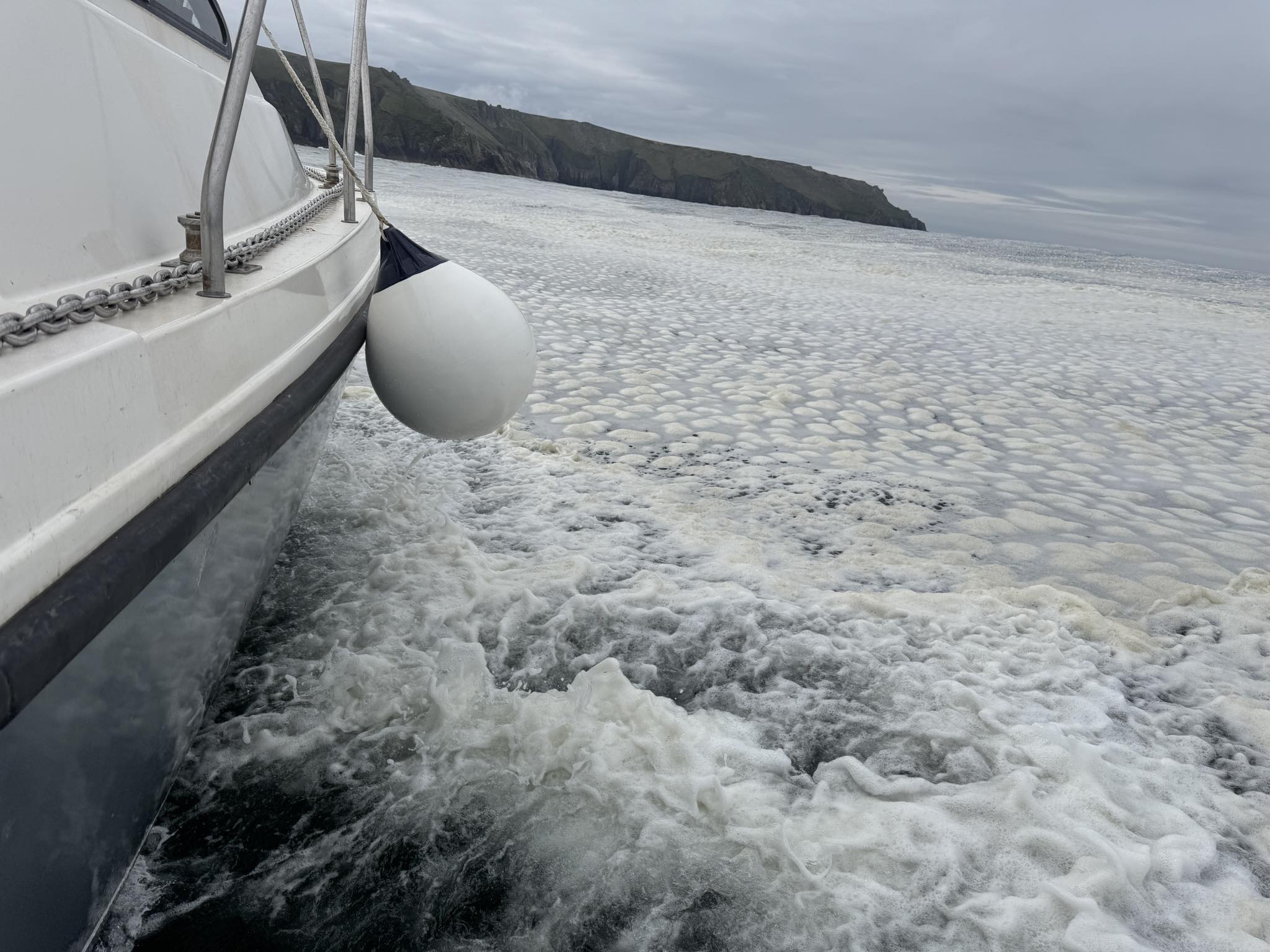
Whilst the algae blooms witnessed along the coast are nothing new there are a couple of observations I will make. First the bloom often referred to as May bloom is earlier than normal and secondly the amount of surface froth is unusual and whilst large spring tides and a big surging swell have contributed I personally consider that this could be largely due to extensive run off from rivers into the Bristol Channel carrying worrying levels of enrichment from agricultural run-off and sewage overflows.
Frothy waters off Lundy – Image courtesy of Predator 2 Charters
There is increasing awareness of the many issues that impact upon water quality with considerable focus on rivers with many groups with environmental interests now joining together to campaign for a revision into how we manage our environment. This is certainly complex and requires extensive effort across government and society.
Next month you will find Seven Fables at The Exmoor Society and Exmoor National Park Authority Spring Conference. This year their focus is on rivers and among the invited speakers are nature writer Professor Charles Foster, Mark Lloyd ~ CEO of the Rivers Trust, Professor Sir Dieter Helm and Toby Diggens of Dig & Co.
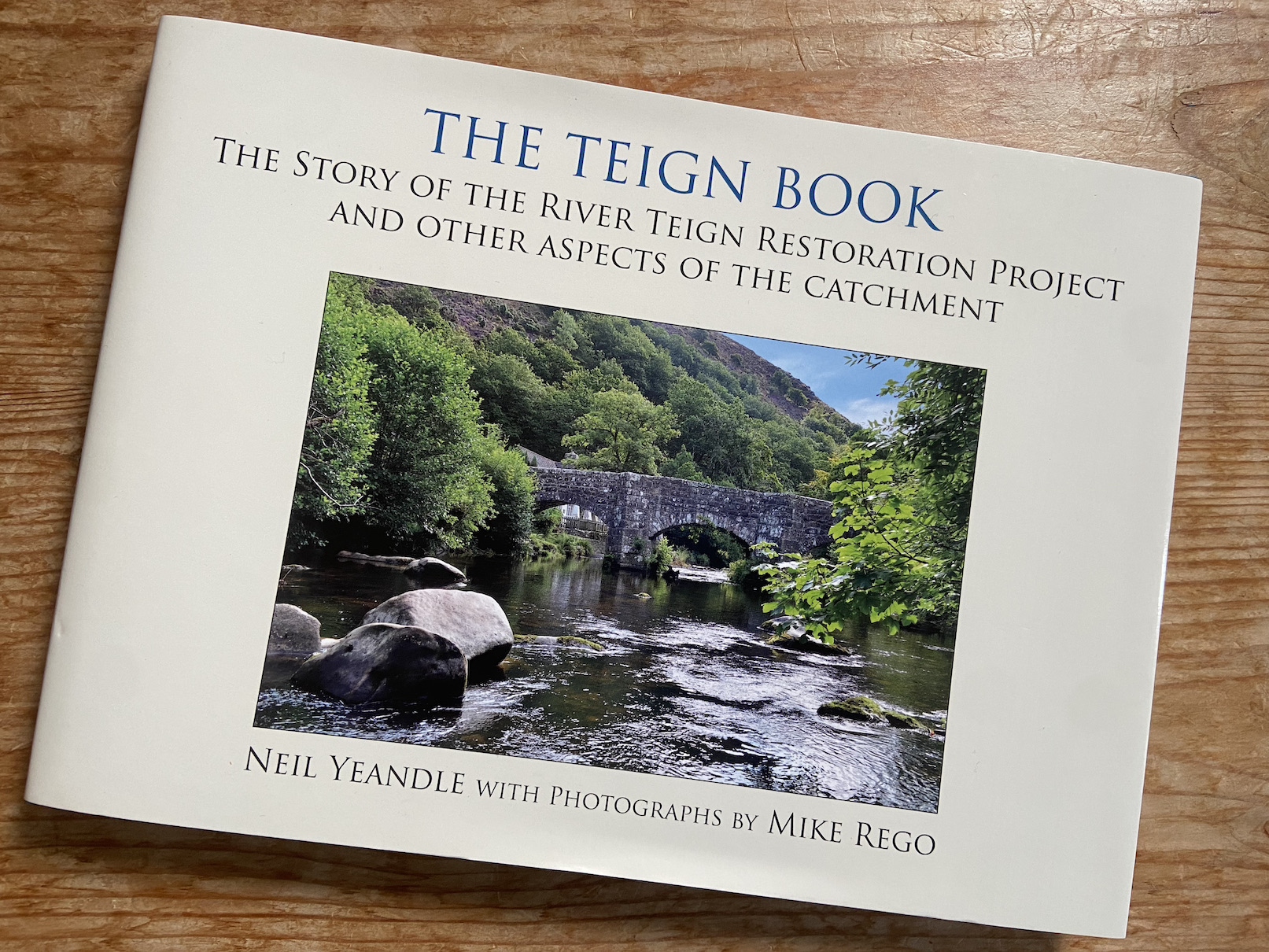
THE STORY OF THE RIVER TEIGN RESTORATION PROJECT AND OTHER ASPECTS OF THE CATCHMENT
NEIL YEANDLE with photographs by Mike Rego
Rivers inspire with their unique histories as they flow through our green and pleasant lands and it is anglers who are amongst those with the deepest connection and passion. This is evident throughout the pages of the Teign book written by Neil Yeandle who has produced a very comprehensive and informative book on this fascinating and beguiling river.
Neil is a lifelong angler whose connection with the Teign commenced when he moved to the West Country in 1988. He became a member of the Lower Teign Fishing Association in 2001.
‘As a keen sea trout angler, he soon fell in love with the Teign, although night time angling and work were never a great combination. After setting up a business Partnership, and later his own company in 1988, he was fortunate enough to be able to retire in 2011, leaving him more time to pursue his passion for angling. Neil has served on the Lower Teign Fishing Association for many years and as secretary of the Teign Angling and Conservation Association since 2013. He volunteered to write a book as part of the River Teign restoration Project and this is the fruits of his labour.’
Passion and dedication to the river Teign the environment and of course its fish are apparent throughout the pages of this book. I was encouraged to write a review of this book by Roger Furniss, Chairman of The Teign Angling and Conservation Association. I feel honoured to have been given this opportunity and as an avid collector of fishing books it was a task I relished.
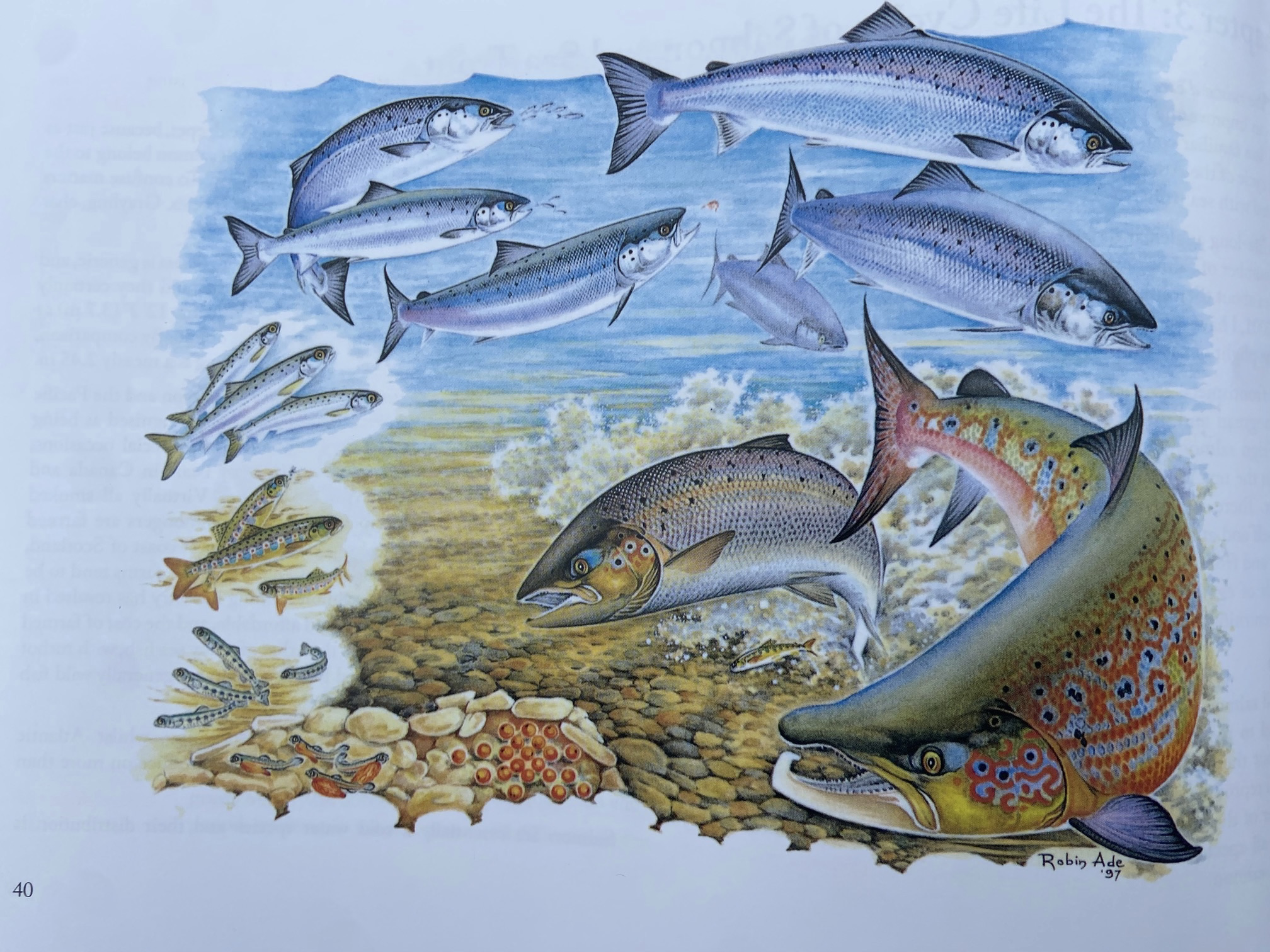
The Teign book is far more than a fishing book for it delights and informs readers with an evocative story of the river and its tributaries. The full life and extraordinary cycle of salmon and sea trout is explained in detail and enhanced with the colourful illustrations of Robin Ade . The fascinating natural history and man-kinds impact over the centuries is fully documented as the Teign plunges from the rugged heights of Dartmoor to the estuary at Teignmouth.
The book contains a wealth of photographs taken by Mike Rego and many others donated by many interested parties. These images are a valuable addition to a rich and informative text.
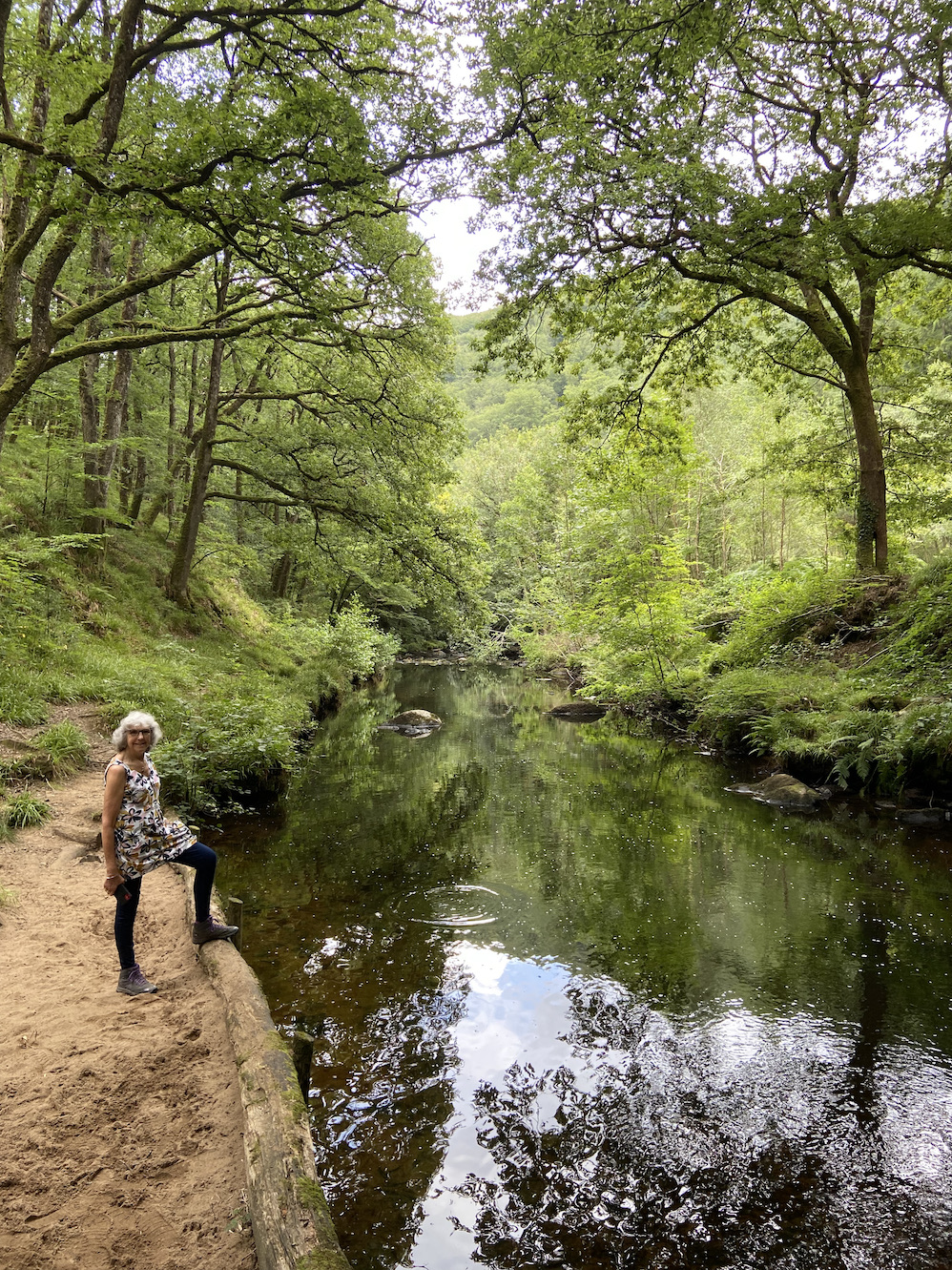
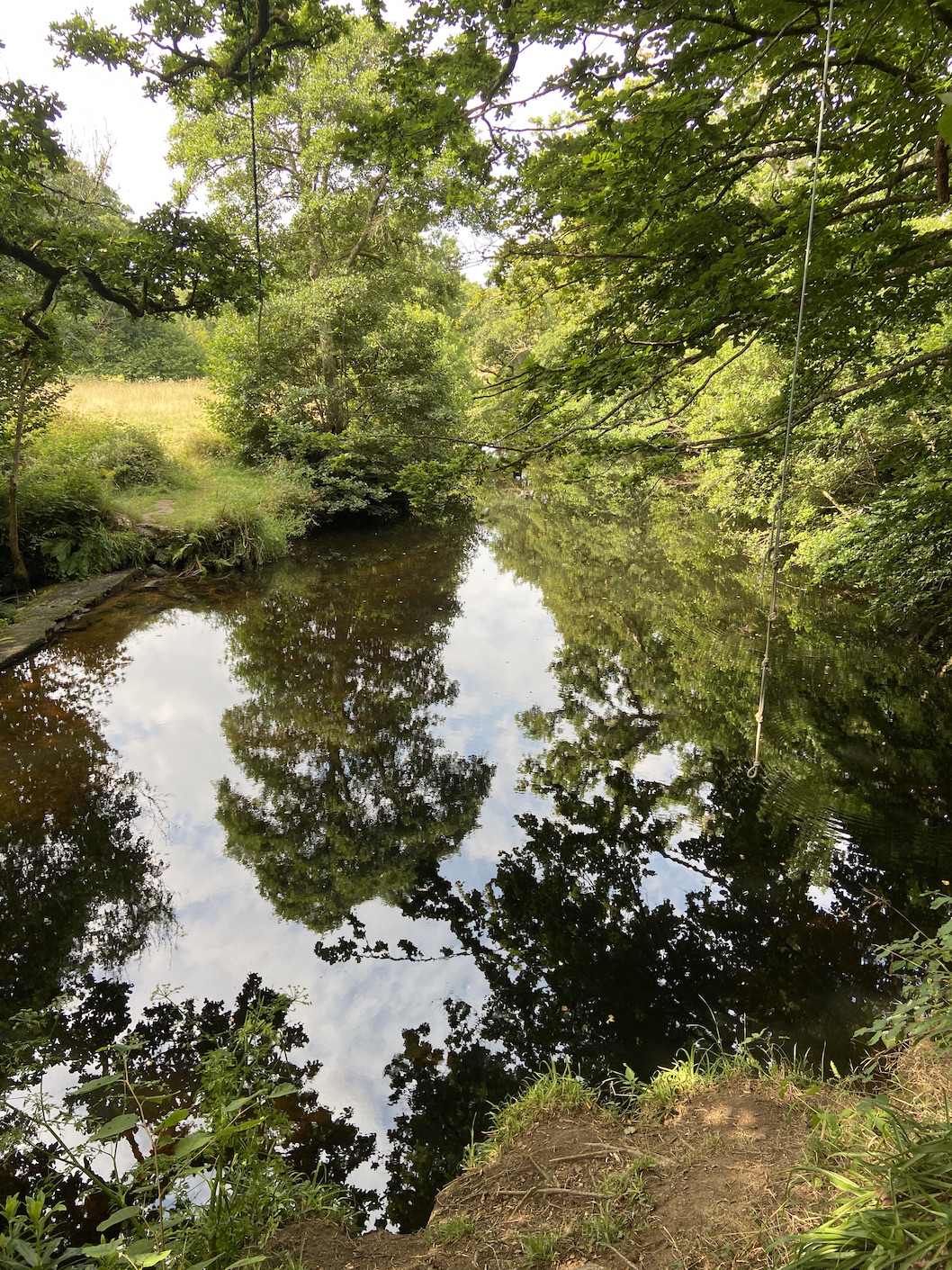
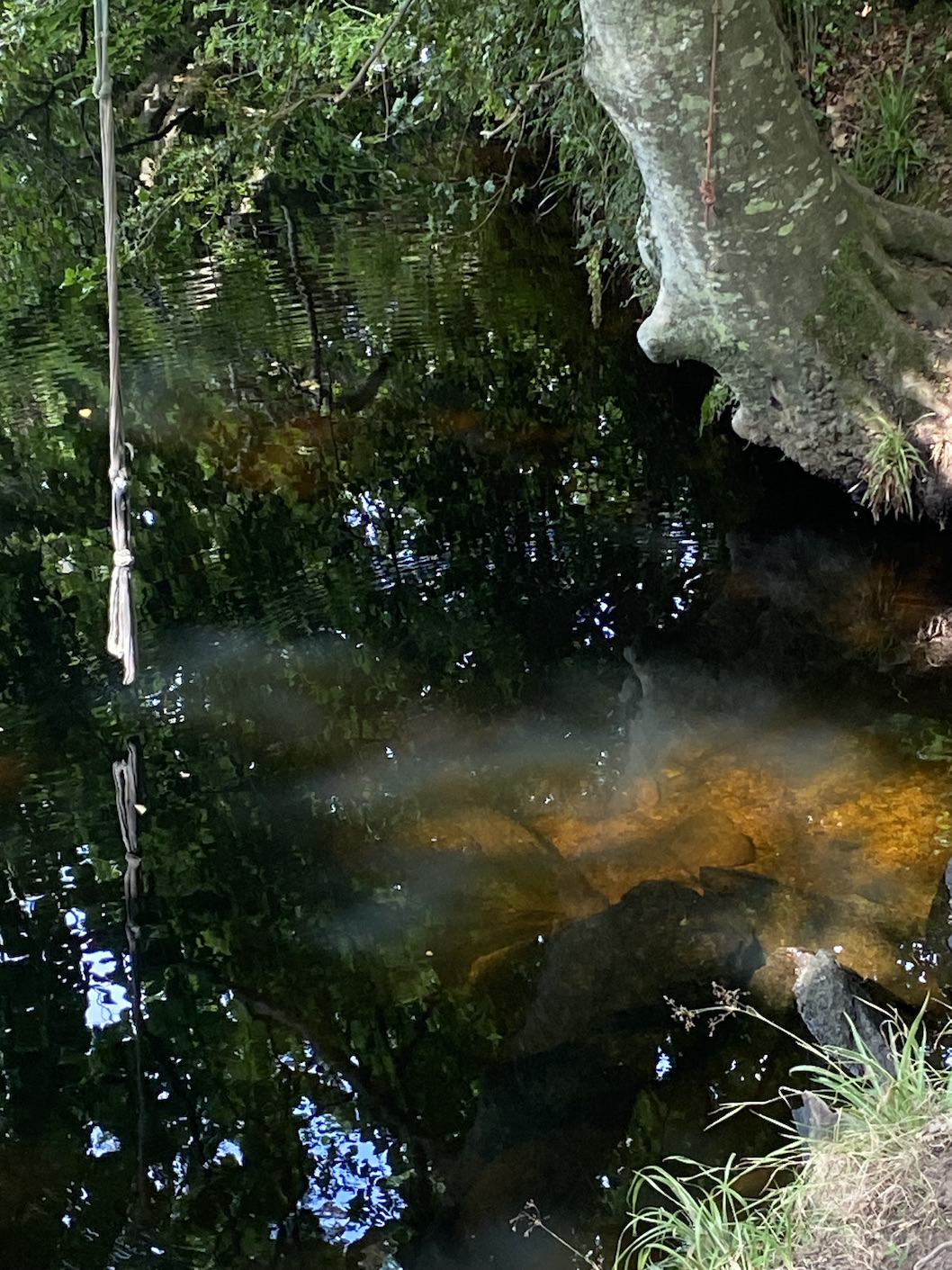
I have yet to fish the River Teign though I have developed a close interest in the river after reading of its fish in several books and articles over the years. My wife and I have also walked the banks of the Upper Teign as it flows through the deep wooded gorge below Castle Drogo and stayed close to the river during a short break at Chagford during the summer of 2024. I glimpsed good sized trout lurking in the sunlit waters that had that beer stained colour that always adds a sense of depth and mystery.
The steep and wooded gorge below Castle Drogo
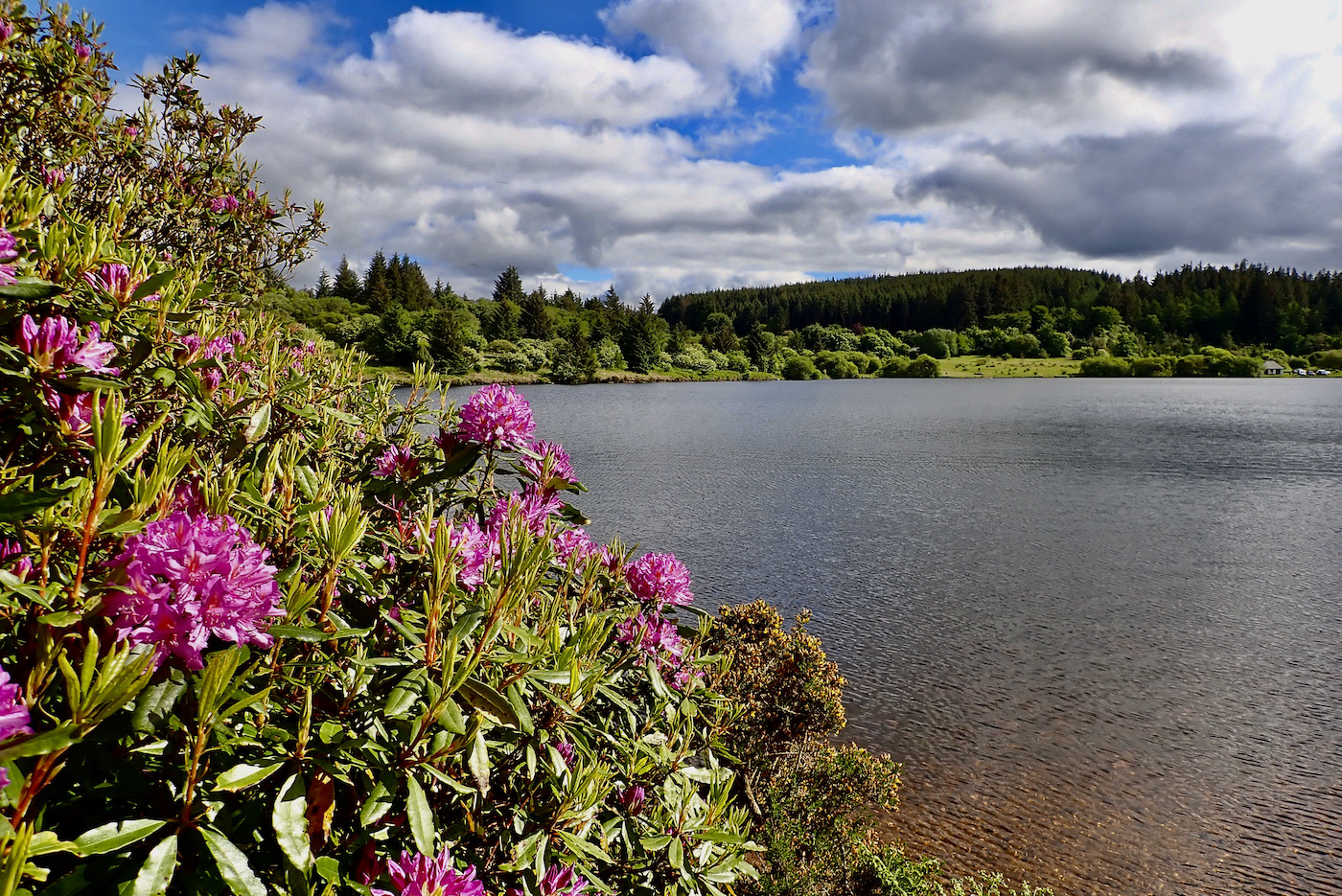
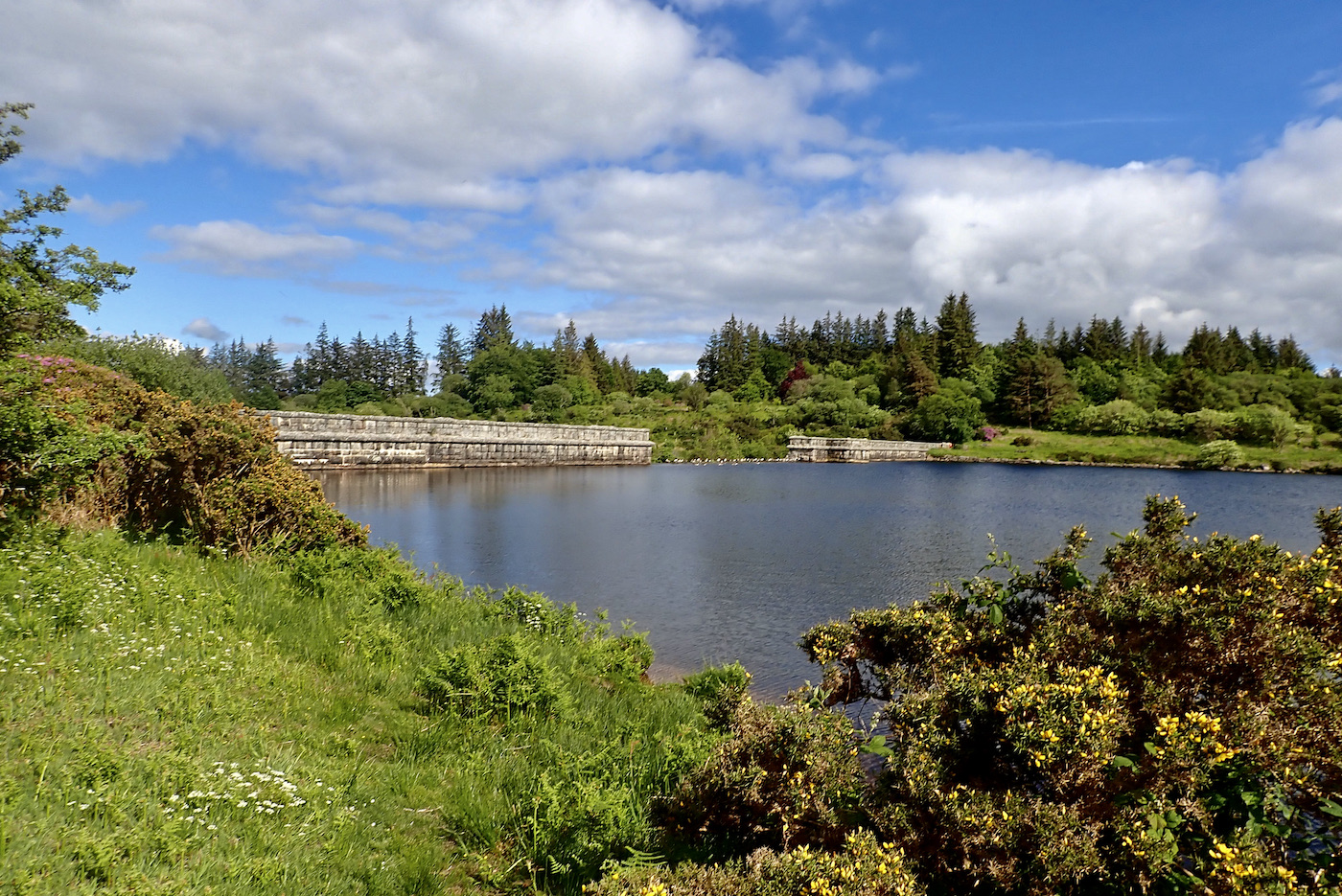
I also enjoyed some success whilst fishing at Fernworthy Reservoir at the head of the South Teign.
I have long held the belief that each river has a distinct and unique character undoubtedly influenced by its history and geological location. This belief was fully endorsed as I devoured the contents of this comprehensive account of the Teign. The stories and accounts of angling trips entwined with folklore and superstition add an entertaining and intriguing dimension to the book.
The fact that a rivers life spans millions of years is told within the pages and it becomes increasingly apparent how mankind’s hand has impacted in recent history. The key purpose of the Teign Restoration project is to raise awareness and engagement with the public in regard to the catastrophic decline of salmon and sea trout.
The sad story of salmon decline in the book is one that is replicated across the West Country and the Teign’s anglers have certainly shown determination to do all that they can to try and reverse this decline. The gathering of vital data over several years via walkover surveys, redd surveys, electro fishing surveys, river fly surveys, tagging projects, piscivorous bird surveys, in river works and temperature logging has provided an in depth knowledge of the rivers vital habitats and interconnected eco system. This data is used to channel effort into habitat improvement ensuring that work is invested wisely.
In addition to all of this work a salmon play, Our River Poetry competition and an exhibition at Castle Drogo have helped to engage with an audience far beyond the angling community.
The book is a celebration of hope for the future and how anglers and conservation bodies can work together. The Teign is a beautiful river its journey from source to sea through a vibrant landscape deserves to be told and this book gives a fascinating insight into a river as a living part of the land in which we live. After reading the book I am inspired to explore the rivers valley and maybe even search for those stunning fish that haunt its mysterious shaded pools.
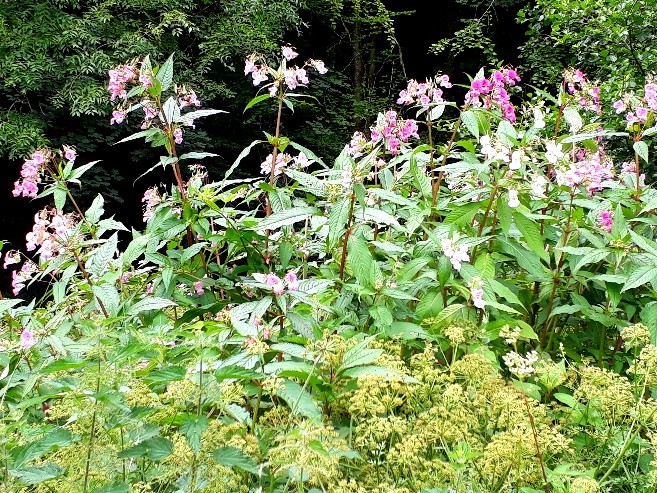
Himalayan balsam (HB) is a widespread and damaging invasive non-native species (INNS) which grows rapidly each summer in dense monoculture stands, especially along riverbanks, and shades out deeper-rooted native species before dying back in winter. Bare soil is left without perennial root structures to stop soil from being eroded and dumped into rivers as silt (one recent study suggests a rate of 10 tonnes per km per year). This smothers gravels, invertebrates and fish eggs, and threatens salmon and trout populations in particular.
HB infestations also cut off access for angling and other activities and worsen damage from other INNS (e.g. making riverbanks more vulnerable to collapse from signal crayfish tunnelling).
Look out for for further posts on DAA 2025 initiatives relating to Himalayan Balsam.
Do you live in North Devon? Are you interested in the health of your local rivers?
We are looking for new volunteers to join Westcountry CSI and become citizen scientists!
What is Westcountry CSI?
Westcountry CSI (Citizen Science Investigations) is a scheme established by Westcountry Rivers Trust (WRT) that involves monitoring the health of our streams and rivers, through spot sampling. We are organising a training event (delivered by WRT) to sign volunteers up.
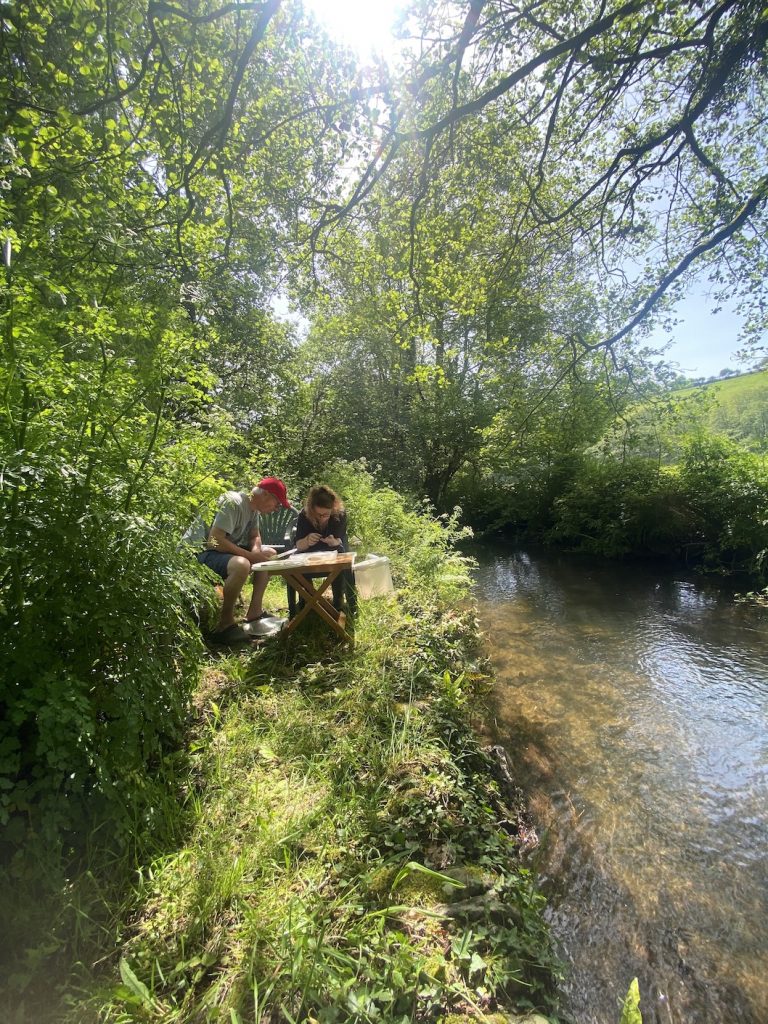
The surveys are fairly quick and can take up to 15-20 minutes to complete. Once you sign up to the scheme online, you will receive free kit including phosphate test strips, a turbidity tube and a dissolved oxygen probe. As part of the project, volunteers are asked to take monthly samples at their chosen monitoring site and upload the results onto cartographer – a database managed by WRT.
The event details are included below:
Westcountry CSI Training Event
at Hatherleigh Community Centre
on Thursday 20th March
from 10.30-12.30pm
If you would like to book a place at the event, please email [email protected] confirming the area you live and where you’d be interested to survey, if you have a preference.
The training event is funded through Devon Wildlife Trust’s Northern Devon Natural Solutions project and therefore, we are only looking for volunteers who can sample streams and rivers in the northern parts of Devon, although this can include anywhere in the Taw and Torridge catchments. For more information about the wider project, you can view the website here: Northern Devon Natural Solutions | Devon Wildlife Trust