Last year I reported on a local angling clubs efforts to clean up their local sea angling venue following threats to close it off following unacceptable litter left by careless and uncaring anglers.
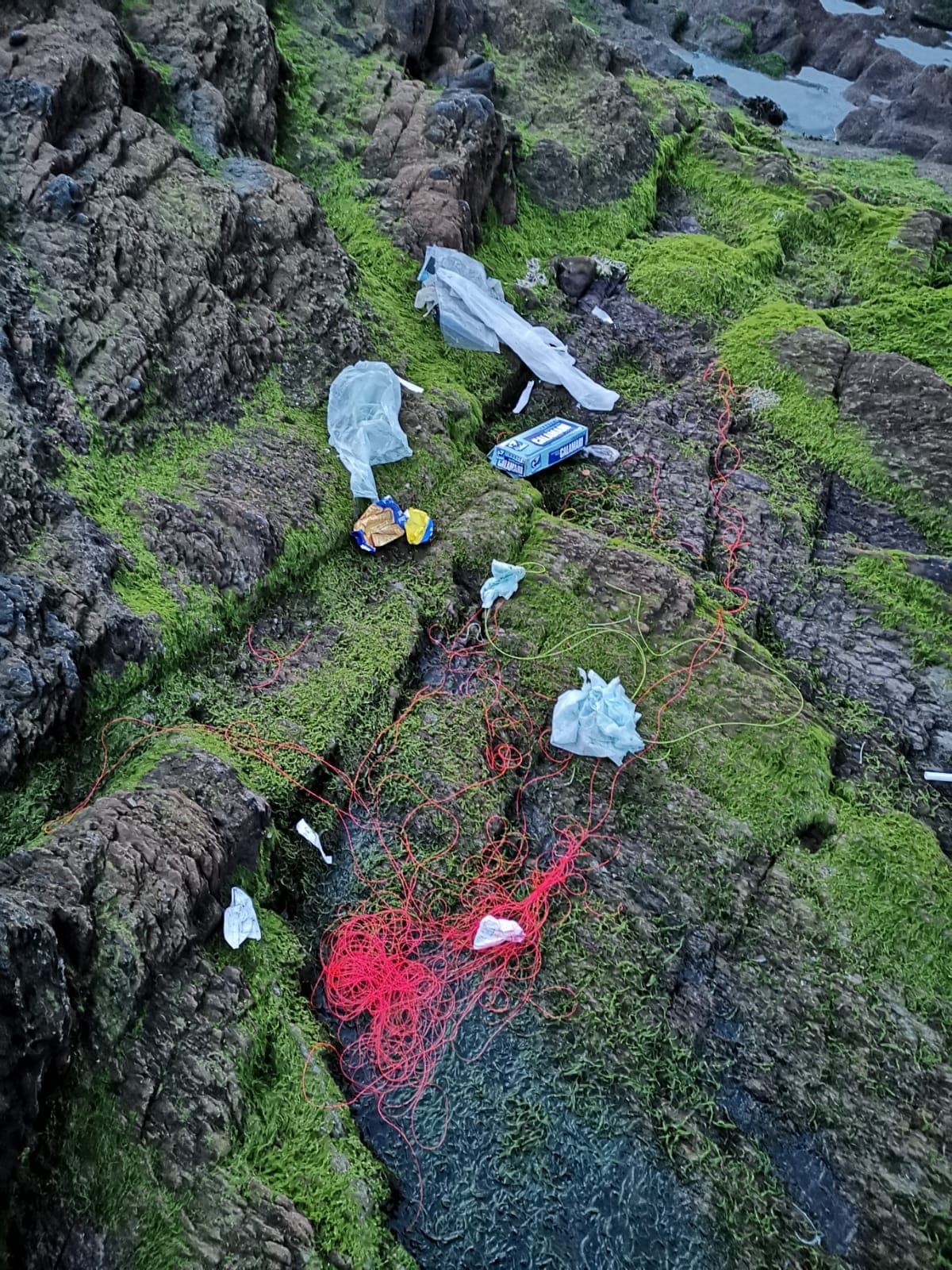
Sadly a year later I still get reports of issues relating to angling litter and whilst anglers are not exclusive in leaving litter they should be appreciative of the environment that is surely an integral part of what angling is about? I recently received this sad image of a popular North Devon Rock Mark the angler who sent this is to be commended for picking up the rubbish and removing it from the venue. We must all make every effort reduce litter and leave nothing at the waters edge accept memories.
Line is one of the major angling related litter issues and a new scheme is being launched to encourage responsible disposal. I will be speaking with local tackle shops and perhaps clubs to see if we can get access to the scheme here in North Devon.
Anglers National Line Recycling Scheme see link below :-
I will publish the occasional old Journal column from ten years or so back as its often interesting to look back and see whats changing.
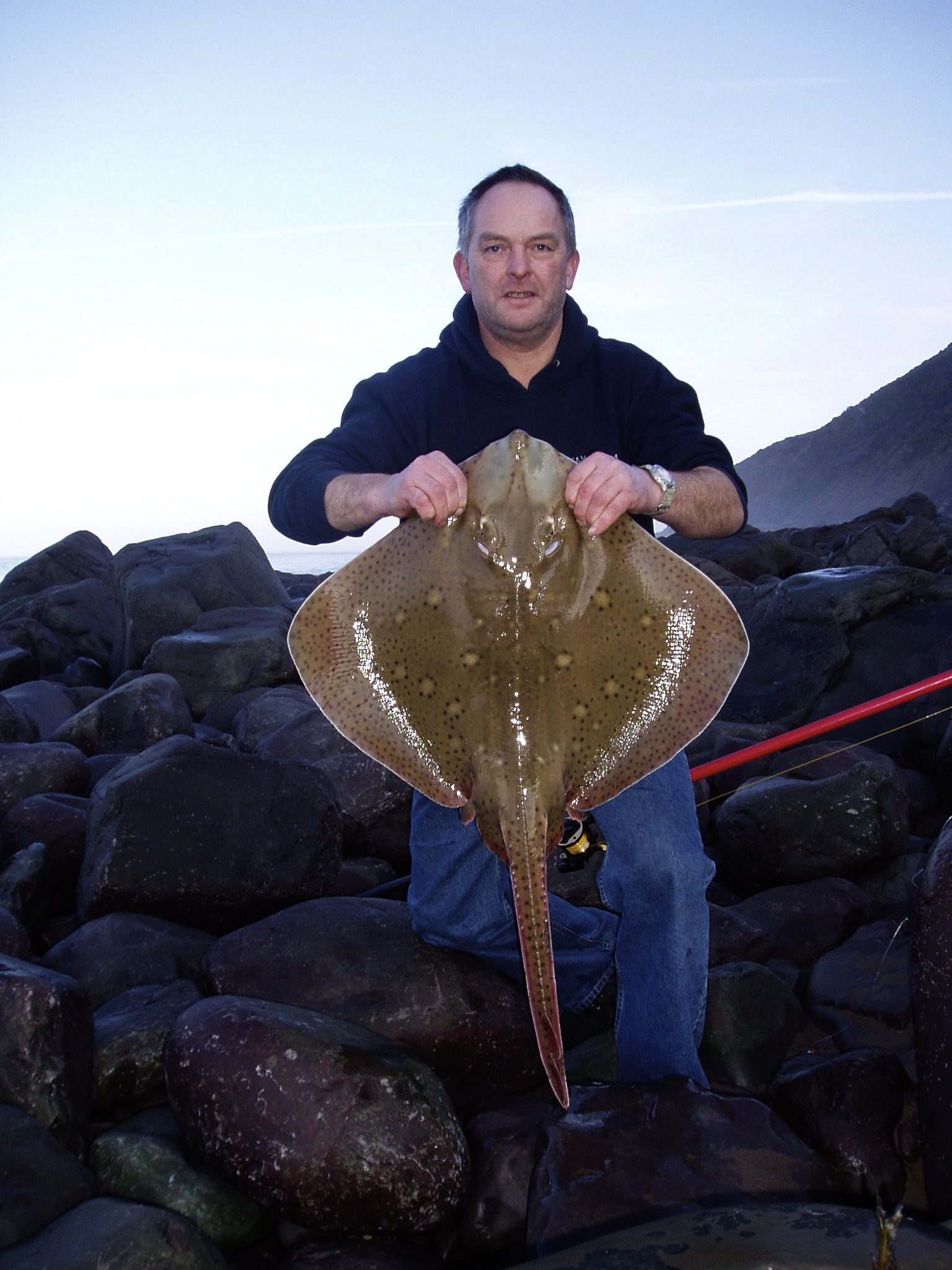
(Above) Blonde ray caught by John Avery in February 2008
ANGLING REPORT January 27th 2008
Spring on its way
The recent mild weather is bringing many signs of spring. Frogs have already deposited plenty of spawn in many ponds and bird song is already ringing out. Spring bulbs such as snowdrops and primroses are already out with daffodils well advanced. In lakes and ponds fish will also be stirring and starting to feed more frequently. Whilst many anglers will be targeting carp it could be worth trying a float-fished lobworm in the margins for perch. Attract them with a steady trickle of maggots and chopped worm. The perch is surely our most handsome fish and some huge specimens reside in our local Stillwater’s. Perhaps there lurks a fish to beat the new British record scaling 6lb 2oz that was recently landed from the River Thames.
Bideford Angling Clubs January Coarse match at Riverton saw Nielson Jeffery secure victory with a net of mostly carp totalling 19lb 9oz. Steve Baileys net of 12lb 9oz took the runner spot. John Lisle’s net of silver fish weighing 11lb 2oz taking third.
Stafford Moor continues to provide excellent sport with some impressive weights coming from Tanners and Woodpecker. Nathan Underwood took top spot in a recent Sunday open match with 127lb of carp. The carp took 8mm pellet fished beneath a waggler float. If conditions remain mild then some of the specimen lakes larger residents should be banked. Fishery owner Andy Seary has invited any angler who lands the thirty pound carp stocked recently the opportunity to name the fish. The angler will also receive a weekend’s free fishing.
On the open coast anglers continue to hope for a cod or two. I fished two sessions last week in what I would have termed ideal conditions for cod. A few dogfish and Pollock were all that succumbed to my offerings. Cod are now very scarce in comparison to ten or twenty years ago when devotees landed double figure fish on a regular basis. I have heard of a 16lb fish but have no confirmation. A few anglers have also reported losing fish into double figures. Lets hope I can report on a big cod before the winter is out. Marks within the estuary are giving a few codling to 5lb along with several bass to 6lb. Fresh crab is the most successful bait.
Whilst there are no cod there are plenty of other species to fill the void. In Combe Martin Sea Angling Clubs roving match last week it was Kevin Legge who continued his recent run of form landing a specimen conger of 26lb 4oz. Paul Widlake took the runner up spot with a bull huss of 9lb 8¼oz and Andy Joslin third with a conger of 15lb 9oz. Members reported taking plenty of dogfish, whiting and pollock from various marks along the coast.
Combe Martin SAC member Guy Sprigg’s landed a fine blonde ray of 15lb 4oz from a local rock mark.
Bideford angling clubs latest mid week rover saw Stuart Bailey take a 1lb 15oz dogfish for top spot. A nice whiting of 14⅞oz for Nick Jobe took second with Jazza John securing third with a doggie of 1lb 13⅝oz.
Tony Gussin secured victory in Rod N Reeler’s monthly Rover landing a specimen small-eyed ray of 11lb 15½oz. In runner up spot Julian Stainer with a dogfish of 2lb 10½oz and in third Tony Werner with a doggie of 2lb 9oz.
The recent conditions are ideal for targeting trout on small Stillwater’s. I seldom find it necessary to use a sinking line relying on a nymph pattern fished on a long leader in combination with a floating line. A slow retrieve generally proves effective with an occasional twitch often triggering a take. Bratton Water is an ideal choice offering clear water and hard fighting rainbows. Owner Mike Williams tells me that visitors to the water have been enjoying some good sport recently with fish taking dry flies on a regular basis. Best fish in recent weeks was a rainbow of 7lb 8oz to the rod of T.Evans. Several five fish bags to 17lb have been taken.
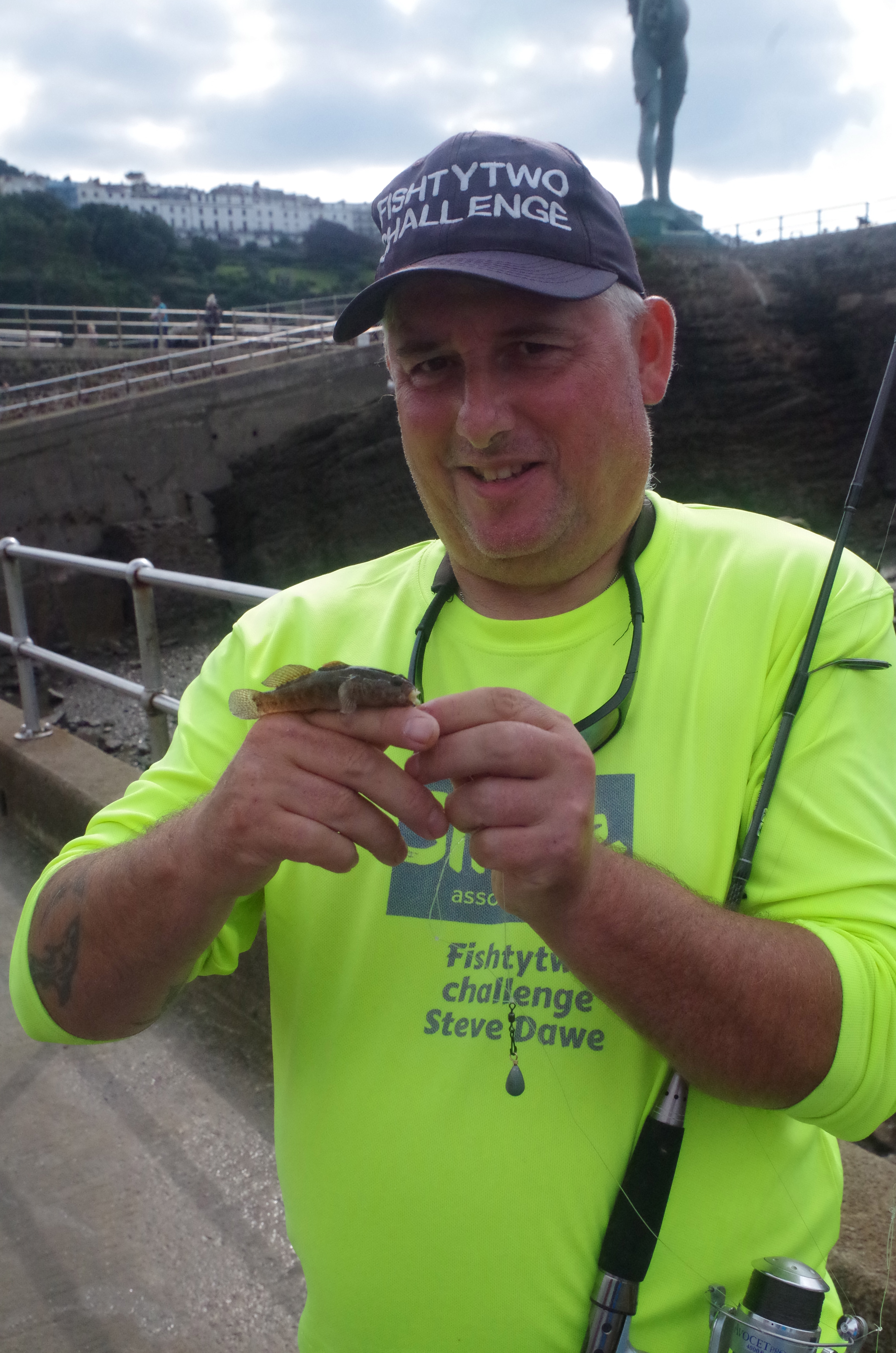
Congratulations to Steve Dawe on an amazing year of fishing and fund raising for the stroke association. I have already ordered my copy of Steves book recording his amazing year of species hunting and will review it within these pages. Many thanks to Steve for writing the below report for North Devon angling News.
The challenge to catch 52 UK species in 52 weeks ended on December the 31stwith a final push to track down a 3 Bearded Rockling from a mark in Ilfracombe. Despite great advice on location and tactics from two very good North Devon anglers the species remained elusive although Pollack, Pouting and Congers provided a distraction. My final total for the year long challenge ended on 77 species when I finally got one of my nemesis species the Spotted Ray while fishing aboard Mike Webbers Teddie Boy out of Minehead. The Spotted Ray alone had taken 9 sessions across the year before I finally got the target, it does sum up the challenge that targeting a certain fish species presents.
Fish just don’t read a script and despite anglers I know catching the Spotted Ray with impunity if you don’t have a slice of luck to add to the time spent on the bank then that magic fish can prove difficult. Over the year the North Devon Coast and Bristol Channel have been good to me on the species front with, Conger, Spurdog, Bullhuss, Dab, Hounds, Cod and Flounder all ticked off the list from the North coast.
This was largely down to great skippers and unconditional advice from several of the North Coast’s best anglers, you guys know who you are, and I and the Stroke Association are extremely grateful. During the challenge I notched up over 7000 miles, 115 sessions, 52 sea species, 25 coarse and game. Out of that total 44, were personal bests, a statistic I am sure I will never match or exceed again.
I must also thank Wayne who does a sterling job of reporting and promoting fishing events and achievements through his pages. Wayne invited me to attend the Combe Martin Sea Angling Clubs annual fun day at Ilfracombe this summer, and it was a great few hours spent with future anglers catching mini species. This event alone raised £25 for the charity in coin donations placed in the charity box, typical of the generosity shown by anglers and their families this year. Many people I met this year know someone or have had a family member effected by a Stroke, this life changing condition can affect everyone young and old.
Last Saturday I was joined by my good friend and inspiration for this challenge Andy Adams, Andy was a dedicated angler who was hit out of the blue with a massive stroke. The stroke has left Andy wheel chair bound and in need of a full-time carer, what it didn’t take however was his fighting spirit. Together we presented a cheque for £1340.00 to Hayley Ali of the Stroke Association while at a lunch down in the port of Looe.
I was asked by several of the readers of my blog to consider writing a book of the year long challenge, I have managed to complete this to coincide with the cheque presentation. The book titled Fishty Two Weeks in a Yearis available from Amazon as a Kindle version and Paperback.
All profits from the sale of this book will also go to the Stroke Association, so anyone buying are helping this great cause. Although I may have been the figurehead of this challenge it was only possible due to the copious amounts of goodwill, professionalism and support of my fellow anglers and friends so I salute you all.
Its often good to cast a line from a different shore and this seemed extra relevant as 2019 gets underway bringing a renewed focus on club fishing events. There has been considerable interest among many sea anglers on fishing for squid using jigging tactics and myself and several members of Combe Martin SAC were keen to have a go. After a few discussions over a beer at the end of a 2018 club meeting a plan was put in place.
As is often the case when the day came several club members could not make it but five of us could and so on January 5th we set off on the journey to Torquay and Princess Pier. The location had been chosen after reading reports of squid being caught on a regular basis. The alternative venue was Weymouth which was a bit further but potentially more reliable. On this occasion being a our first squid foray we decided upon this closer to home venue as a training ground to gain experience.
We had also heard reports of a few mackerel being caught and this would be a welcome opportunity to stock up the bait freezer with both squid and mackerel. A visit to Ilfracombe’s High Street Tackle ensured that we had a few lures and Sabika feathers.
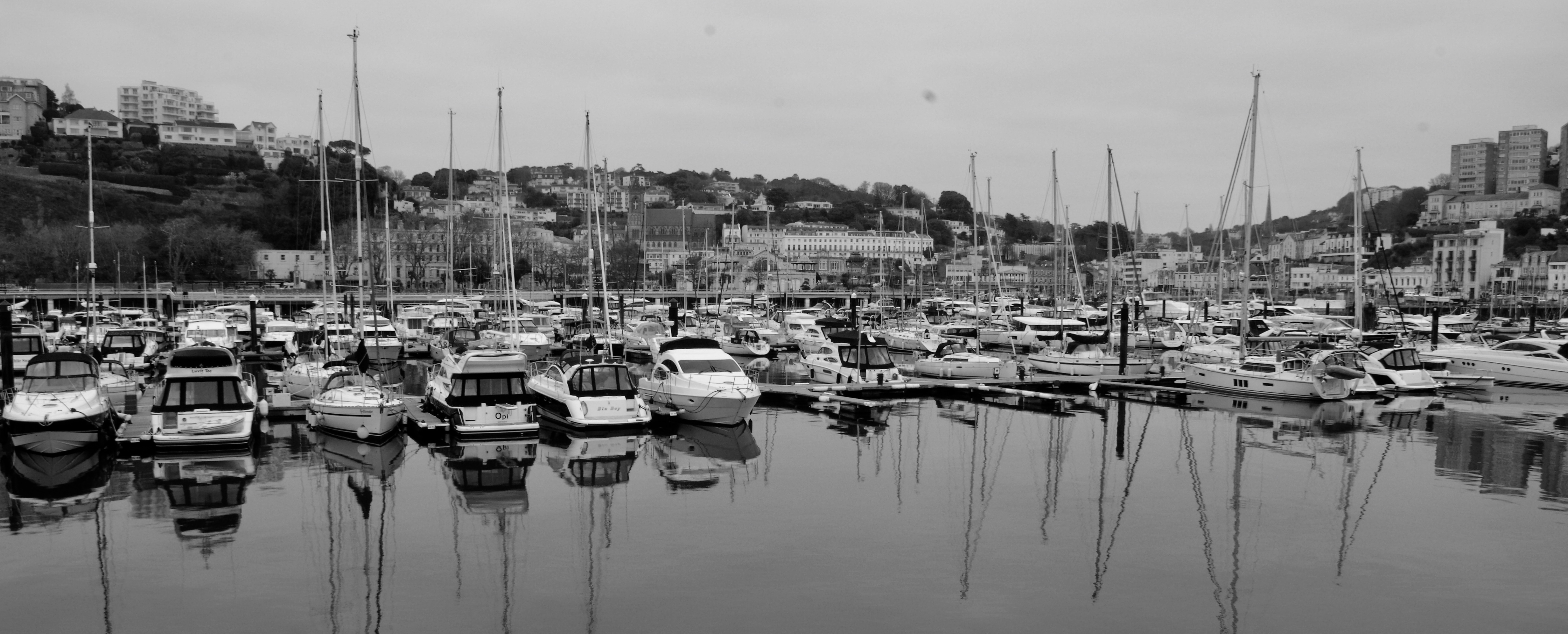
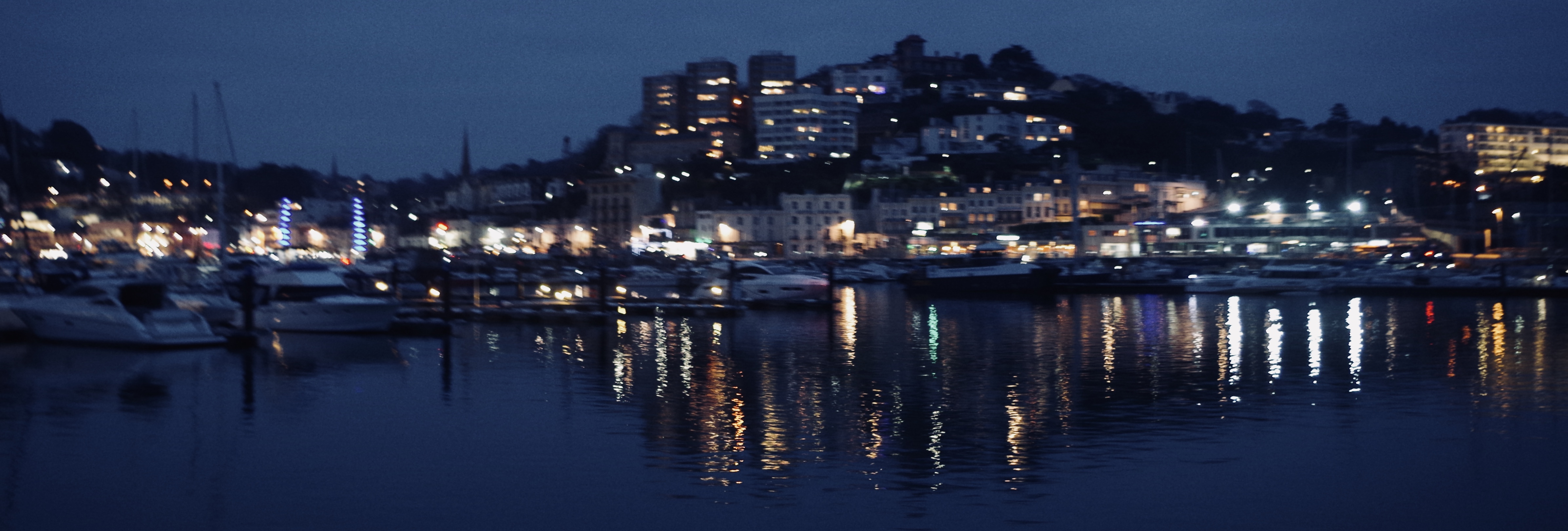
The trip down to Torquay proved uneventful and by 1.30pm the intrepid five were lined up on the front of Torquays Princess pier. The seaside town seemed quite vibrant and busy with plenty of tourists strolling along the prom on this cold calm winters day. Behind us in the inner harbour luxury boats rested on their moorings; a testament to the vast sums of money some people acquire. The seascape of the bay was a glassy calm across to Berry Head with the occasional fishing boat, pleasure boat and Jet ski disrupting the mirror like surface.
We had been advised that squid could be caught during daylight hours and as a result had arrived well before dark. This ensured we secured a good spot and gave more time to experiment. A clue to good spots to try for the squid were small stains of black where squid had been pulled ashore. we also chose a spot close to the lights that are known to attract baitfish and squid after darkness descends.
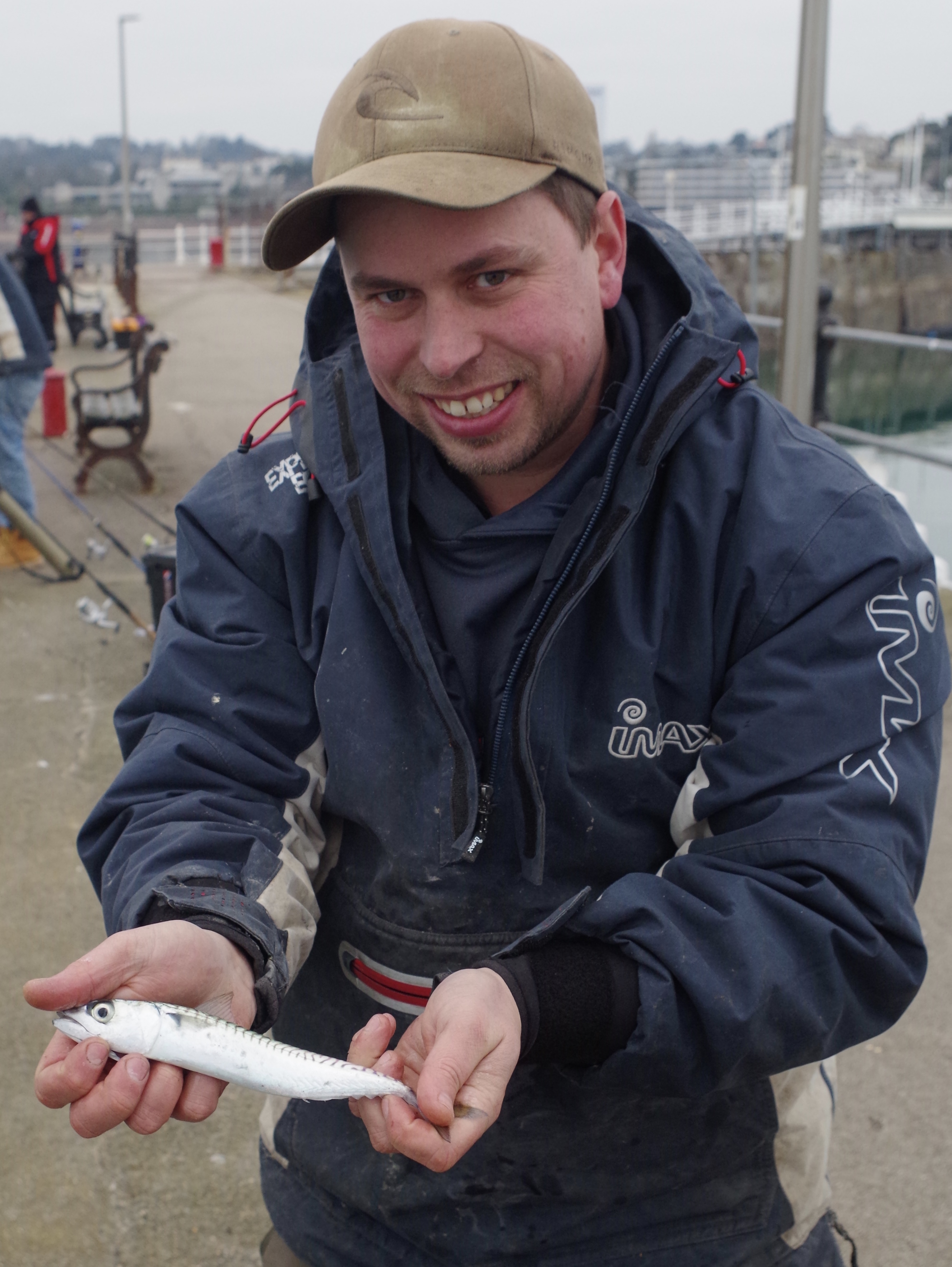
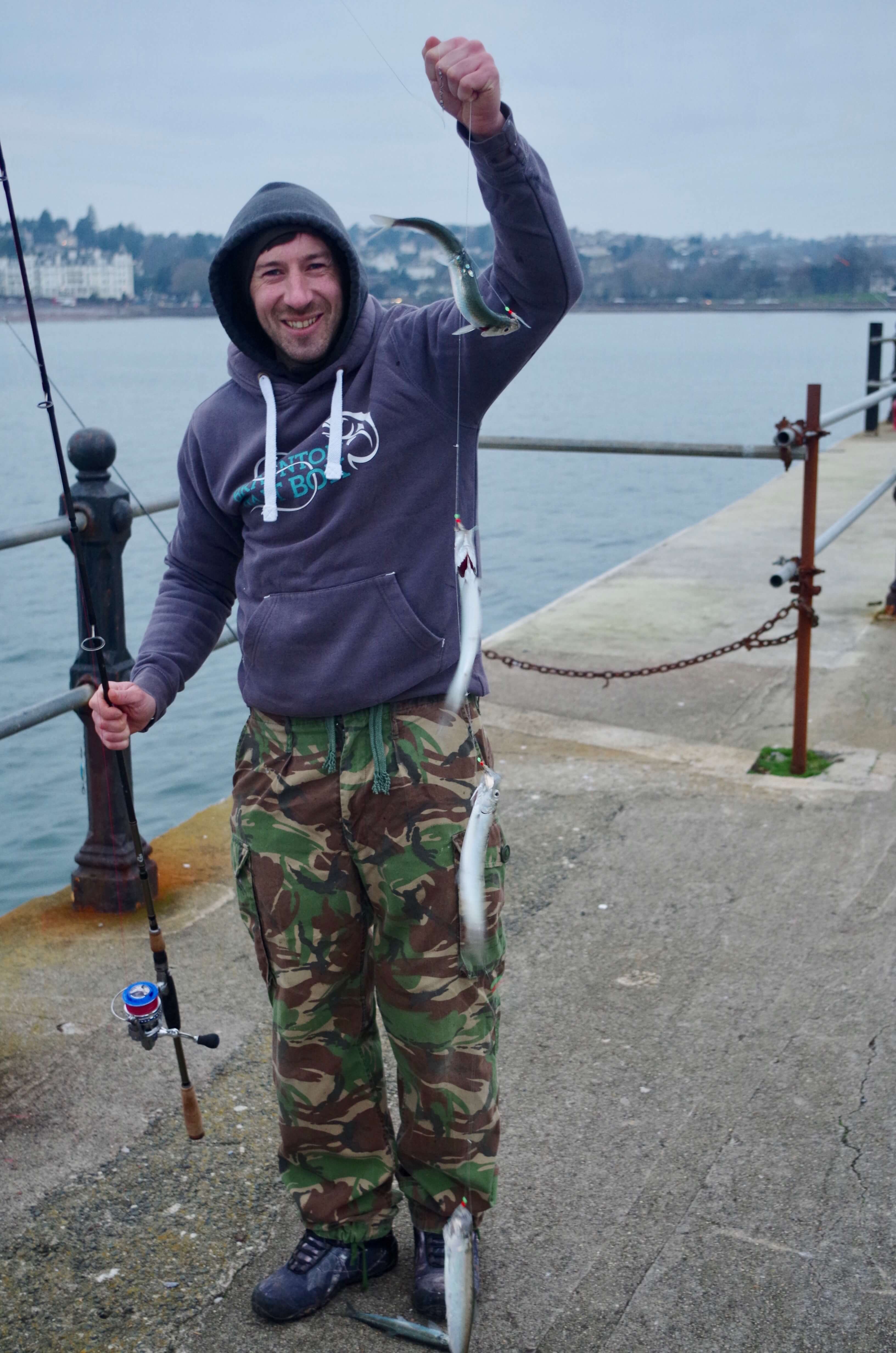
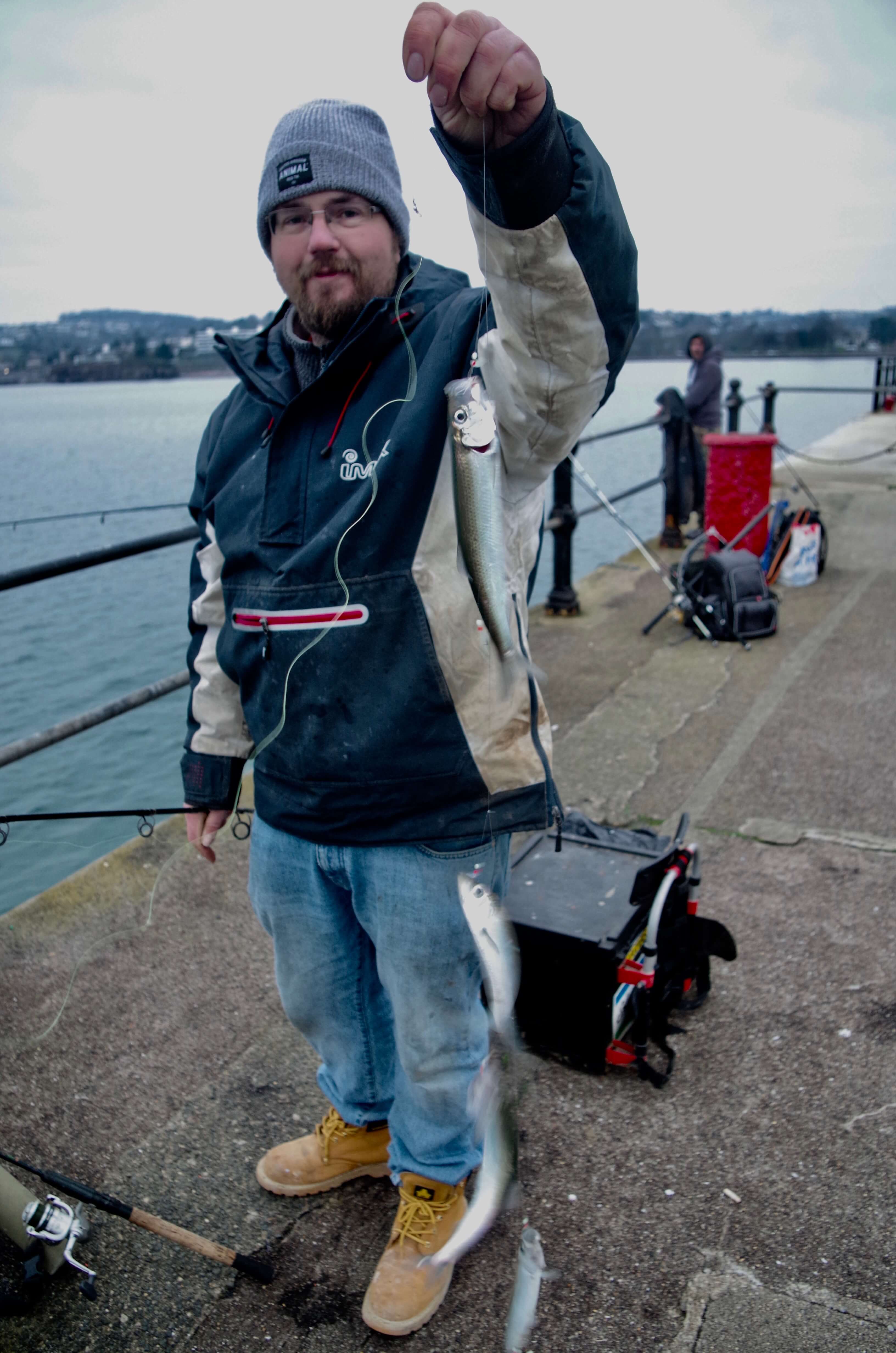
After a few casts with our squid jigs small fish could seen following and this prompted the switch to sets of small Sabika type feathers. Dan Welch was I think first to catch swinging a small mackerel ashore.
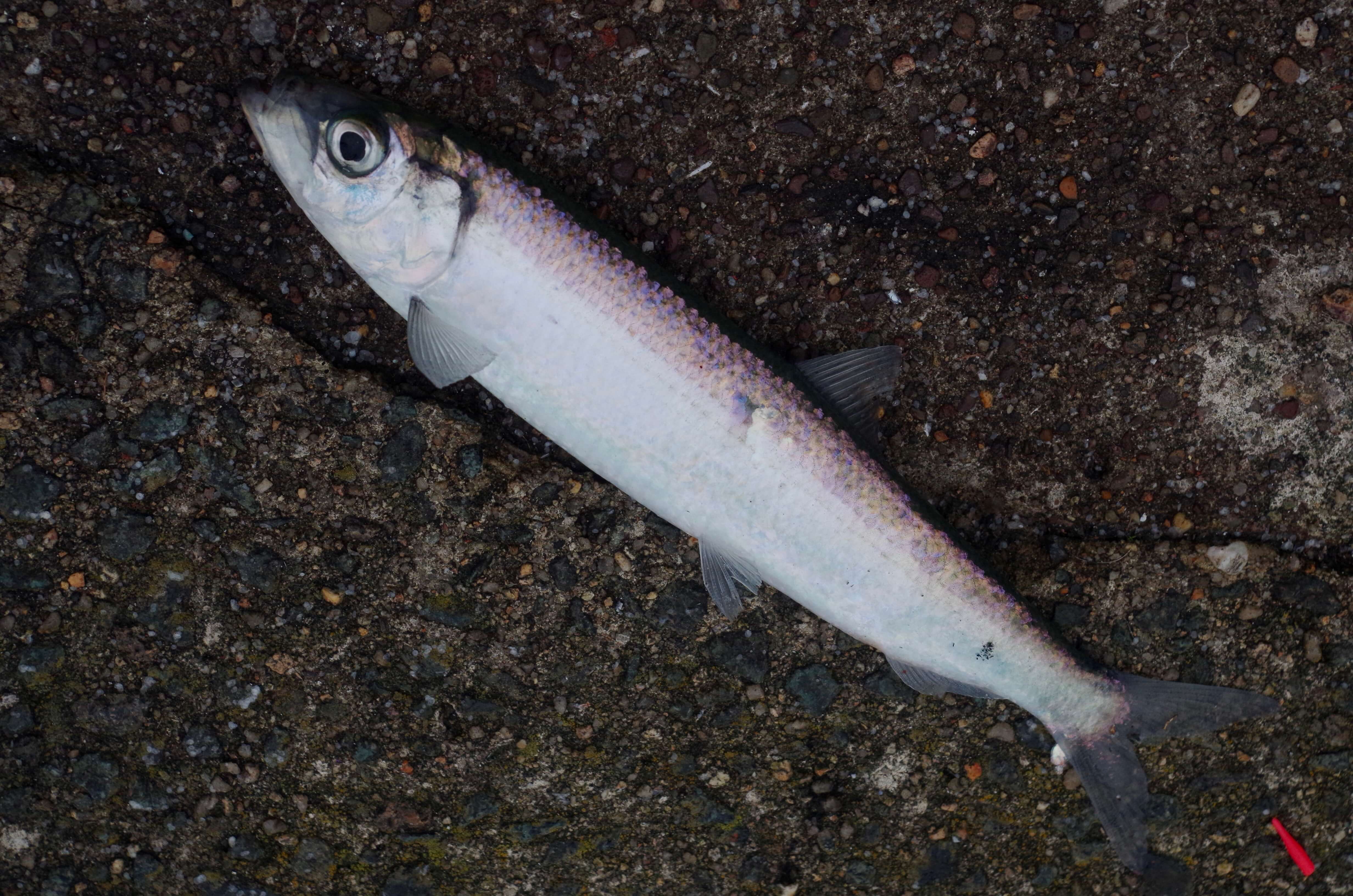
This was followed a short time later by a herring to Matt Jeffery a pleasing sight and Matt’s first of the species from the shore.
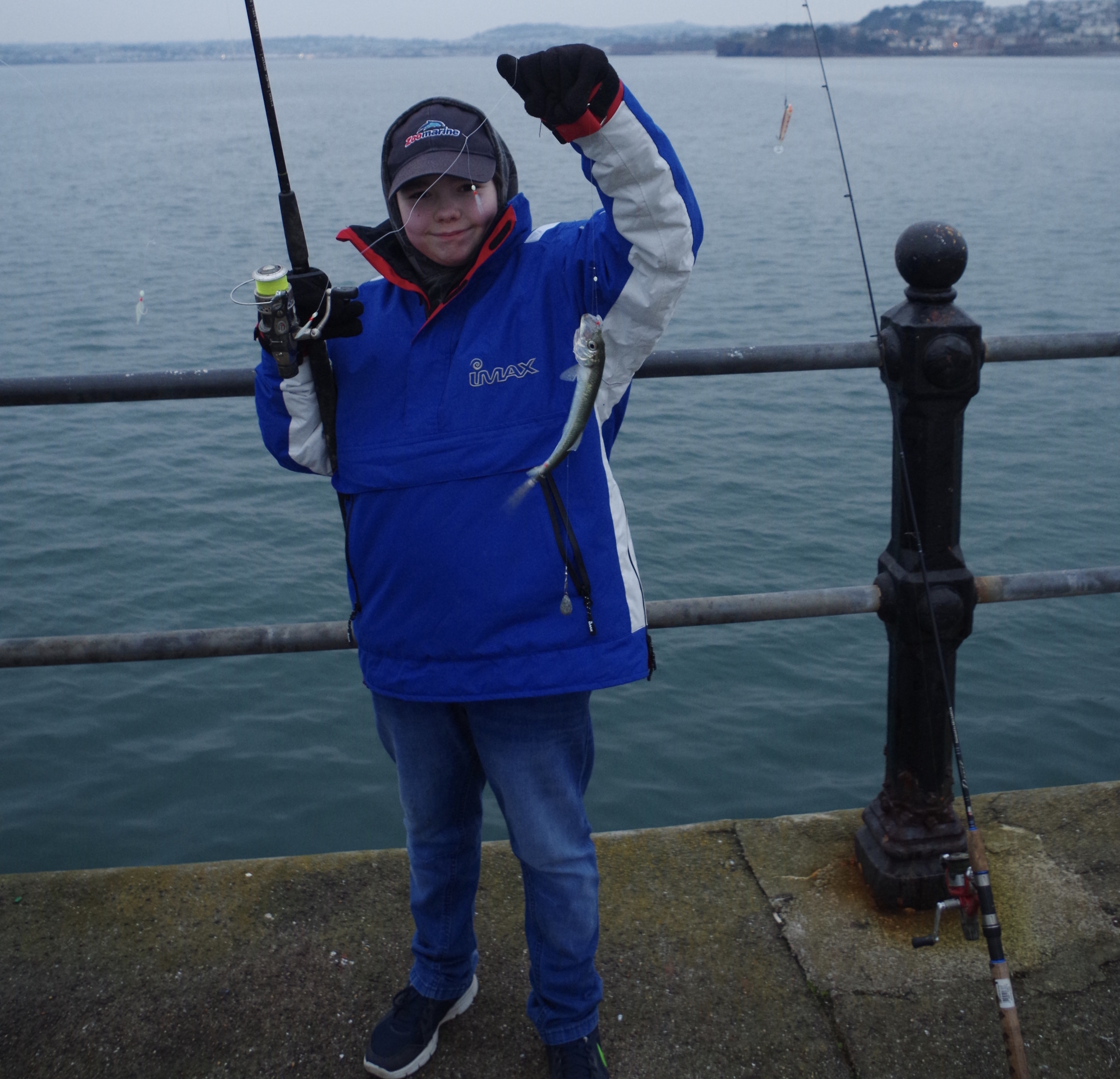
As the afternoon progressed we all started to enjoy success with herring with these shimmering silver fishes brought twisting and gyrating to hand to be stowed away as bait for predatory fish on the North Devon coast or to sit beneath a crimson topped float at some pike water inland.
(Above)Rob Scoines is delighted with a string of herring.Matt Jeffery joins in the fishy harvest.
(Above) Josh Jeffery enjoyed success with the herring shoals.
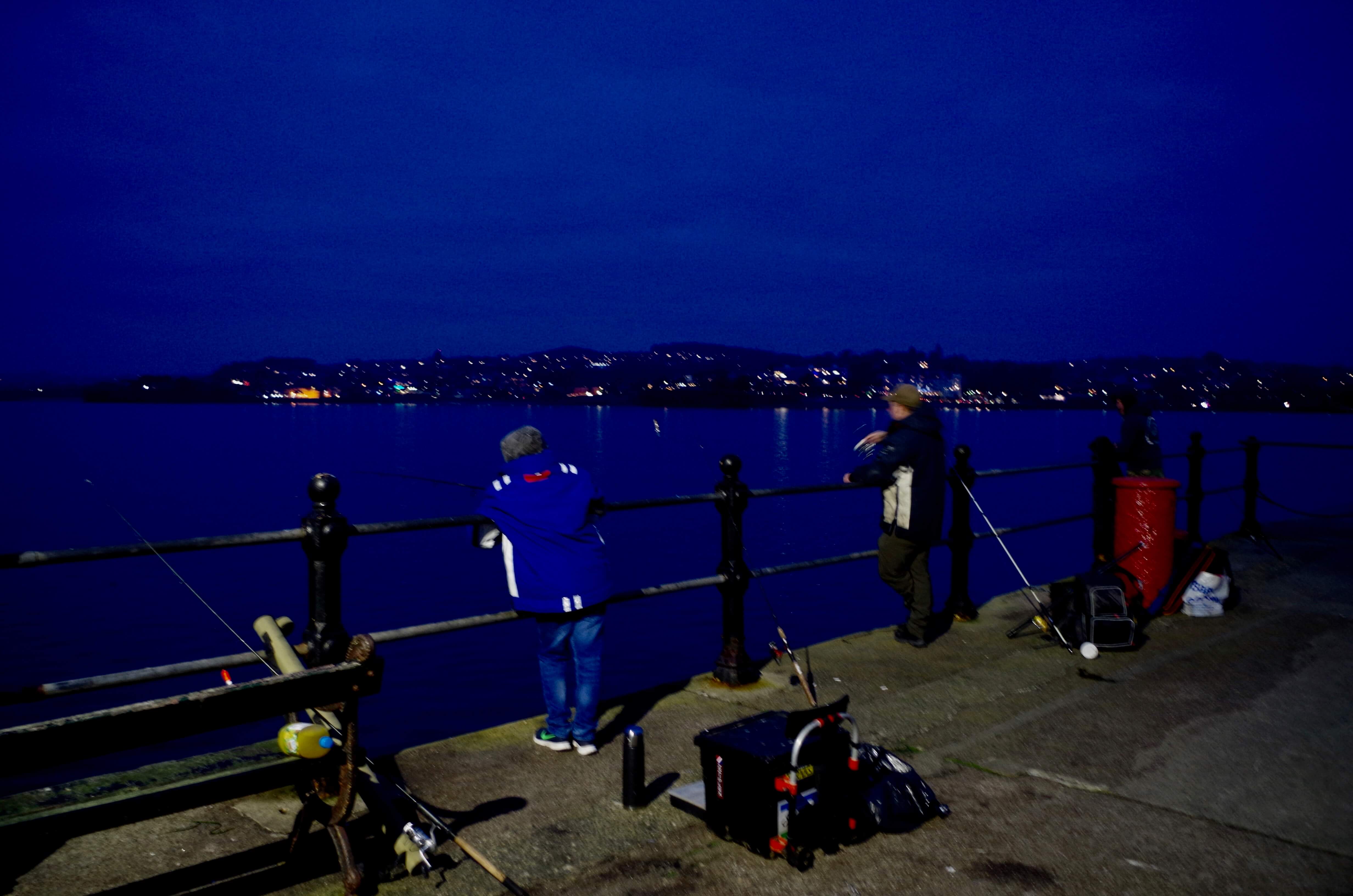
As the light fades the herring continue to smash into the strings of feathers and our bait bags are all well stacked with gleaming fishes. Its now time to focus fully on the main agenda squid!
The jigs are flicked and retrieved at various rates and varying between steady pulls and erratic twitches. As none of us have any prior experience we have to learn from scratch and it is this that is part of the fun. There is great excitement when we glimpse a squid chase young Josh’s lure until he runs out of water.
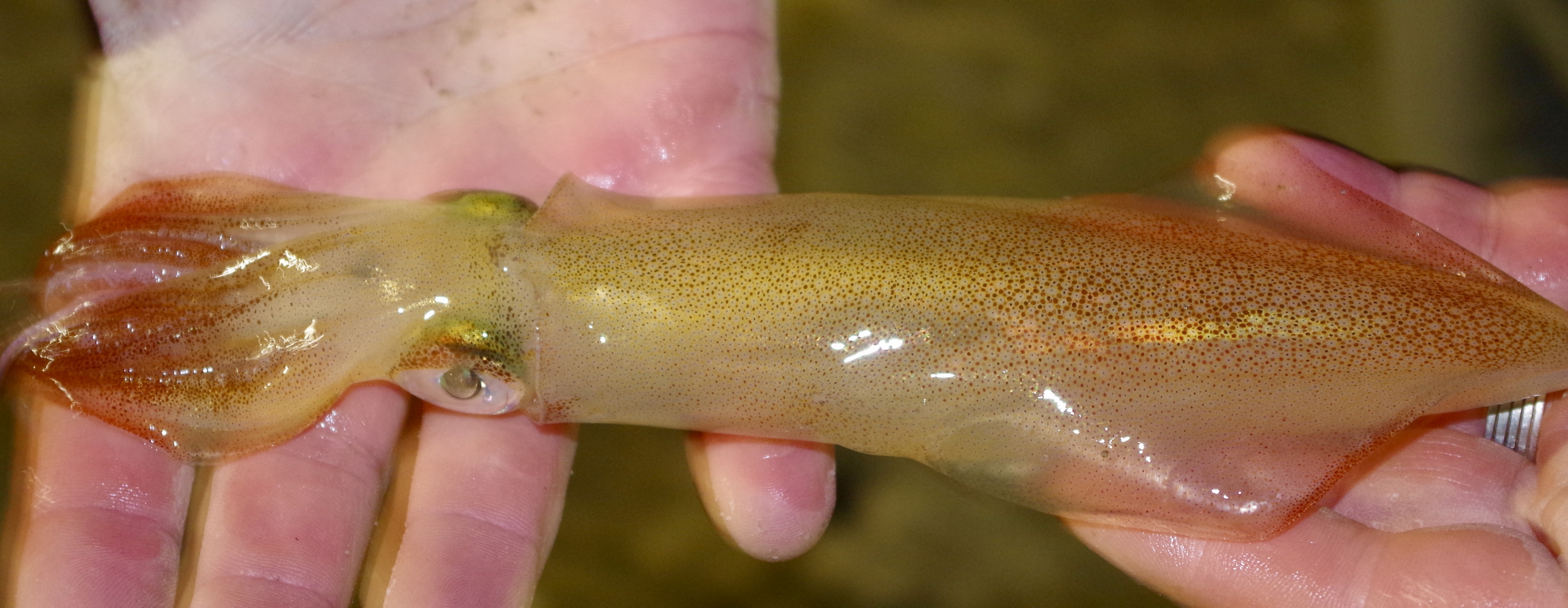
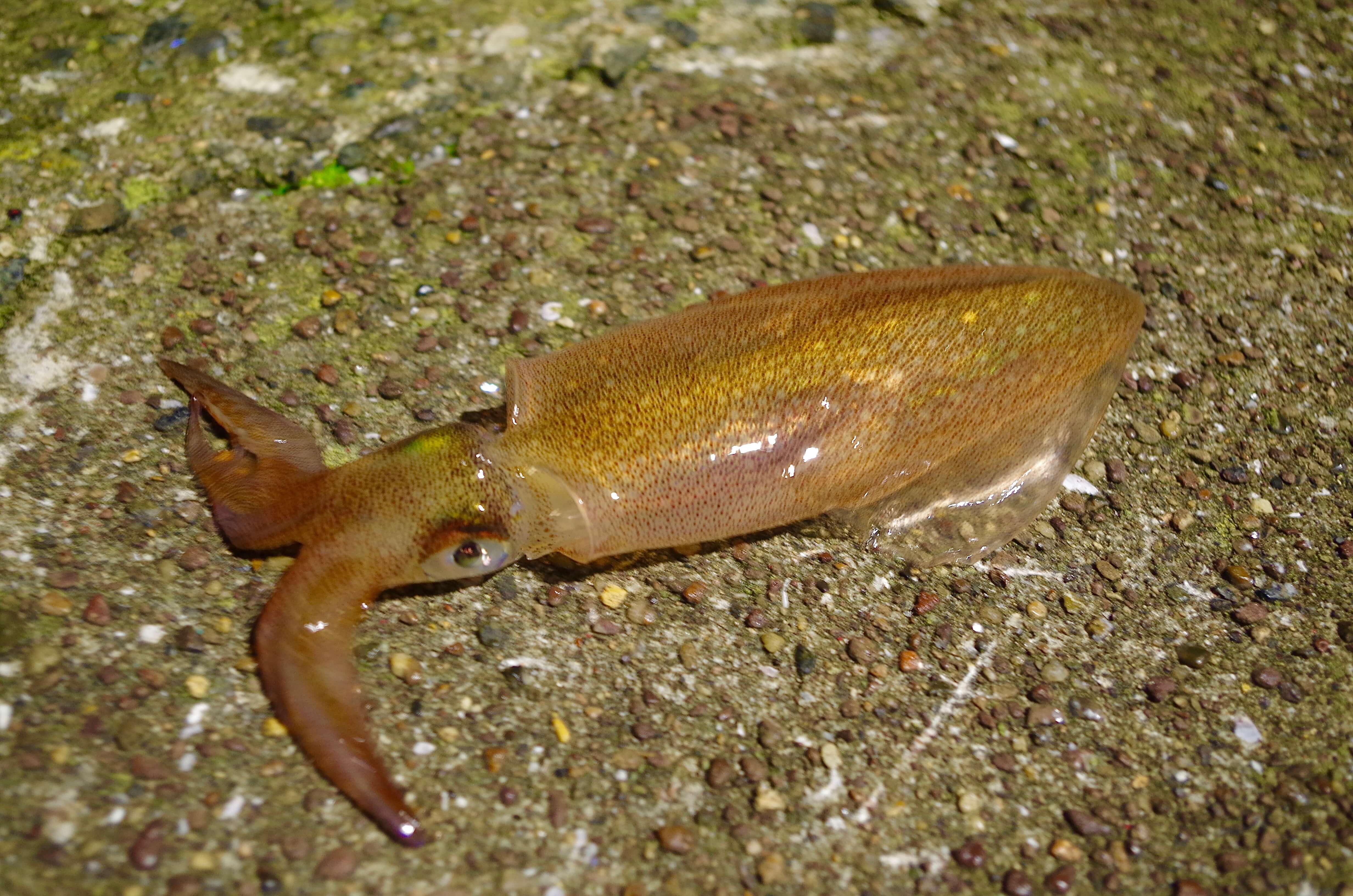
Encouraged we all focus on the squid mission with renewed belief and enthusiasm. It is Dan Welch who eventually brings success for team squid lifting a moderate sized squid to hand with its amazingly vibrant glowing colouration.
With mission squid partly accomplished parking tickets and fast food start to dominate the conversation and we decide to retire to KFC before heading back to North Devon with plenty of bait and some happy memories. An occasional trip to a seaside pier offers refreshingly easy fishing where friendly banter and fun takes priority. Catching mackerel in January seems a little unseasonal as the Christmas lights twinkle into memory. Mission squid was not exactly a great success but we did catch a squid. The pleasing bonus was string upon string of glittering herring.
Kevin Legge as a well earned reputation for catching specimen fish from the North Devon shoreline and having fished with Kev for close to forty years I know he is meticulous in his preparation and leaves nothing to chance. Kevin has been testing the latest terminal tackle from Veals Mail Order and sent me this short article.
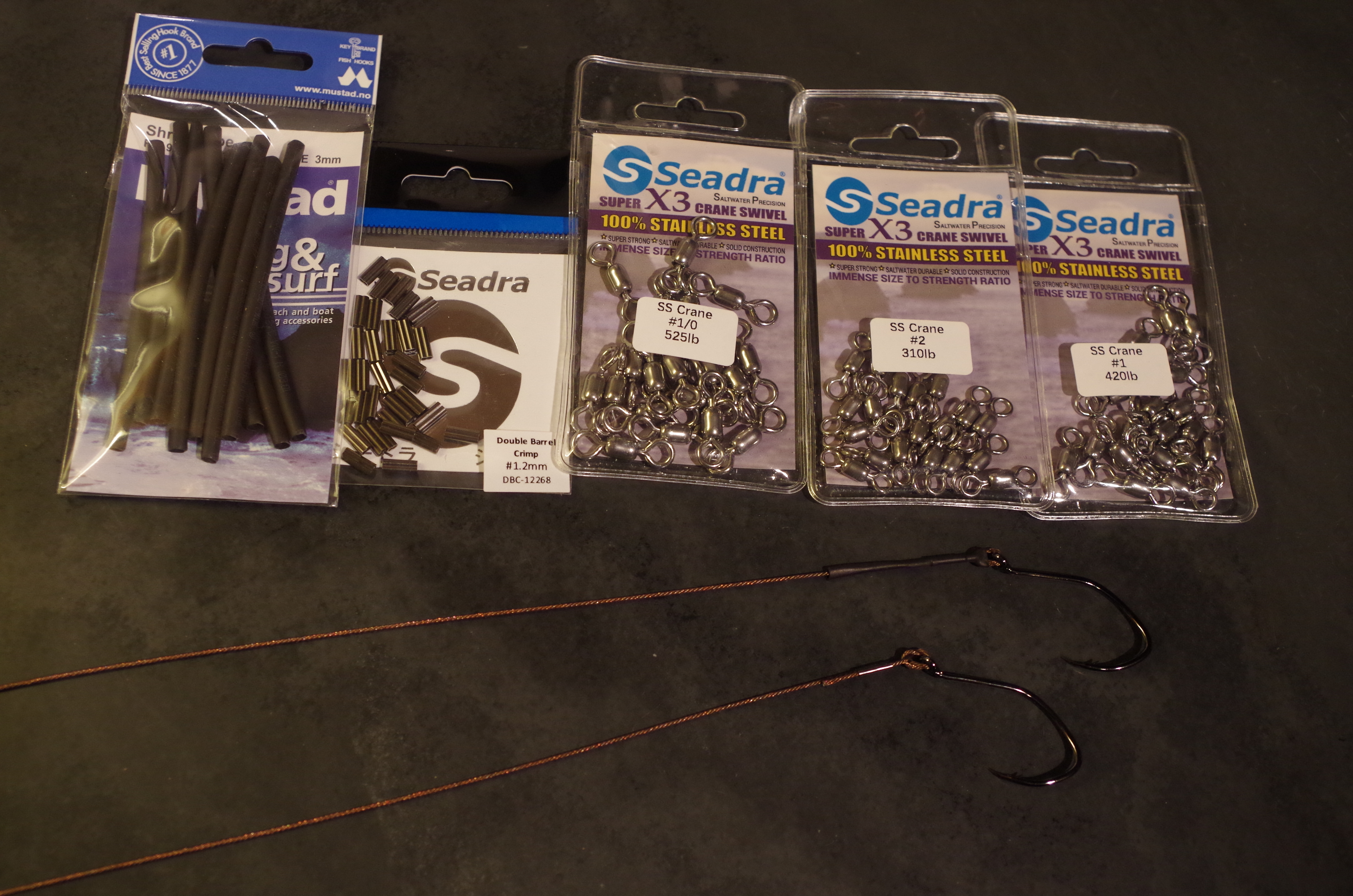
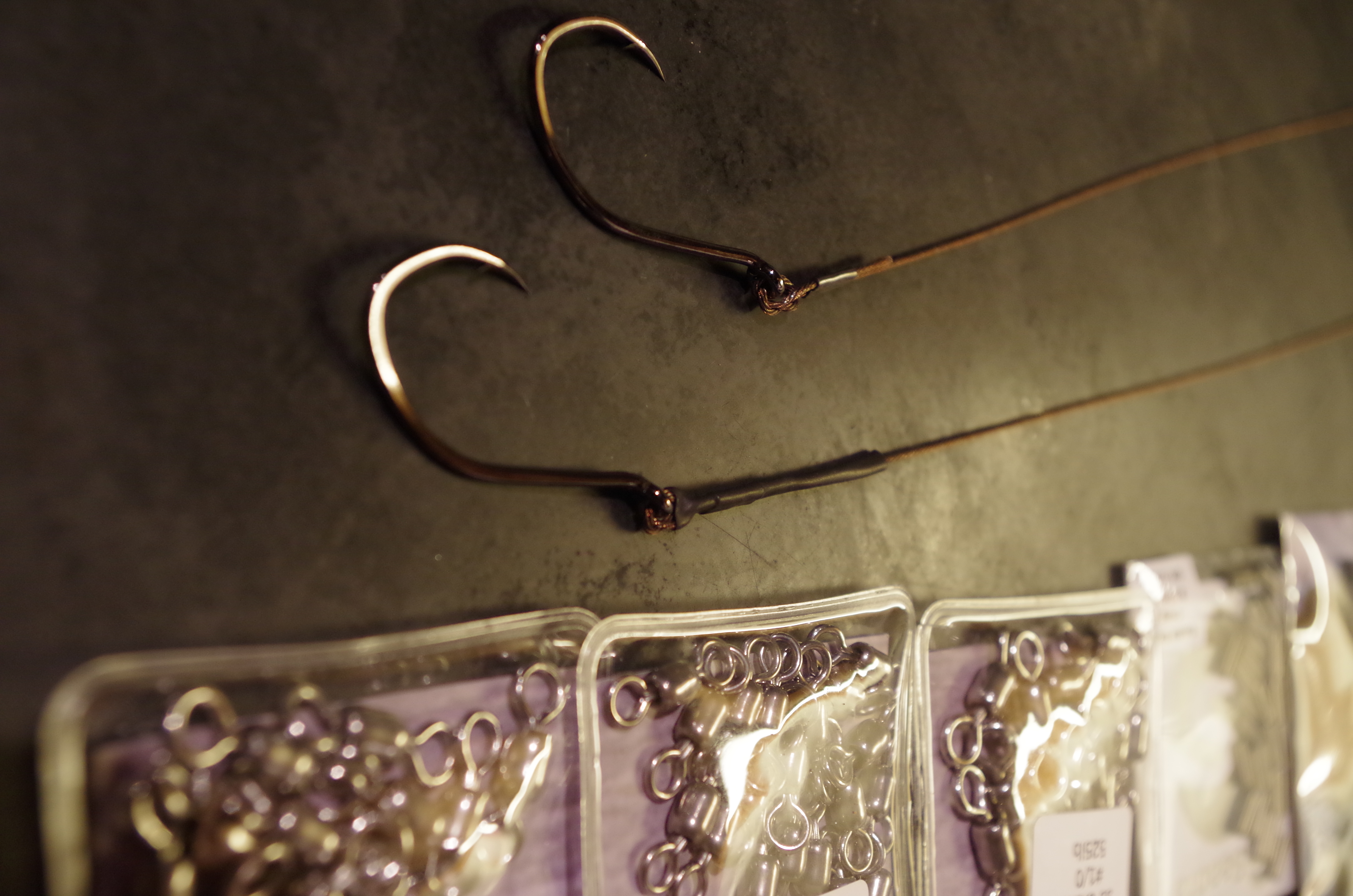
I have been asked recently about wire traces for toothy critters. I have been using the Mason Wire for a few years now in 175lb b.s this wire is both strong and extremely kink resistant a plus when the straps and dogfish are about in plague proportions.For hooks I use good old Varivas extras or the recent catfish hook. I have always been a fan of stainless steel swivels and the latest from Seadra are exceptionally robust with the 1/0 crane swivel rated at 525lb! To connect the trace to hook and swivel I have been using Seadra double barrel crimps 1.2mm. The crimped joints are protected using Mustard shrink tube (3mm) this creates a neat finish and protects the fingers from shards of wire that can give a nasty cut.
At snaggy marks Kevin often uses a single hook instead of the more commonly used Pennel rig.
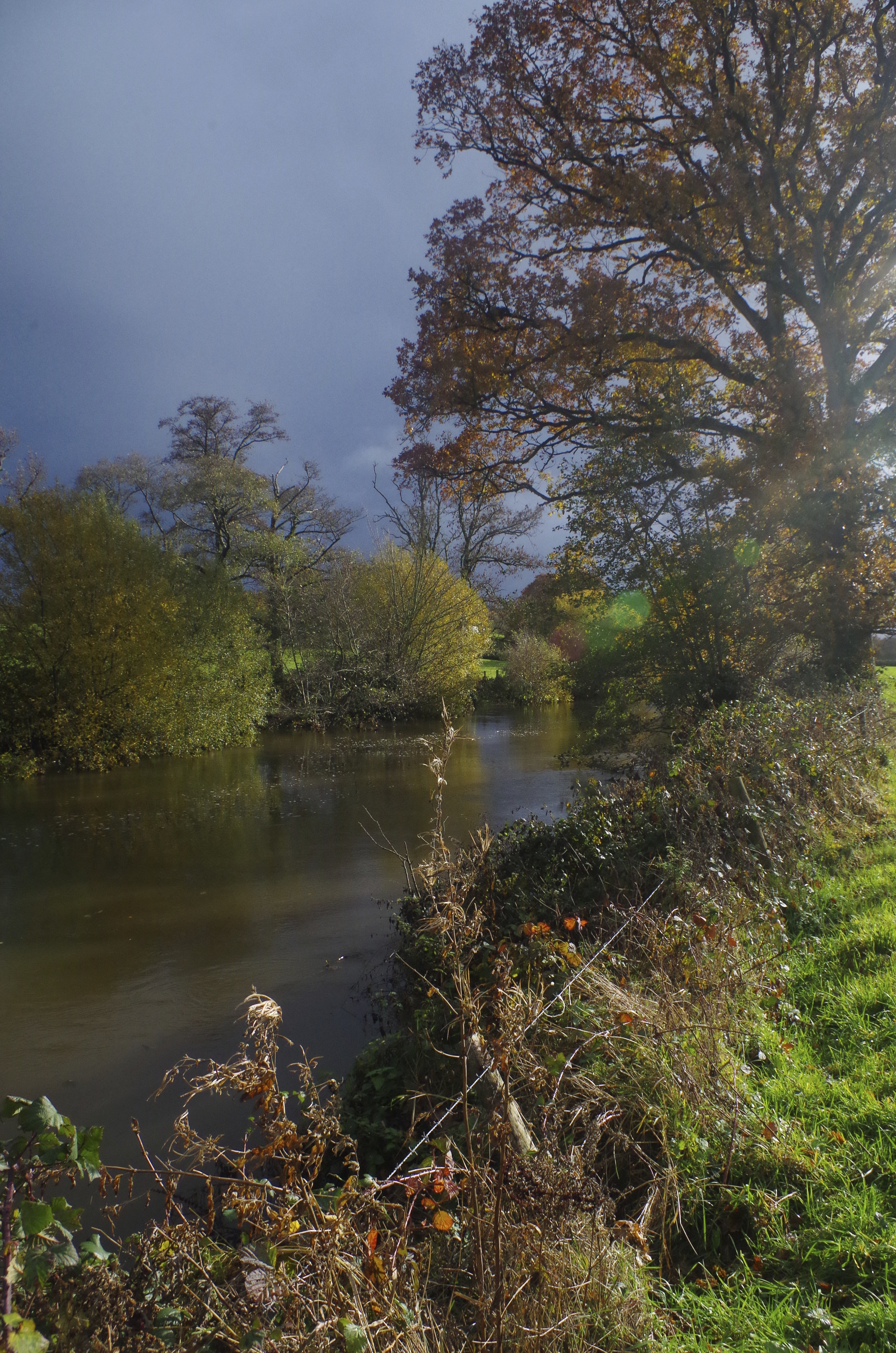
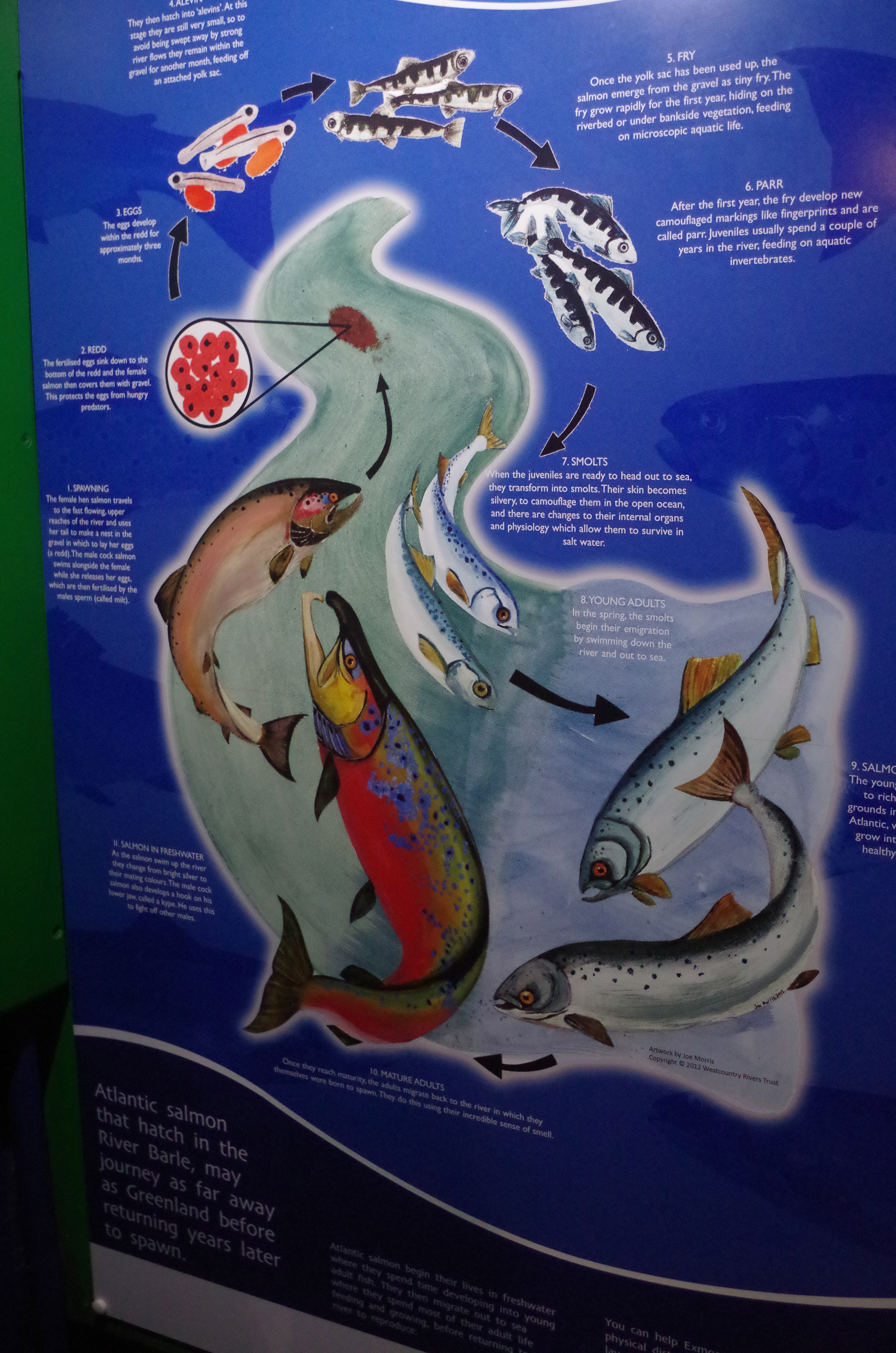
Mid winter and high on the moors salmon and sea trout are cutting redds ensuring the ongoing survival of these enigmatic fish that forge into our rivers each year in a struggle that is every bit as dramatic as the migration of the wildebeest on the Serengeti. This marvel of nature is overlooked by many who pass over swirling waters without a thought for these majestic creatures.
Anglers have a deep fascination for these fish and a passion to preserve stocks for future generations. I joined members of the River Torridge Fishery Association for their annual trapping of salmon for their hatchery located close to a tributary of the Torridge.
Below is a copy of Newsreel by kind permission of Charles Inniss.
The River Torridge Fishery Association – News Reel
Over the weekend 10/11thNovember we successfully trapped the broodstock: 5 hens and 5 cocks all about 8/10lb and all in excellent condition. On Saturday 8thDecember we were able to strip all five hens in one go despite the gales and heavy rain. We now have just over 30,000 eggs laid out in the trays. All the fish have been successfully returned to the river and this year for the first time there was no sign of disease on any of the fish. So far so good.
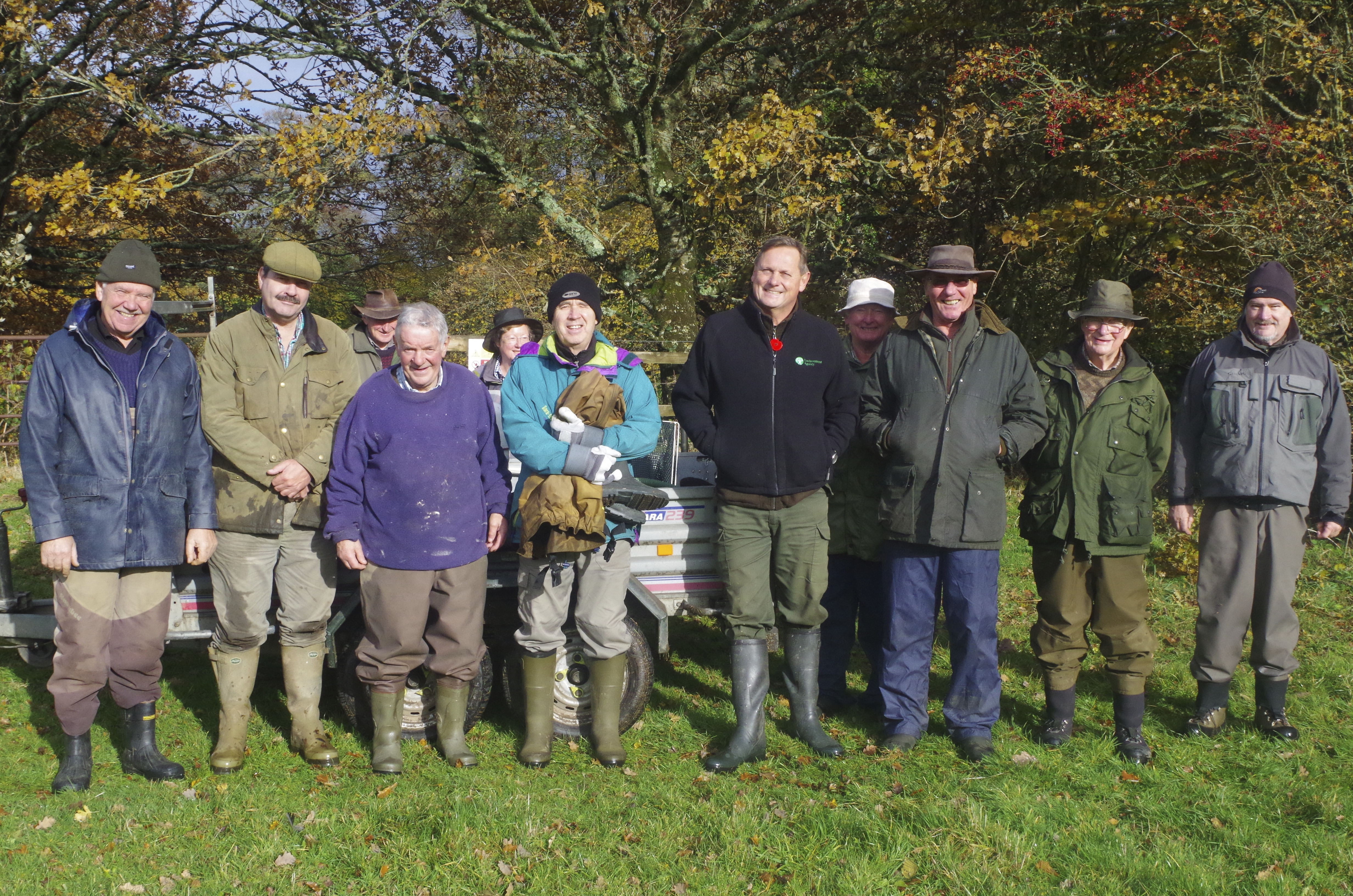
(Above) Members of the River Torridge Fishery Association on Hatchery trapping day.
Juvenile Survey:
The West Country Rivers Trust surveyed 40 sitesduring the late summer and early autumn. The results have not yet been published but apparently several sites on the Okement and Lew were encouraging. The sites on the Upper Torridge again revealed poor densities of salmon fry and parr.
This spring we released some salmon fry from the hatchery into the mill leat by the hatchery. This is a controlled area with no natural salmon production. The juvenile survey in September revealed good densities of salmon fry. The hatchery team was delighted to know its offspring were doing well and surviving in their natural surroundings.
The Annual Dinner and Raffle:
Another superb evening at The Half Moon. Over 50 of us enjoyed an excellent meal followed by the raffle and auction. Once again member support for the annual raffle was tremendous and over £1,500 was raised which will go towards continuing our efforts to improve the fishing on this beautiful river. In particular this money is used to finance the running of the hatchery and the cost of the juvenile survey. Particular thanks to Paul Ashworth, our Chairman, and his wife Geraldine who organised the raffle and the auction. There was the usual wonderful array of prizes.
The Fishing Season:
There are good years and poor years. 2018 will go down as one of the poorer years. Low river levels and high water temperature made fishing difficult. Too many of us, me included, wait for the ideal conditions and do not bother when the conditions are unfavourable. Those who ventured out caught fish having some success with the sea trout using dry fly.
Proposed Measures to reduce salmon exploitation:
Despite rushing through the consultation process in the autumn of 2017, all has since gone quiet: presumably the proposals are sitting on a desk at DEFRA. Let’s hope a final decision can be made for the 2019 season.
Winter well:
My very best wishes to you all for a peaceful Xmas and a healthy New Year.
In 2012 River Reads Press published “Torridge Reflections” a fascinating tome by Charles Inniss I am delighted that a fresh print run of 100 copies has been announced wirh copies available from River Reads, Cochybondu books and Charles Inniss. The first edition sold out and is highly sought after by book collectors and lovers of fishing in North Devon.
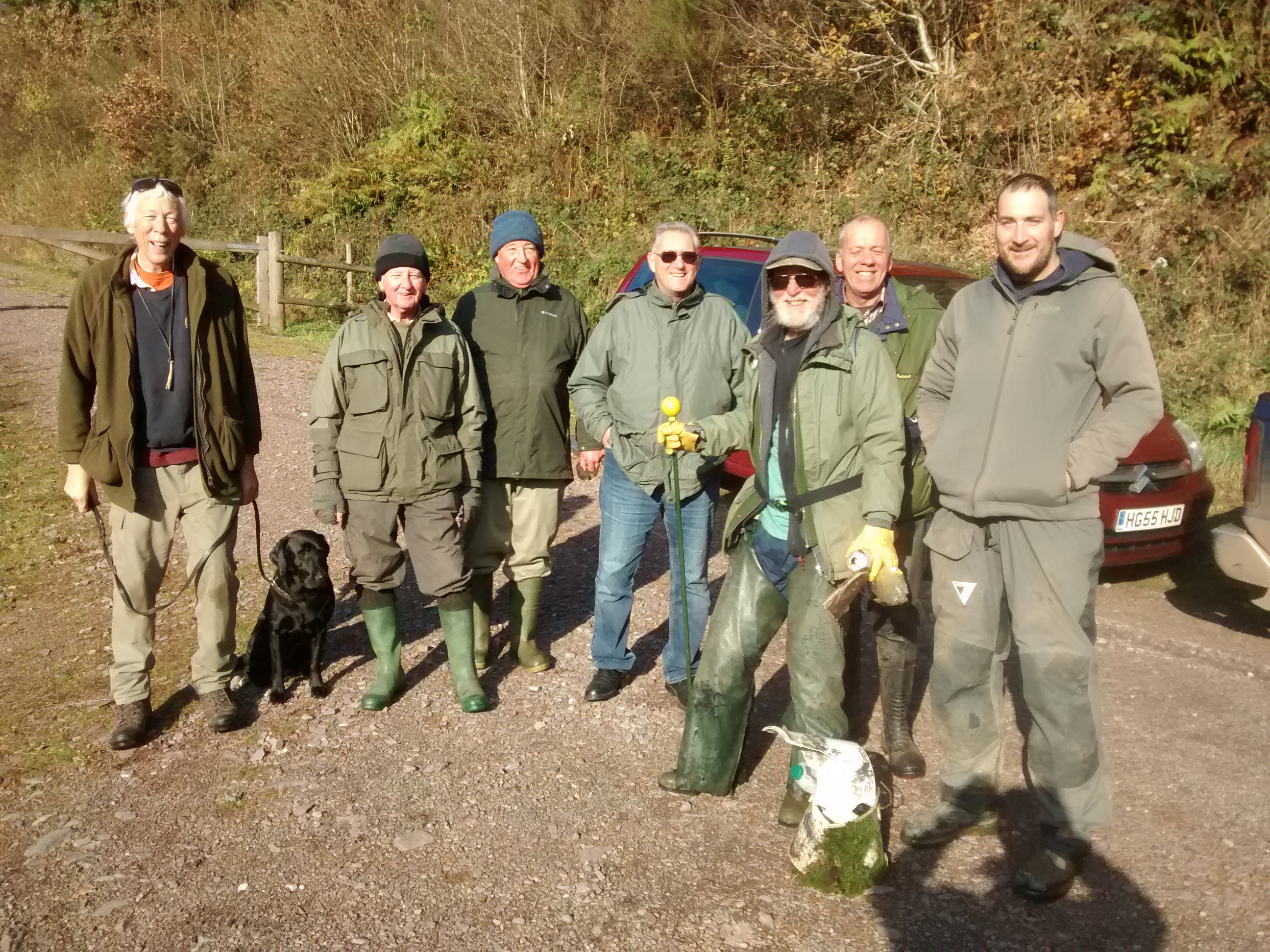
(Above) South Molton Anglers head to the river to count the redds.
Observation of salmon, sea trout and brown trout spawning is an important part of river monitoring and since the dramatic reduction of Environment Agency staff this job is often undertaken by volunteers. The South Molton Angling Club visit the spawning areas on their waters on the River Bray each winter to assess the numbers of salmon spawning. This years observations have been encouraging with good numbers of salmon, sea trout and brown trout seen before winter spates clouded the waters.
Just a quick update on our redd counting morning from Ed Rands.
“The river was in good shape to see what was going on although most other rivers were high and brown.
We walked a familiar strech of river and saw several salmon and sea trout.
There were also a good number of redds there, of different sizes e.g. brown & sea trout and salmon had been spawning which is very encouraging as we didn’t see much last year.
Hopefully they will hatch in the spring and go on their intrepid journey to keep these precious and vulnerable fish in our rivers.
We also picked up plastic and other foreign bodies from the river.
So all in all a very enjoyable morning, thanks to those who attended.
Merry Christmas.
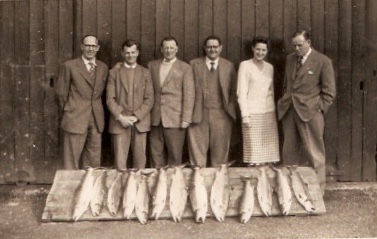
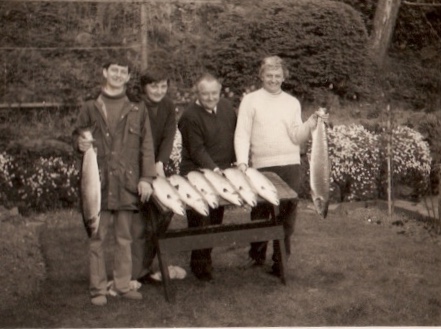
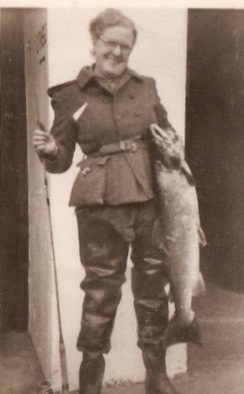
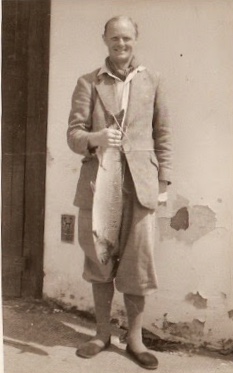
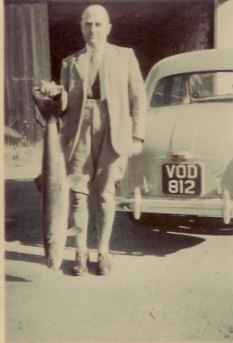
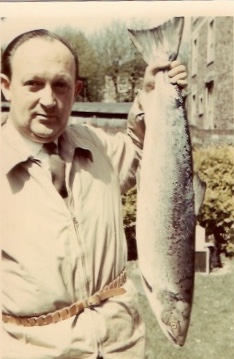
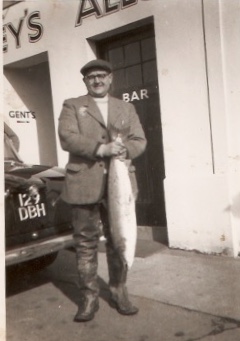
Ed Rands shared a number of old photos with me that had been found in the attic of a house during a house move. They are fantastic images that give a fascinating glimpse into the past.The images are from the Fortesque Hotel at Kingsympton and show salmon caught from the River Taw probably from the Junction Pool area. The these spendid catches of salmon were made during the 50/60’s.
In those days of plenty virtually all salmon were killed as stocks were abundant and few feared for the future of the species. Whilst anglers undoubtedly contributed to dwindling stocks other factors have had a far more dramatic impact. Pollution, Poaching, Global Warming, Disease, Over Exploitation, Farming Practices,Silting of spawning grounds, Obstacles to Migration, Predation and other factors have all played their part. These days anglers are fighting for the survival of these magnificent fish removing barriers to migration, improving habitat, campaigning to remove netting, practicing catch and release and attempting to improve stocks by using hatcherys to improve fry survival.
It is sad to see how stocks have been allowed to decline over the years. We have lost a great deal from our rivers it would be tragic if salmon were to be consigned to the history books like the mighty sturgeon that once migrated up many of our local rivers.
I was looking around on my computer and found the Journal report from Ten Years ago. Might be of interest I thought. A few points of Interest.
Flounder fishing was Ok but ragworm digging hard going.
What happened to Barnstaple Rod N Reelers?
A few familiar names in the report and interesting comment on the state of angling at the time. Is this feature worthwhile if popular I could make it a regular feature?
Comments on NDAN’s facebook page please.
ANGLING REPORT
Where are the fish?
Sea anglers are having a bleak time at present with fish hard to find all along the coast. The cod of past winters are virtually non existent and even the dogfish are not prolific. I am hearing more and more concerns about foreign trawlers plundering fish stocks ever closer to our shores. The lack of saltwater sport is of great concern to all connected with the sport. The estuary is a traditional retreat for sea anglers to seek the humble flounder that are showing in reasonable numbers in both estuaries. There is certain appeal to the estuary landscape in winter with its flocks of bird and ever changing sky. Bait digging has been particularly hard going this year with ragworm in short supply. Of course nature is cyclic and has a habit of coming good eventually, as I feel sure it will this time.
Bideford Angling Clubs latest mid week rover saw Damien Babb secure victory with a dogfish of 2lb 1½oz. Close behind was Mike Grayson with a doggie of 2lb 1¼oz. Dick Talbot’s dogfish of 1lb 14¾oz was third.
Barnstaple Rod N Reeler’s November Rover saw Steve Baker take top spot with a fine rockling of 1lb 13½oz. In runner up spot Julian Stainer with a dogfish of 2lb 7¼oz and in third John Passmore with a doggie of 2lb 4oz.
Andrew Atkinson won Appledore Shipbuilders Christmas Competition last Sunday with a flounder of 1lb 8½oz. In runner up spot was Graham Fisher with a flounder of 1lb 7¼oz. Junior member Cameron Atkinson took third with a flattie of 1lb 7oz. Thirty-Three anglers took part, which included 9 juniors. Chelsea Babb was amongst the other juniors to catch landing a flounder of 15⅛oz and Millie Ayres aged four was thrilled to catch her first ever fish a flounder of 11¾oz.
Combe Martin Sea Angling Clubs annual general meeting at Braunton Cricket Club saw members vote for a radical change in competition format. The coming year sees the club adopt an optional catch and release policy for all club competitions. The club are also introducing month long competitions to help enable members to enter competitions whatever the restraints placed upon them by this demanding 24/7 society.
There was also an in depth debate regarding the forthcoming Marine Bill and the need for involvement in the consultation process. The club is to join the Angling Trust in the New Year which is the national body set up to represent all anglers.
Wistlandpound Flyfishing Clubs AGM saw members pay respect to their late Chairman Terry Hulland with a minute of quiet reflection. Terry had been a keen supporter of the club for many years and his presence and enthusiasm will be greatly missed.
Bob Gooding has been elected as the clubs new Chairman with David Eldred stepping forward as vice chairman. Nigel Bird continues in his joint role as secretary and treasurer. A full calendar of events was compiled at the meeting with most fixtures at the clubs home venue of Wistlandpound.
The clubs Tony Lovemore cup for the most consistent angler in competition was awarded to Colin Combes with 1610 points. In runner up spot David Eldred with 1567 points with Terry Hulland third with 1546.
Members had enjoyed a good season at Wistlandpound with members averaging 2.56 fish per rod in competitions. Anyone interested in joining this small friendly club should contact Nigel Bird on 01271 883252.
Cold winter weather seldom puts rainbow trout off the feed and great sport can be enjoyed at small still water trout fisheries. Southern Wood fishery is nestled in a wooded valley near Bratton Fleming and has been fishing well with several big rainbows gracing the net. Dave Mocks recent visit to the fishery was rewarded with a three fish bag for 19lb 8oz the best trout scaling 8lb 8oz. Dave Richards also landed a three fish bag for 17lb with a best of 7lb 8oz. Neil Roulde secured a fine double figure rainbow of 10lb 12oz in a four fish bag that totalled 31lb and also included a 9lb specimen. David James from Derby landed a brace for 17lb and Paul Cossey of Cambridge a four fish bag for 27lb. Brown trout have also been giving good sport with fish up to 3lb 12oz that have to be returned of course as they are out of season.
Ilfracombe Match groups two-leg match against Bude Pirates saw a very close finish with Ilfracombe securing victory by one point with 242 points. The second leg was fished at Highampton lakes last Sunday when a bitterly cold wind suppressed the fish’s appetite. John Pyle of Ilfracombe secured individual success with a bag of skimmers totalling 2lb 6oz. Kevin Hill of Bude took runner up spot with 1lb 13oz and his team-mate Ade Larkin third with 1lb 4oz.
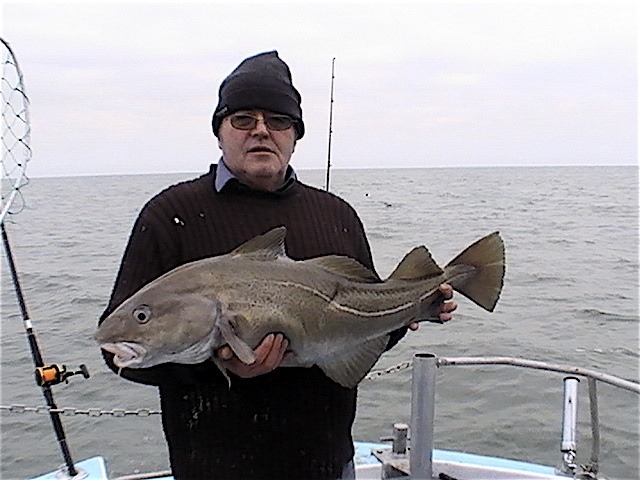
Donald Kyte caught this cod off Lynmouth in November 2008
DIARY DATES
December 7th– Blakewell Fishery Christmas Competition – Sold Out
December 7th– Bideford Angling Clubs Rover
December 7th– Appledore Shipbuilders Rover
December 6th7th– Combe Martin SAC – Christmas Competition
Fishing 6.00pm Saturday to 7.30pm Sunday.
Weigh in at Braunton Cricket Club 7.30pm
December 6th7th– Rod N Reelers Rover
December 7th– Triple Hook Club – ladies and Junior Flounder Open
Fishing 9.00am to 1.00pm Weigh in at Royal British Legion
I was chatting to a fellow angler at the weekend about salmon fishing on the Taw and how the fishing has declined since I first started fishing the river over forty years ago. As is often the case talk reminisced on large fish caught and the angler in question told me of his first salmon a fine fish of around twenty pounds. One particular fish was etched on his memory and he described spotting the dorsal fin of this huge fish on a lower Taw beat. The fish was lying close to the edge in a well known lie its dorsal fin showing above the water. He and a fellow angler climbed high up on the bank and peered into water. They were awestruck at the sight before them; a huge salmon estimated at between four and five feet in length. The fish sensing their presence swam slowly into the depth of the pool never to be seen again despite their efforts to tempt the fish with rod and line.
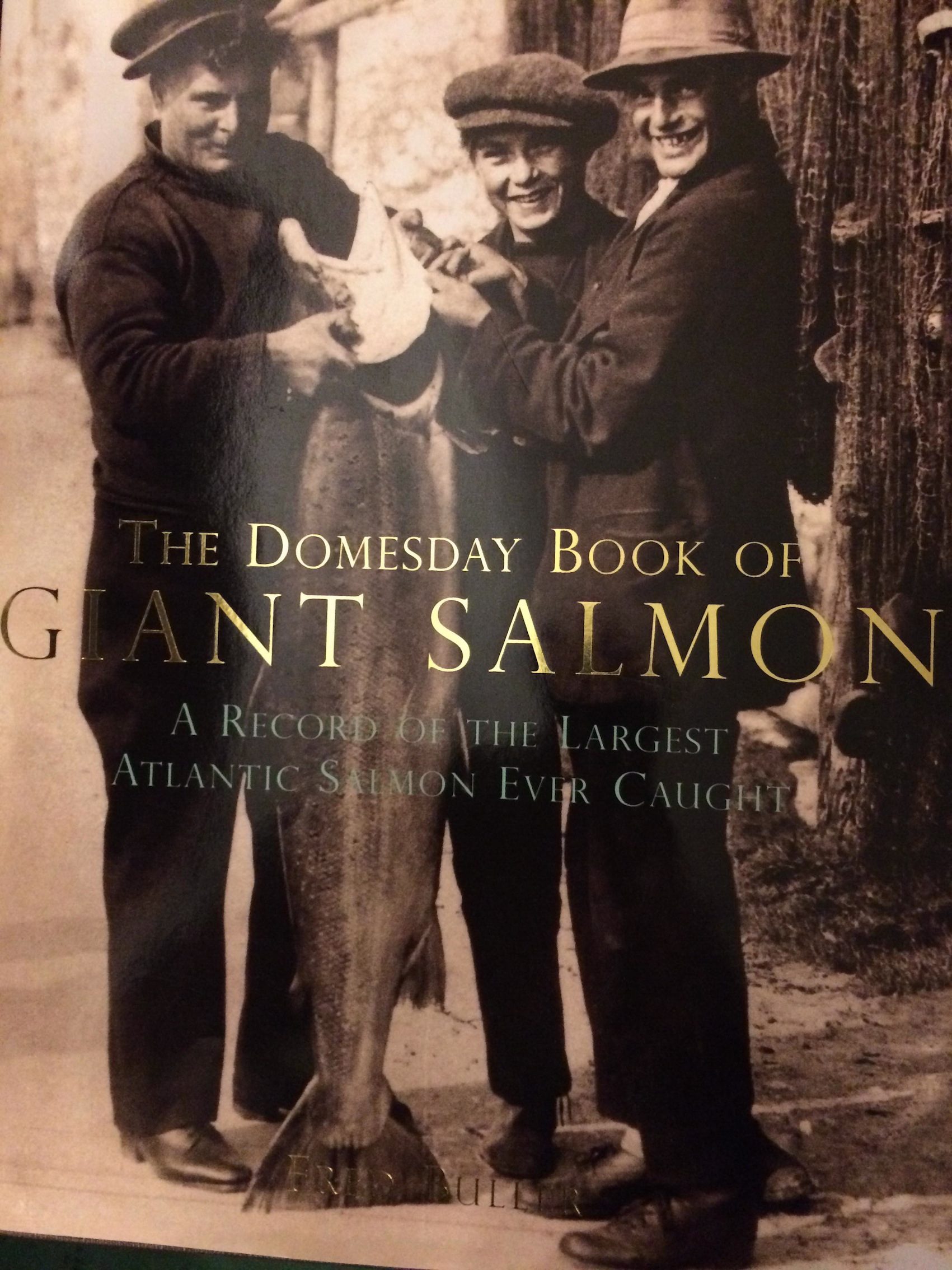
Later on that evening I did a little research leafing through the pages of that Classic tome, ” The Doomsday Book of Giant Salmon” written by that late master of angling history Fred Buller. Within the pages of this book are a couple of huge West Country salmon one of which is the famous 57lb salmon caught in a net by Mr Stephens and Jimmy Hill at Fremington in September 1925. This huge salmon would have been around the same length as the fish sighted by my fellow angler.
Whilst this salmon is likely to be amongst the largest to have run our local rivers it is intriguing to wonder what fish have swum under Barnstaple Bridge and into other North Devon Rivers. As salmon numbers continue to dwindle huge fish are probably consigned to the history books. But there are I am sure people within the local community who can tell of large salmon seen or indeed removed from local rivers in the distant past.
It would be great to hear any stories of large salmon or sea trout from North Devon Rivers even if they were caught many years ago by less than legitimate means. I would be delighted to air any such tales here on North Devon Angling News; an ideal read for those long winter nights. You can email any stories to info@northdevonanglingnews and I will publish over the Christmas period! I will not of course publish the names of the authors unless they are happy for me to do so. It is important that any stories are shared before the generations pass and with them their knowledge.
As an angler I guess it is inevitable that I have always been fascinated by aquariums and can remember clearly the excitement of viewing fish at close quarters within seaside aquariums whilst on holiday in Cornwall. The aquariums at Looe and Fowey were always fixtures on our annual family holiday to Cornwall especially if the weather was a little inclement.
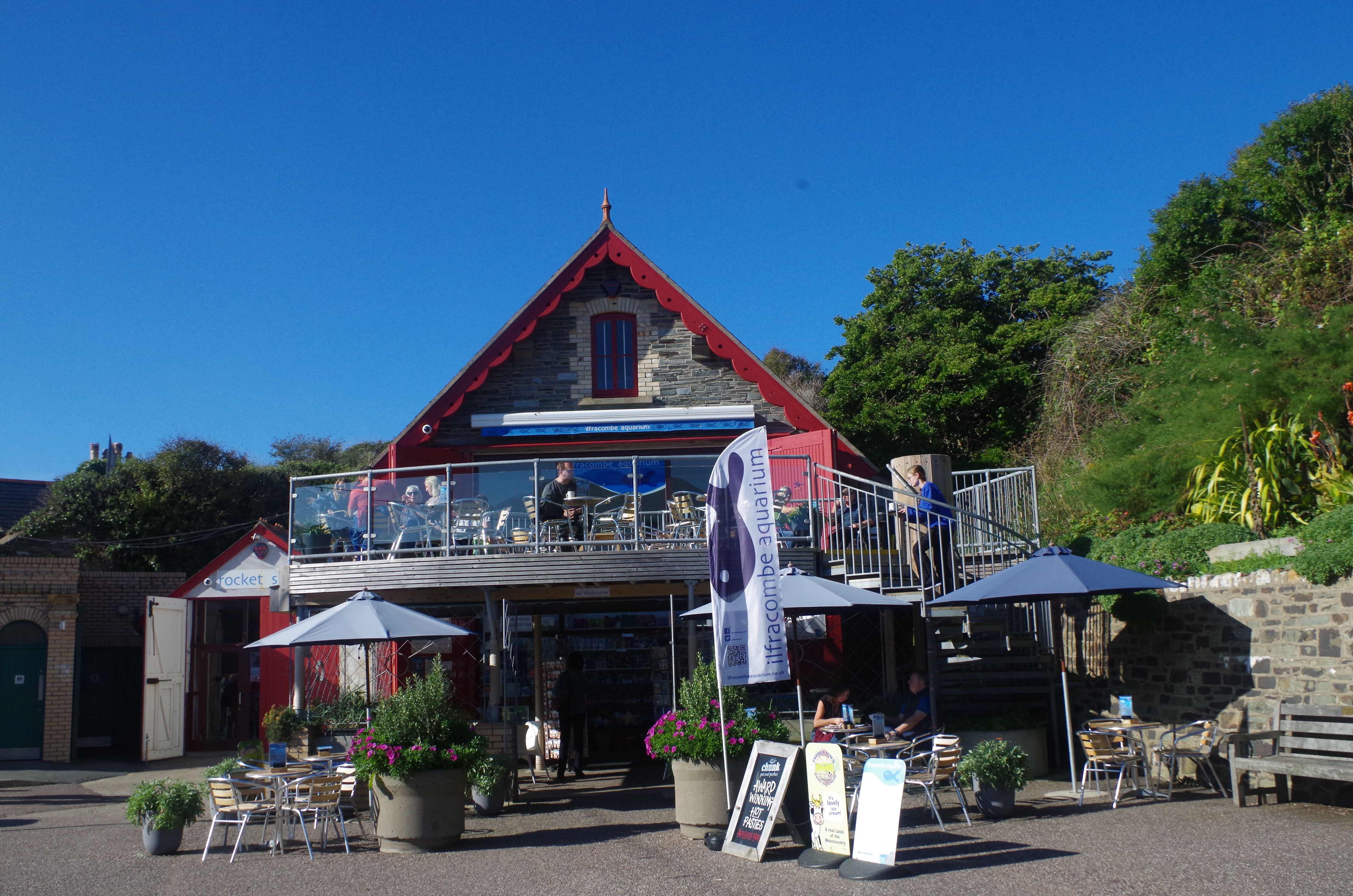
During the Combe Martin SAC Fun Fish in September the Ilfracombe Aquarium team got involved and an invite to visit the aquarium that is tucked away in a corner of the pier car park followed. Hard to believe that the aquarium has been running for over fifteen years and is expanding its range of exhibits each year.
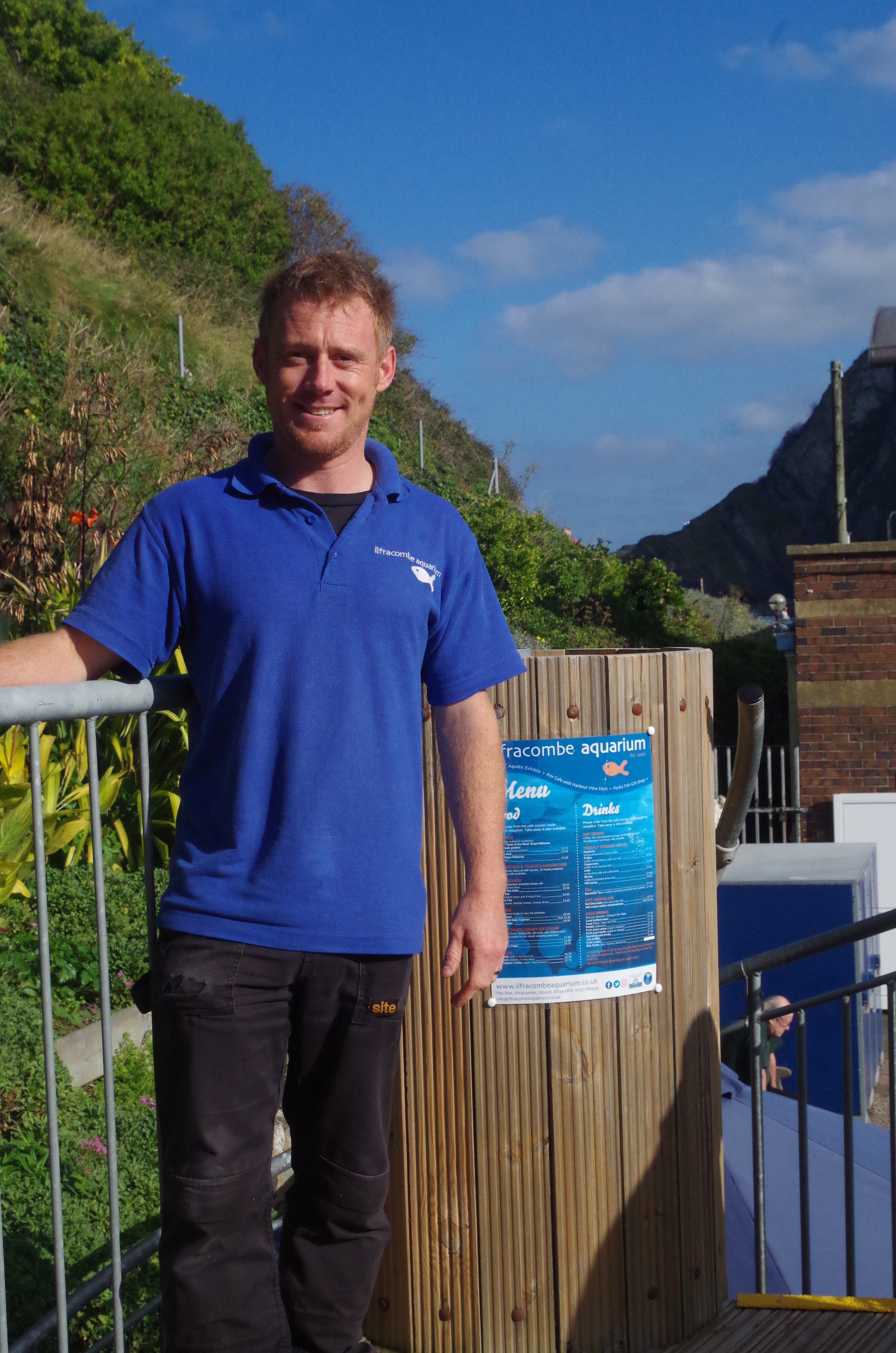
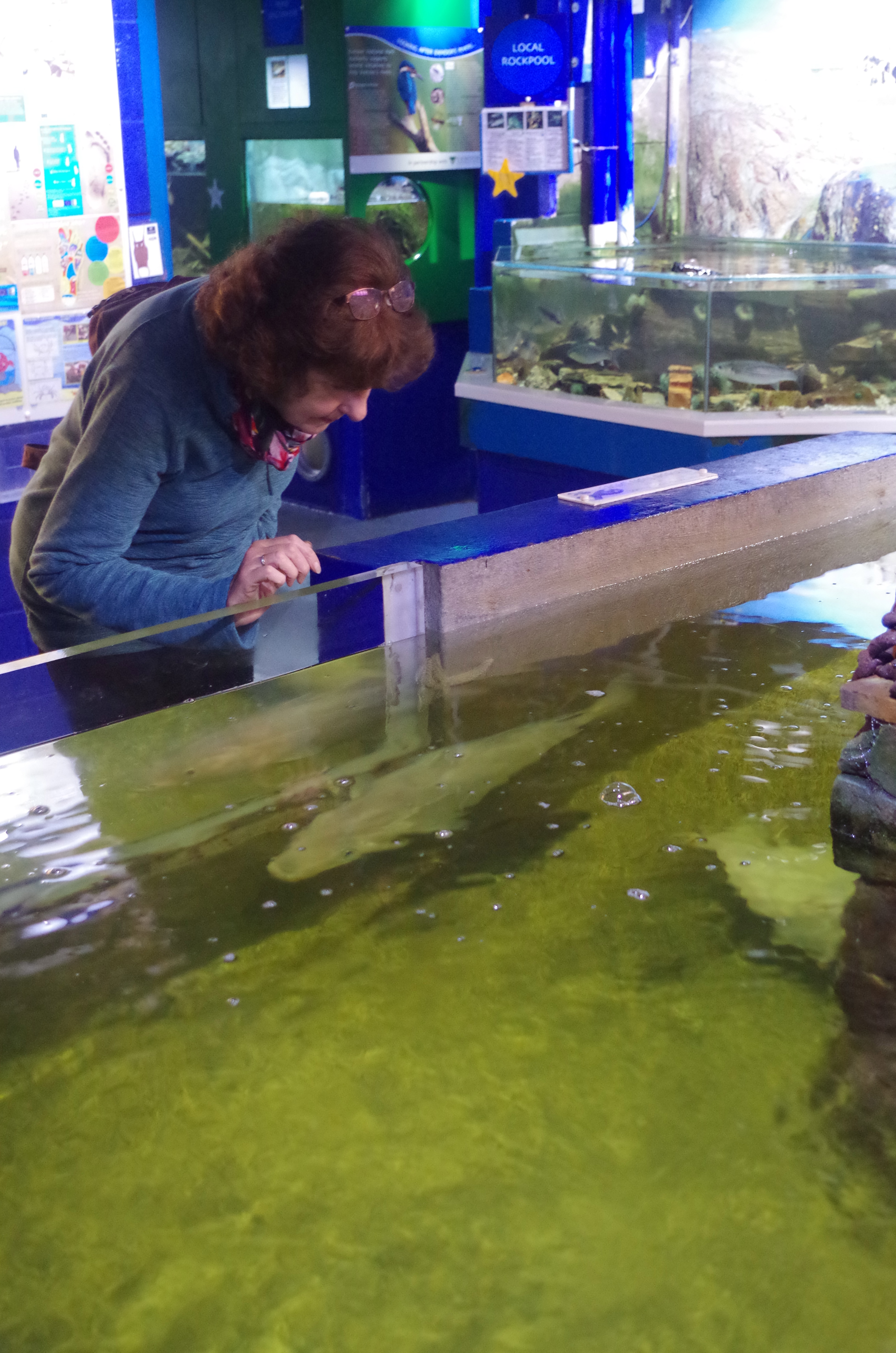
Pauline and I were greeted by Senior Aquarist Steve Corcoran who immediately made us welcome and infected us with his enthusiasm for the venue. The aquarium displays an amazing array of over 75 species to be found in the waters of North Devon from rivers high on the moors to the sea off Ilfracombe.
The exhibits are carefully chosen with only fish that are suitable for a captive environment selected. The welfare of the fish is undoubtedly paramount with all the fish in good condition and the tanks exceptionally clean.The aquarium are working to assist CEFAS based in Lowestoft with species acquisition. Several dragonets have been donated this year for breeding trials. They, however do not regulate our zoo license as such. A zoo license is issued through North Devon Council with practices needing to comply with Secretary of State ‘Standards of Modern Zoo Practice’ 2012. DEFRA are the public body that regulates these standards. . Any fish that outgrow their tanks have to be transferred to other aquariums such as Plymouth. For this reason large fish such as conger are not kept as they can grow very quickly and become aggressive if not fed frequently.
The whole place had a sort of Tardis like feel with far more on display than the exterior appearance of the building suggests. The display boards on the walk around are filled with fascinating facts about the environment, history and the array of captive creatures. Partnership with environmental groups such as the Marine Conservation Society and Exmoor National park is clearly evident.
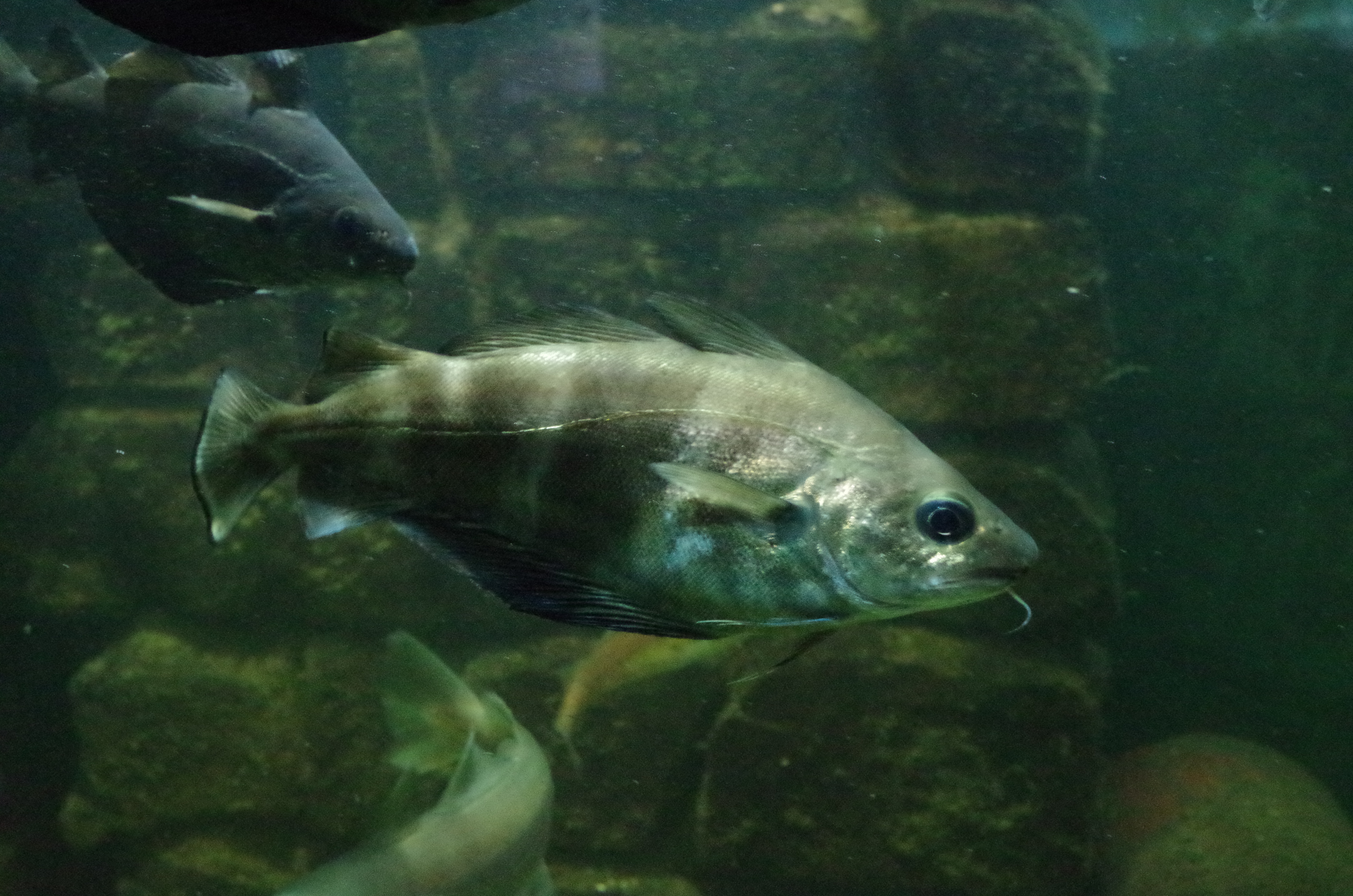
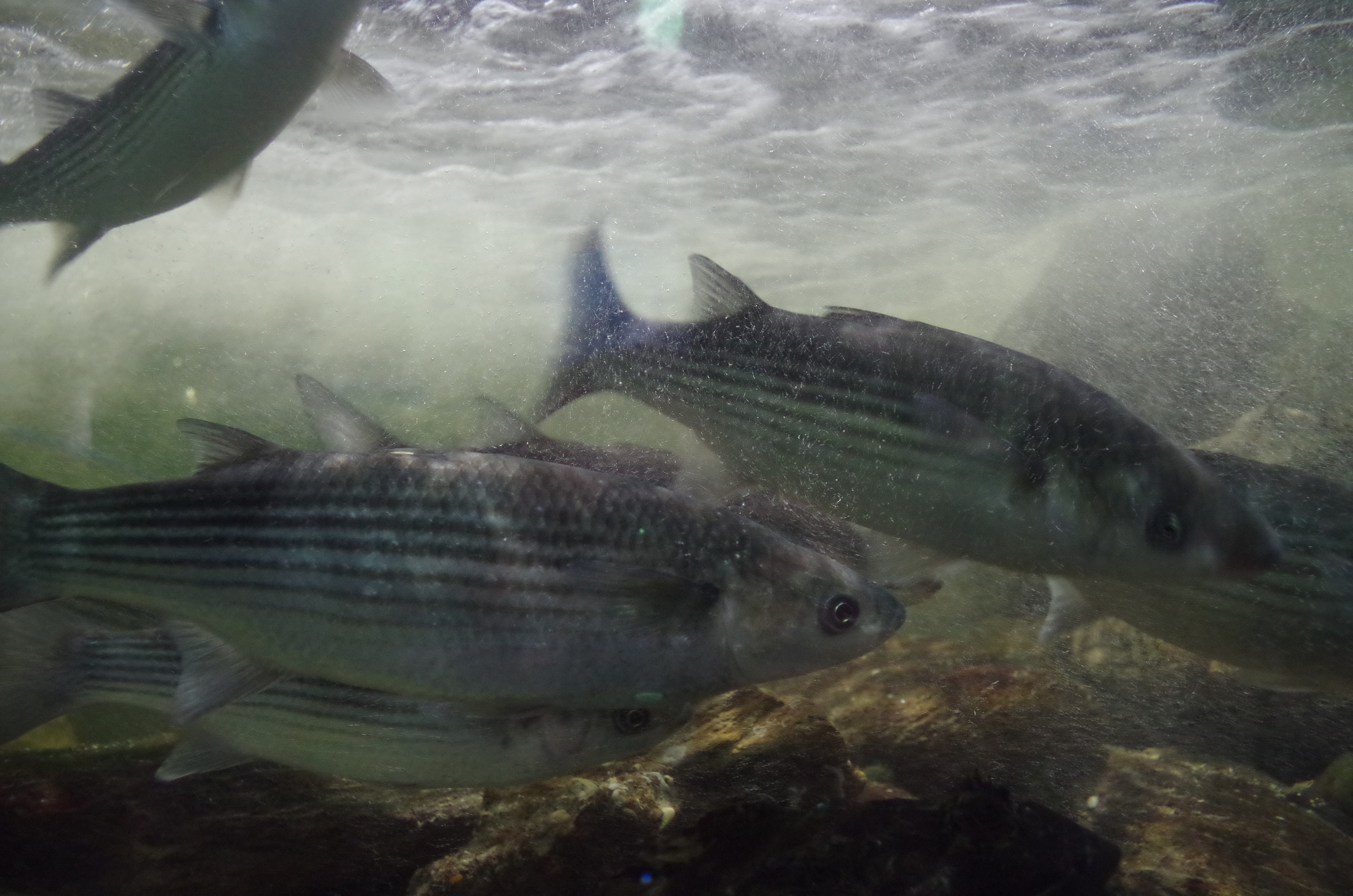
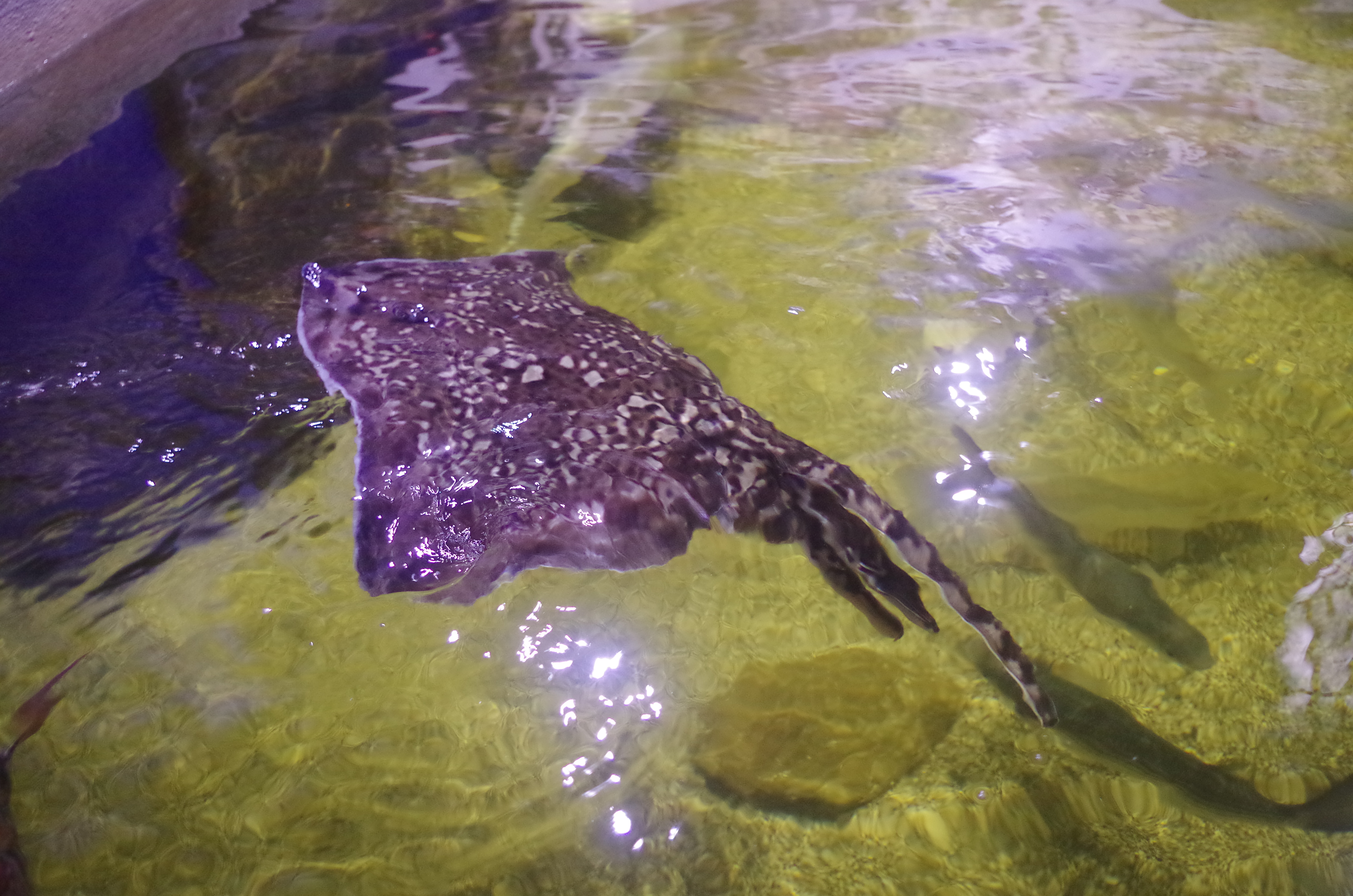
The large seawater tank held a splendid selection of good sized fish from local waters including thornback ray, small eyed ray, spotted ray, pollock, bass, tub gurnard, grey mullet and plaice.
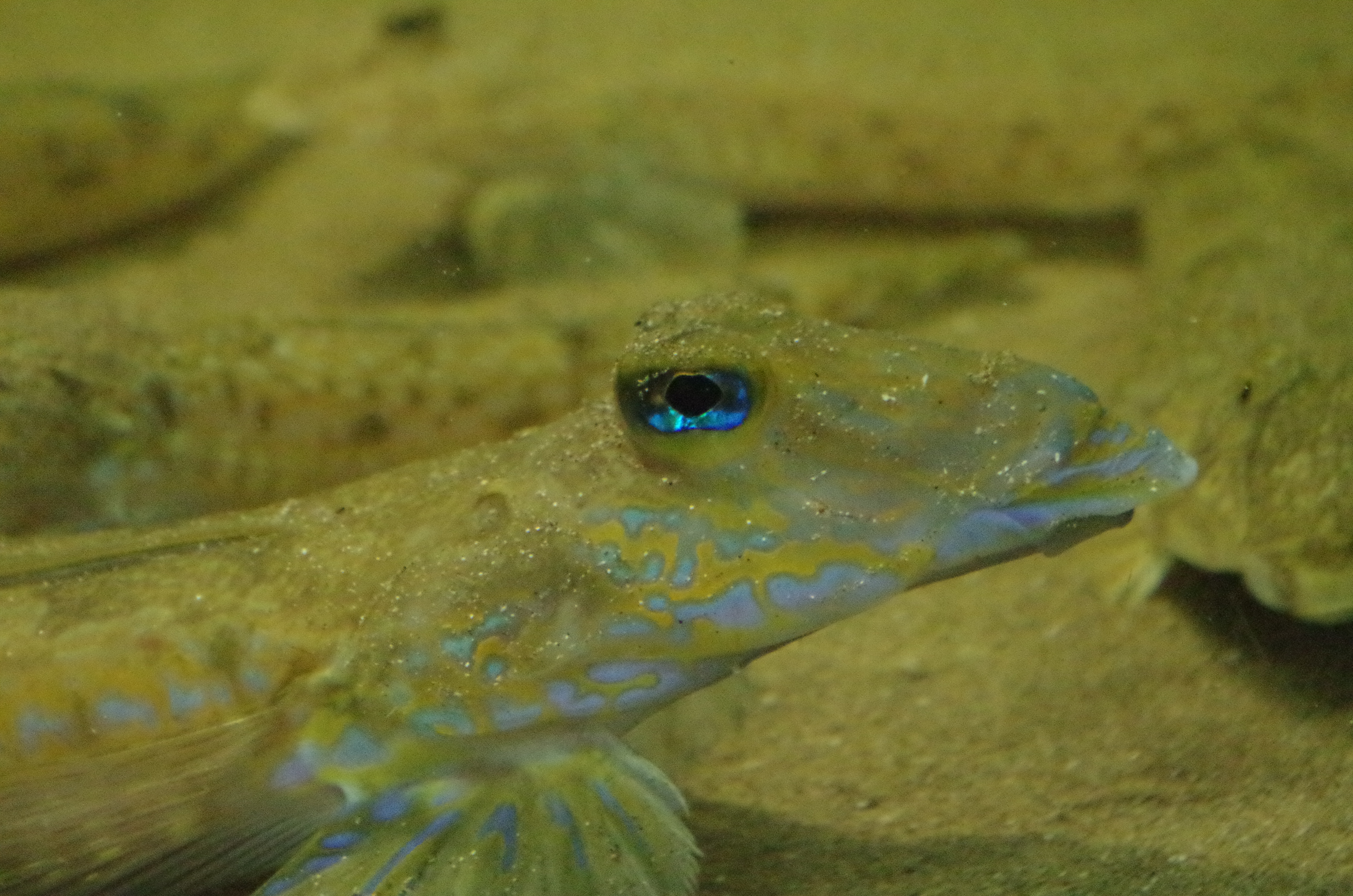
Surprisingly though it was not the big fish that we found to be most captivating but the smaller fish such as the dragonets with their stunning sapphire eyes and bristling demeanor. Pipefish, gobies, topknots, sole and sand smelt were amongst other fascinating fish on display.
Other fascinating creatures were the tiny cuttlefish that had an almost alien appearance as they hovered within the water coming alive when Steve added some particles of food to the tank. Watching the way fish feed is an interesting aspect of the aquarium that will I feel fire the imagination of any visiting angler. Ammo Frozen baits are amongst the suppliers of food to the aquarium who are keen only to use fish that are caught using sustainable methods.
I was delighted to discover that some of the pouting swimming in the tanks were provided by anglers taking part in one of our previous fun fishing events.
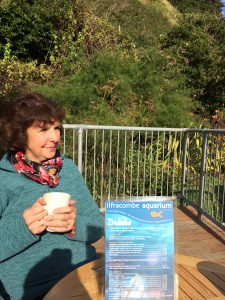
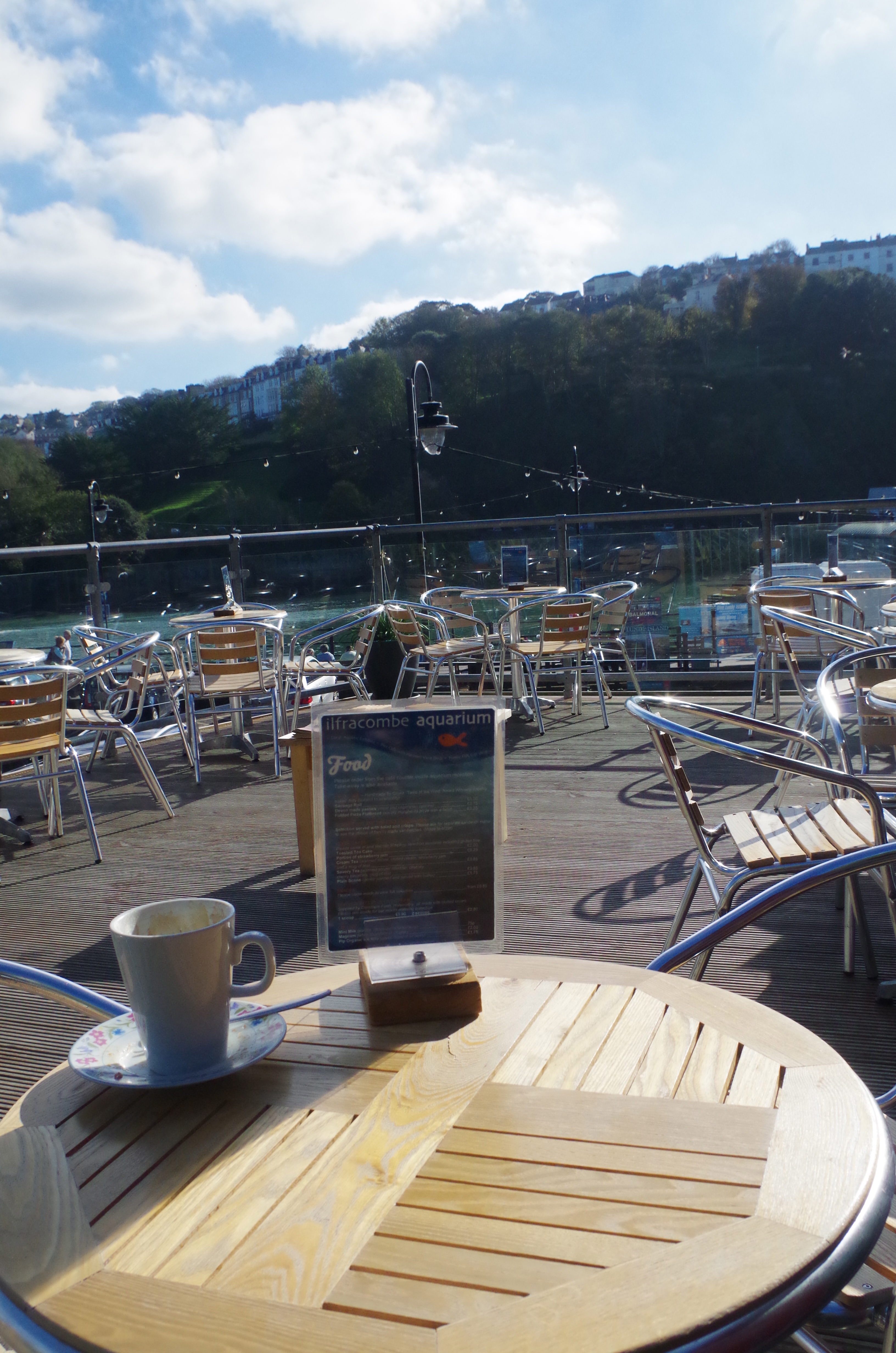
The complex has a pleasing top deck where a coffee and a snack can be enjoyed alfresco with a lower eating area if the weather is not kind.
The gift shop has an array of quirky and fishy goods to tempt members of the family. I would highly recommend a visit before the venue closes for the winter at the end of November.











 Surprisingly though it was not the big fish that we found to be most captivating but the smaller fish such as the dragonets with their stunning sapphire eyes and bristling demeanor. Pipefish, gobies, topknots, sole and sand smelt were amongst other fascinating fish on display.