Join us for an evening talk with Jack Perks on the launch
of his new book The Great British River
on Friday 26th June at The Arundell
|



Join us for an evening talk with Jack Perks on the launch
of his new book The Great British River
on Friday 26th June at The Arundell
|
|
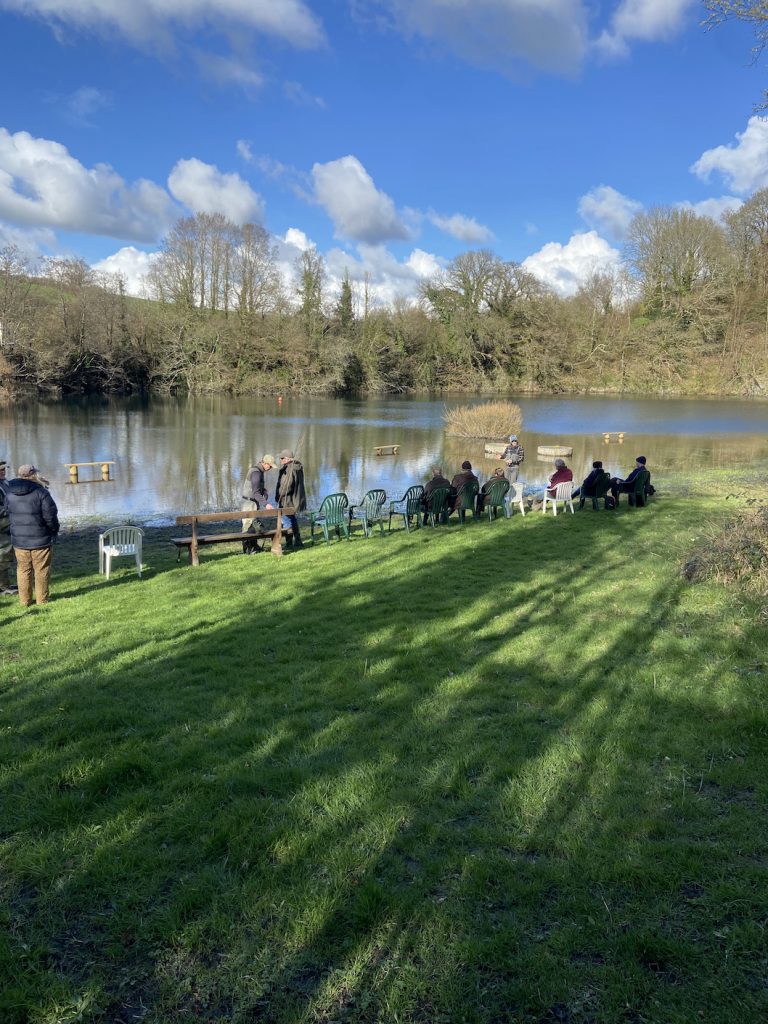
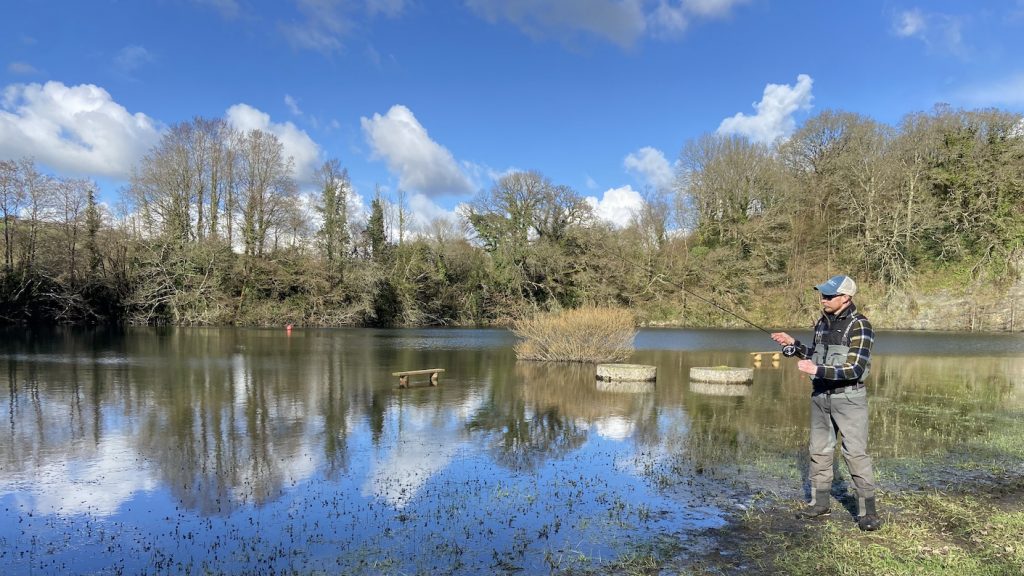
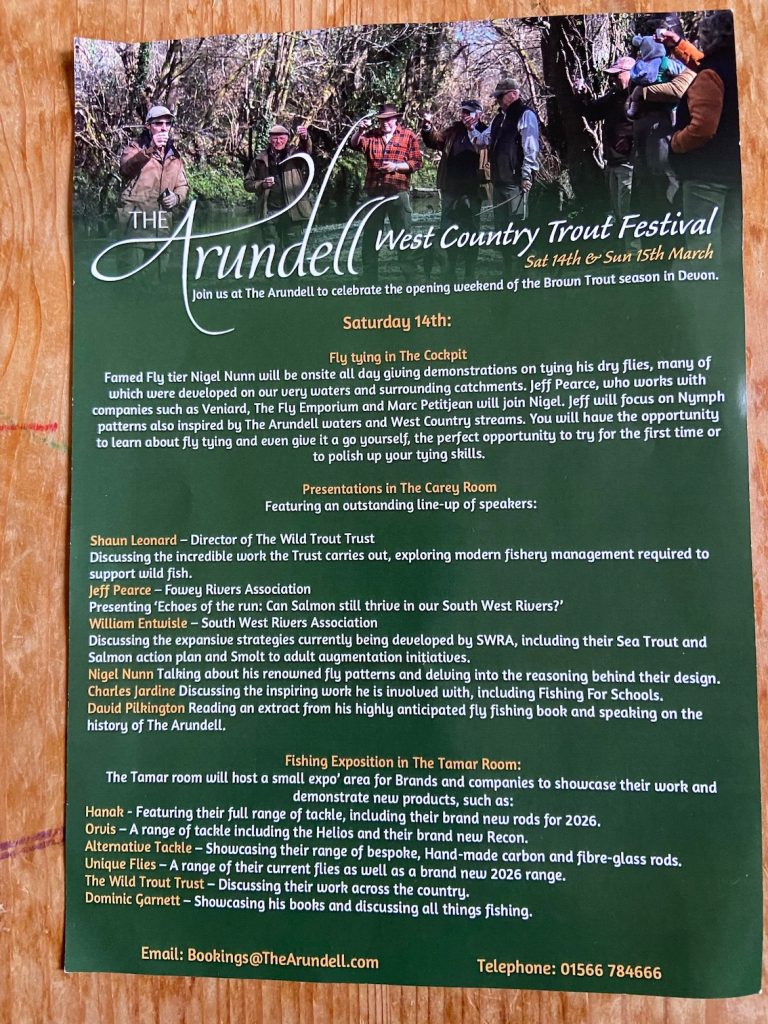
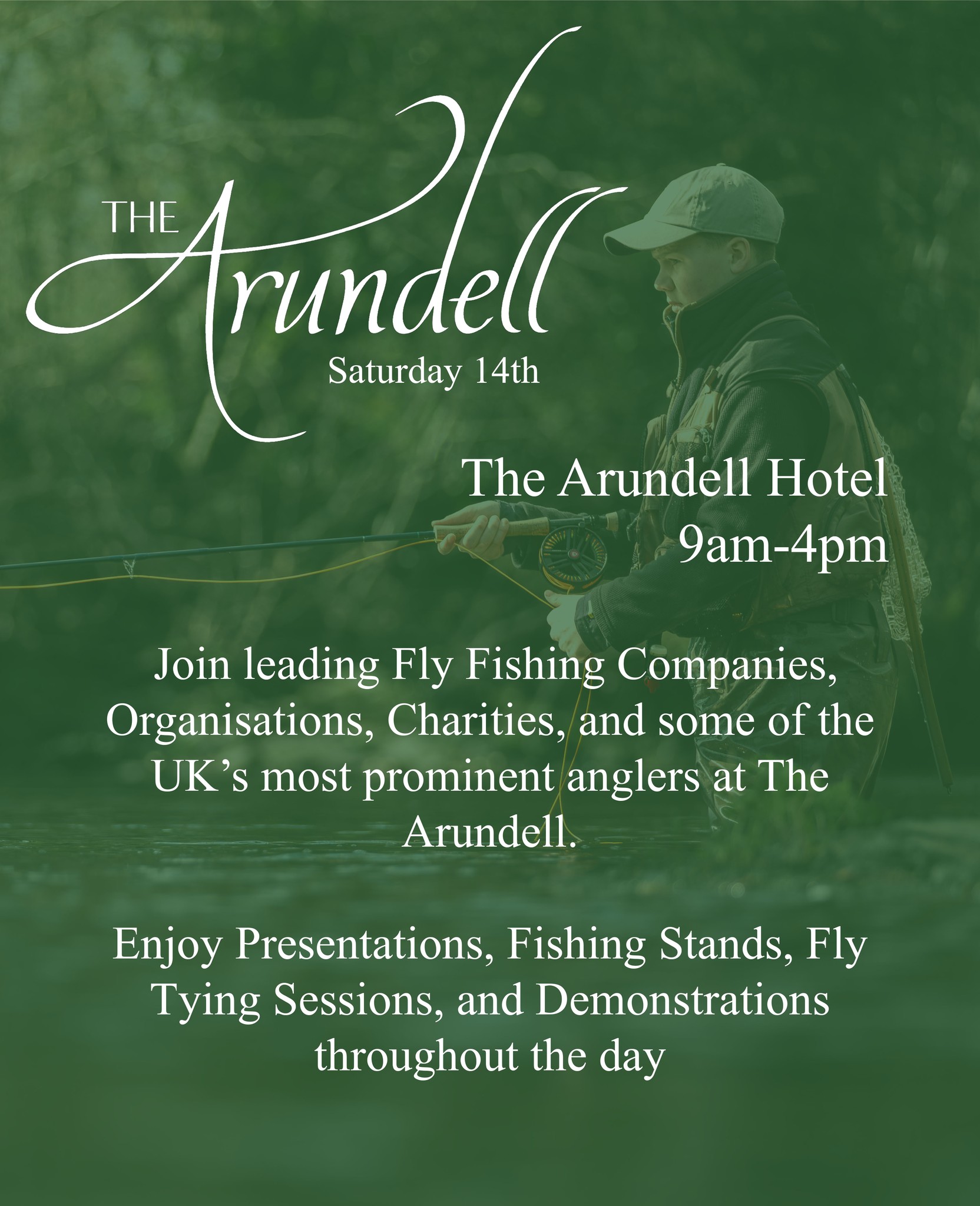
The Fly Fishing community gathered at the Arundell for the first day of the West Country Trout Festival on March 14th the eve of a new River Fishing season. It proved to be a highly enjoyable day of learning, socialising and tackle browsing. My mind is overwhelmed with images, thoughts and plans for a new season so rather than try and report on the day with long winded narrative I will simply post images and relevant captions with links to relevant websites.
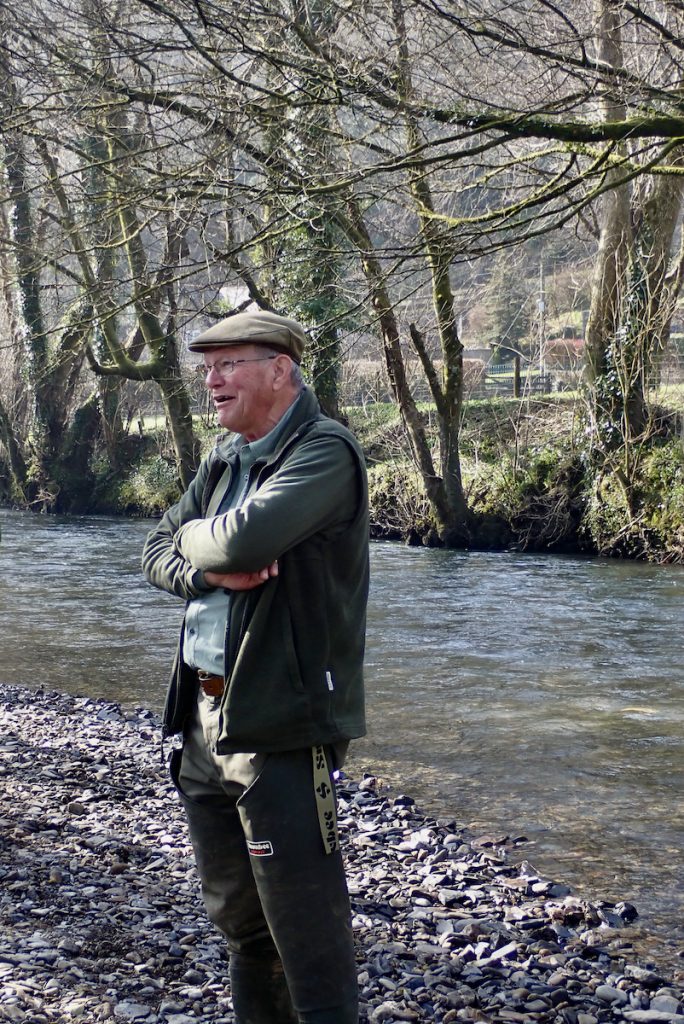
David Pilkington got the talks underway enthralling the audience by reading an extract from his highly anticipated book that reflects upon a lifetime at the water’s edge. His narrative tells of social change and declining salmon runs interspersed with rich and relevant humour.
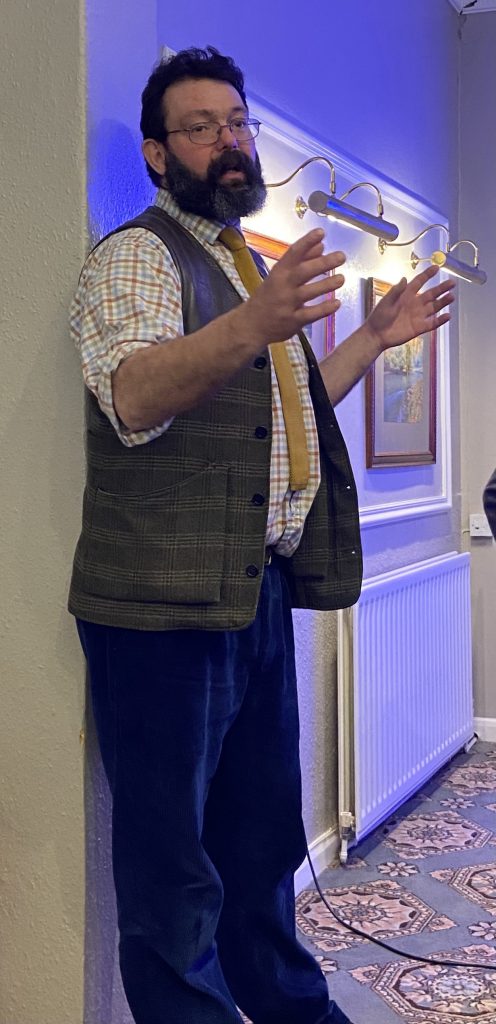
David Oakley delivered a fascinating and informative talk on the work of the Wild Trout Trust. He highlighted the many issues that impact upon our rivers including; Agricultural pollution, Physical modifications, Waste Water, Urban pollution, Invasive species, Abstraction, Hydro and global warming.
He outlined the benefits of wood in rivers, The renaturalisation of rivers after years of misguided abuse. The importance of shade and the return to natural wiggling and meandering water courses.
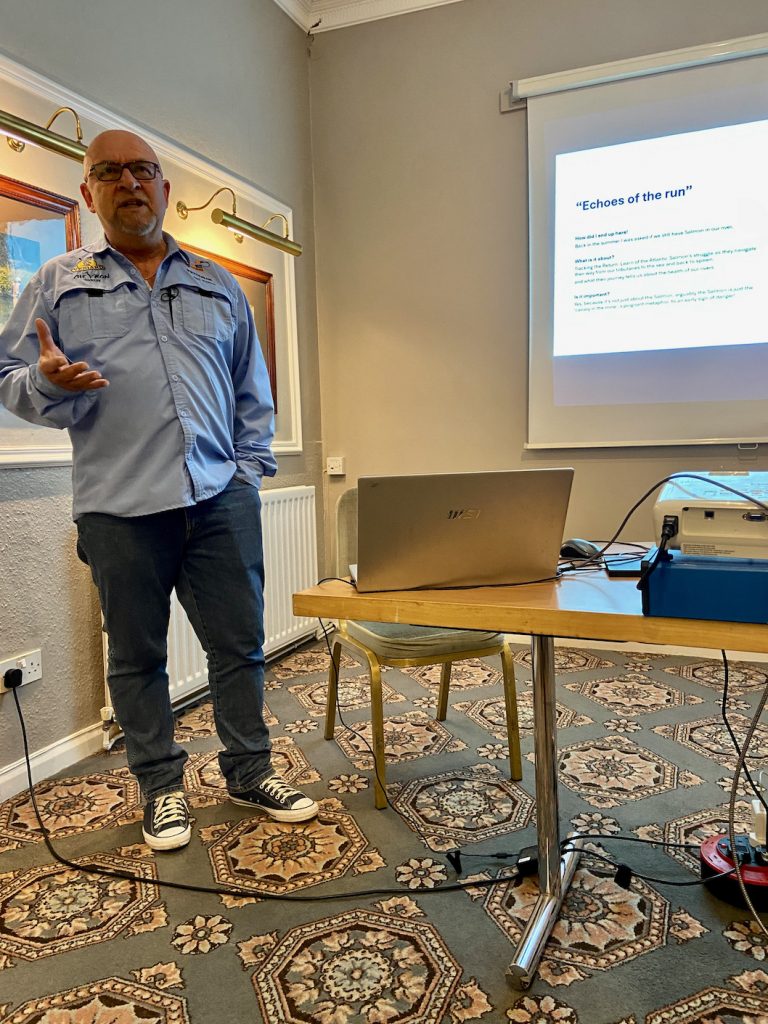
Jeff Pearce presented ‘Echoes of the Run: Can salmon still thrive in our South West Rivers? Jeff has lived close to the River Fowey for much of his life and has an intimate connection with the river and its fish. He explained the sad plight of the salmon and the issues that threaten their survival as they migrate from high on Bodmin Moor to their Ocean feeding grounds and back to their birthplace.
Jeff showed the vital work being undertaken on the River to give the sea trout and salmon a fighting chance.
The impact of Colliford and Siblyback Reservoirs was highlighted along with the hatchery that is being used to compensate for the loss of vital spawning grounds.
Click on links below for more info: –
https://billparrydavies.vhx.tv/products/tidal-reach
William Entwisle
Discussed the expansive strategies being developed by SWRA, including their sea trout and salmon action plan and smolt augmentation initiatives. I missed much of this talk but picked up at its conclusion as William talked of a Noah’s Ark to help salmon to survive as the destructive fishing industry is regulated via international agreements.
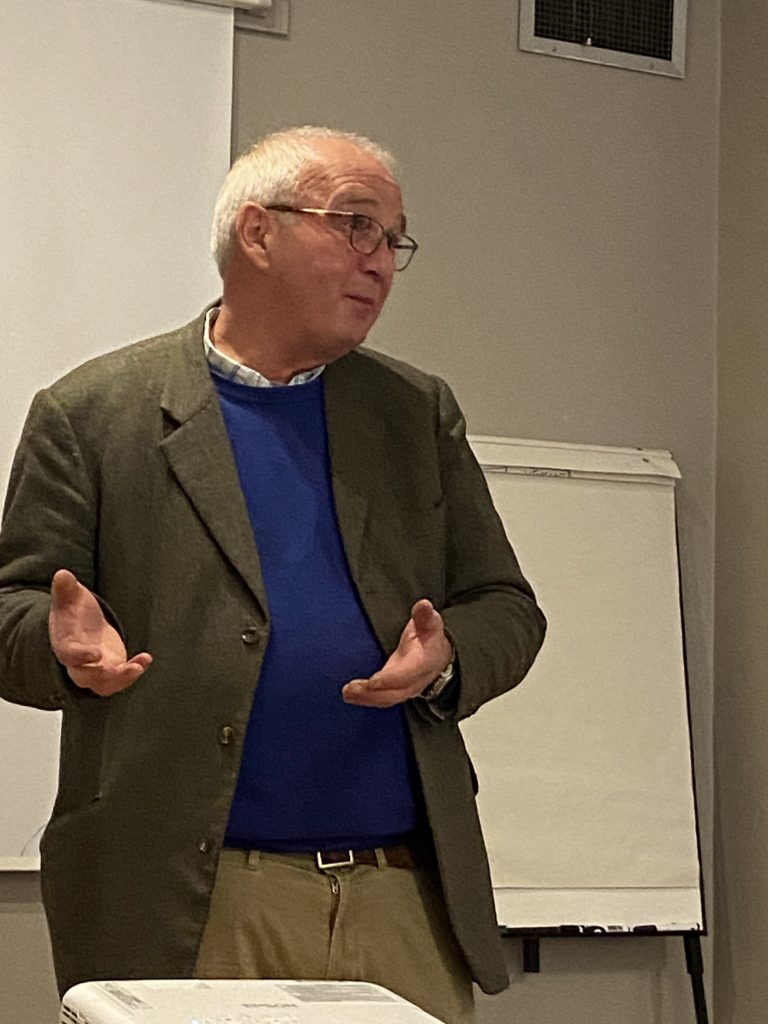
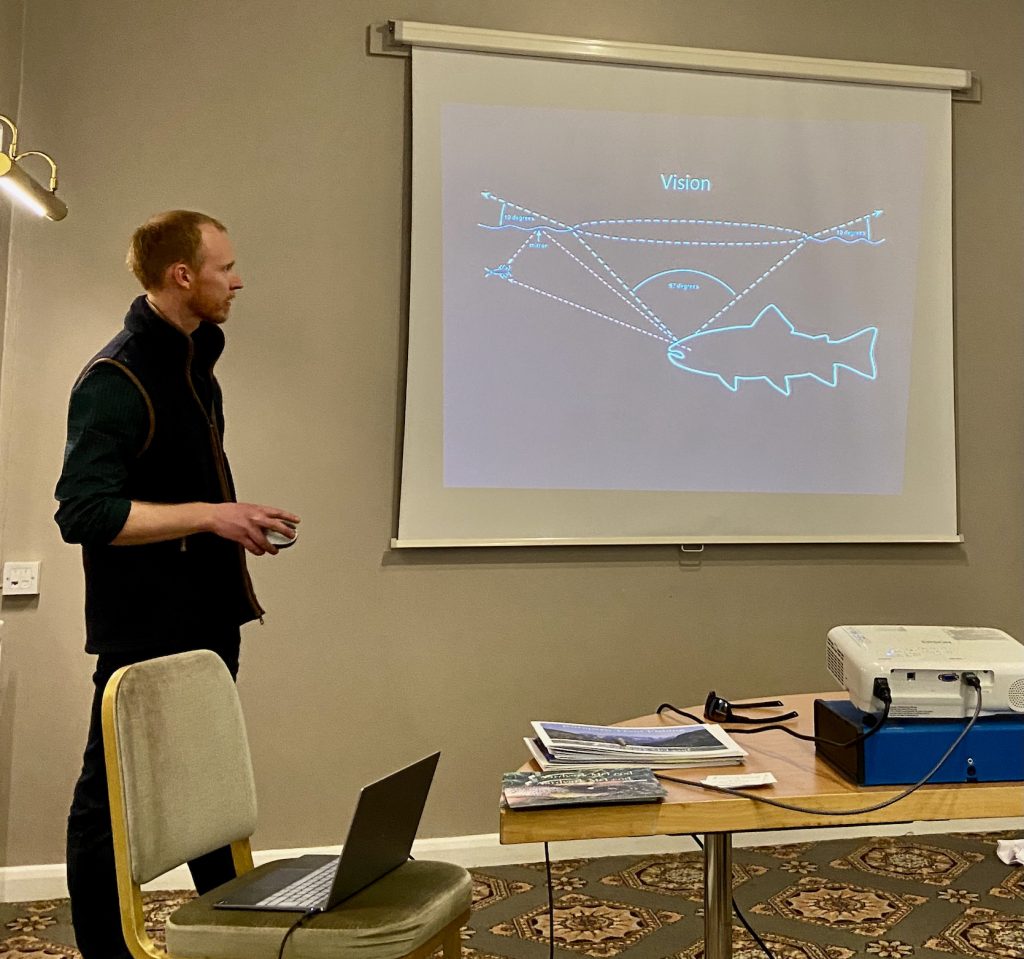
Alex emphasised the value and unique importance of English Chalk Streams. There are 210 chalk streams across the world 160 of which are in England with the others in France. The delights of fishing throughout the seasons were described with tactics and approach outlined with in-depth analysis of the trout’s view of the world.
https://www.aardvarkmcleod.com/water_type/chalkstream/
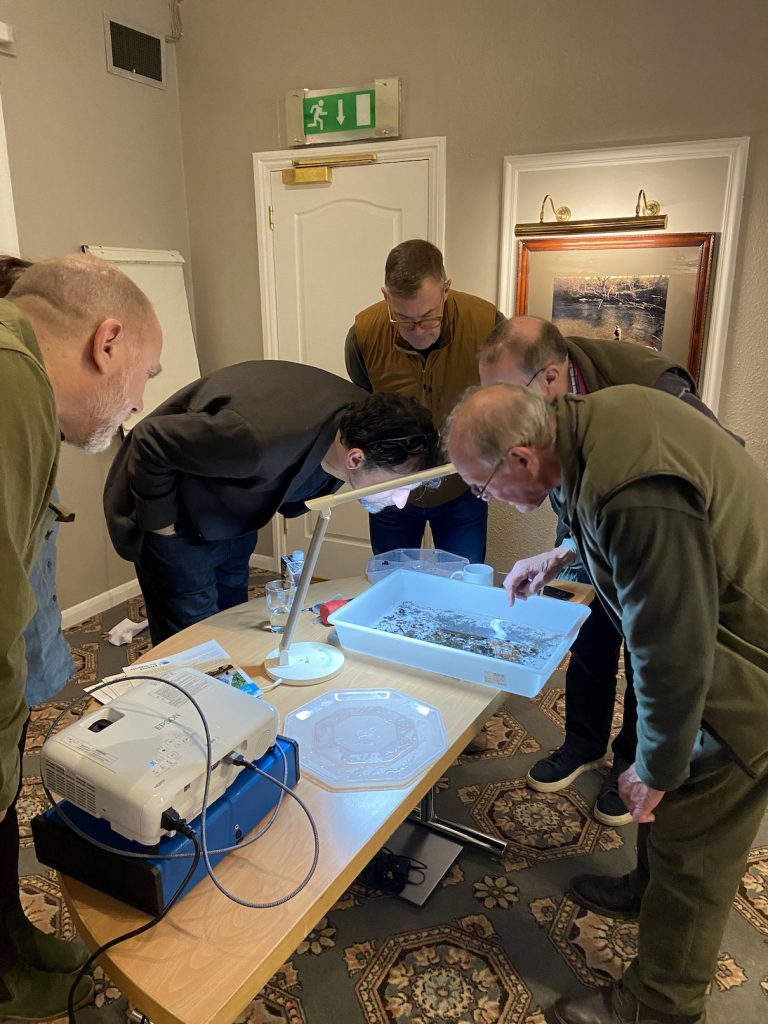
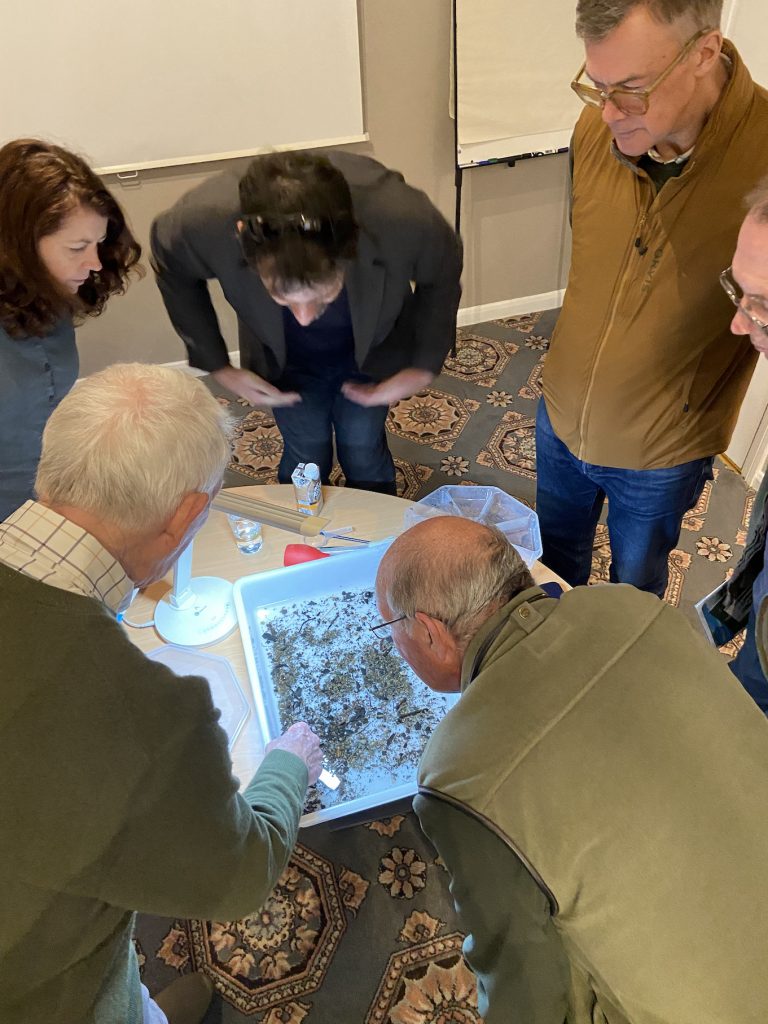
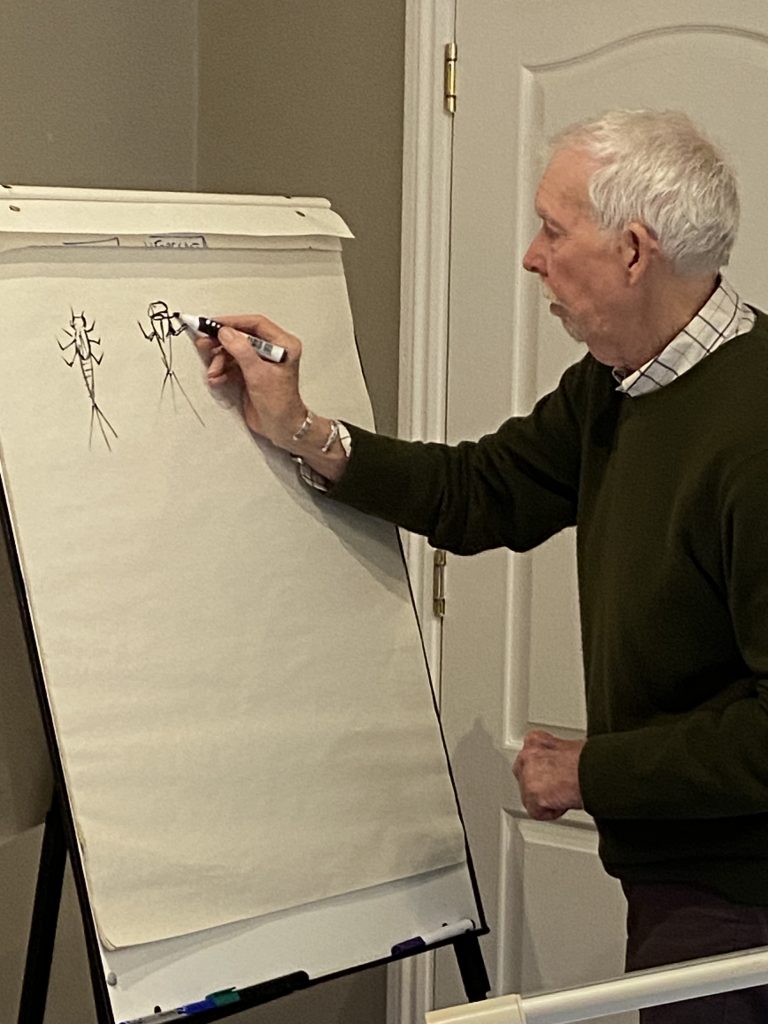
Charles is a gifted teacher and introduced his inspiring Fishing for school program with vigour and passion. The bugs life world of River Fly transfixed the audience and introduced the universal value of Latin across the scientific community. He explained how viewing the abundance of life in rivers linked to art and broader learning. Full details of Fishing For Schools can be found at :-
What we Observe
Is not nature itself,
But nature exposed
to our method
of questioning.
Werner Heisenberg
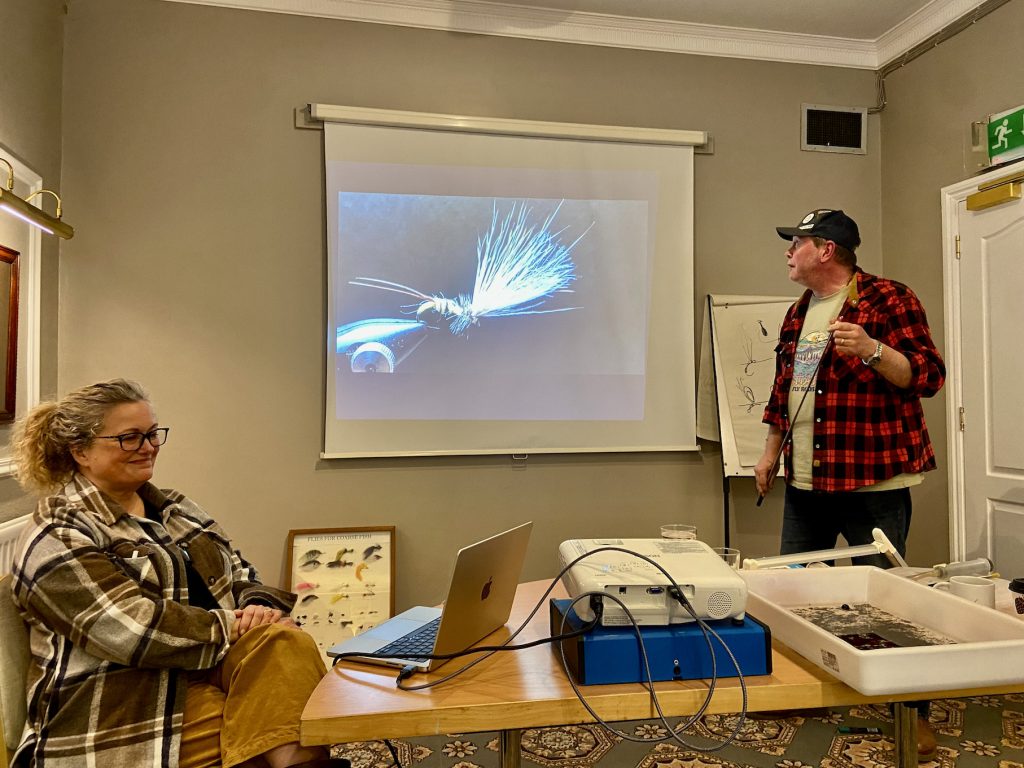
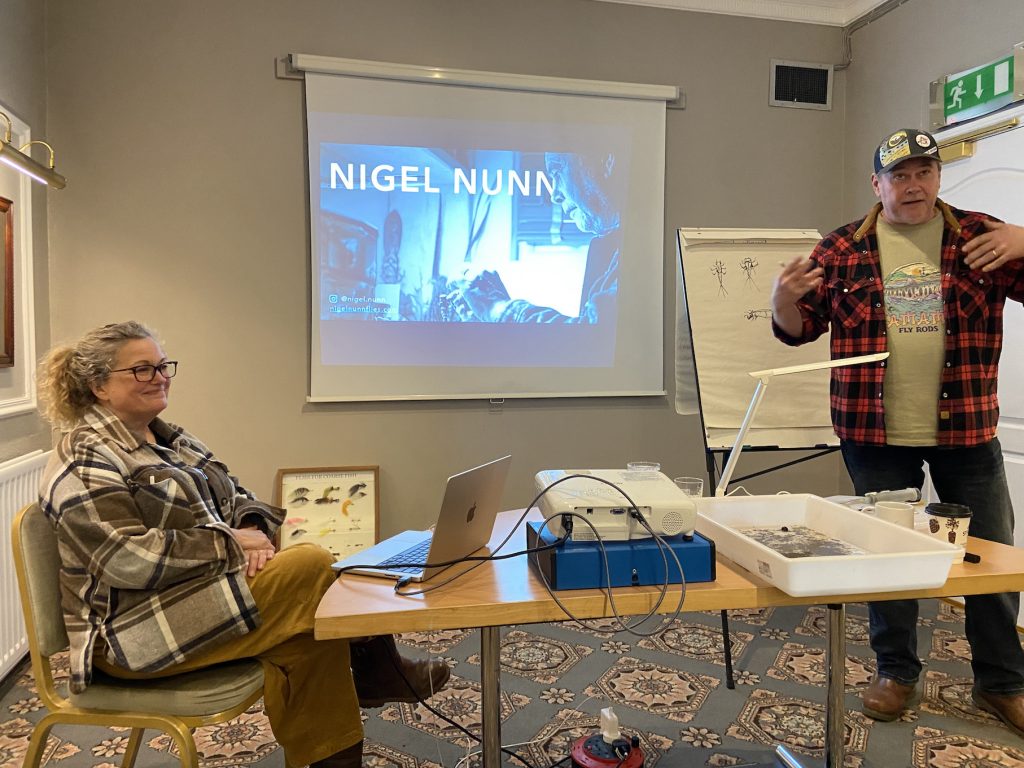
From Charles talk of Latin and life within the water we moved on to a little psychology as Nigel Nunn introduced his world of fly tying. Asking; How trout see things and why they take a fly? Nigel’s non symmetrical scruffy flies are designed to give the illusion of life. A great deal of thought, observation and experimentation is behind the designs of Nigel’s creations that tempt wily trout across the globe.
Nigel related to the names of some of his flies an example being the Gypsy Queen a vibrant pink and green fly, alegedly named after an Irish saying:-
Pink and Green
Should never be seen
Except on the back of a gypsy queen.
Nigel agreed with my comment that one of the most important factors in fly choice is Confidence and belief in its effectiveness.
https://www.nigelnunnflies.com
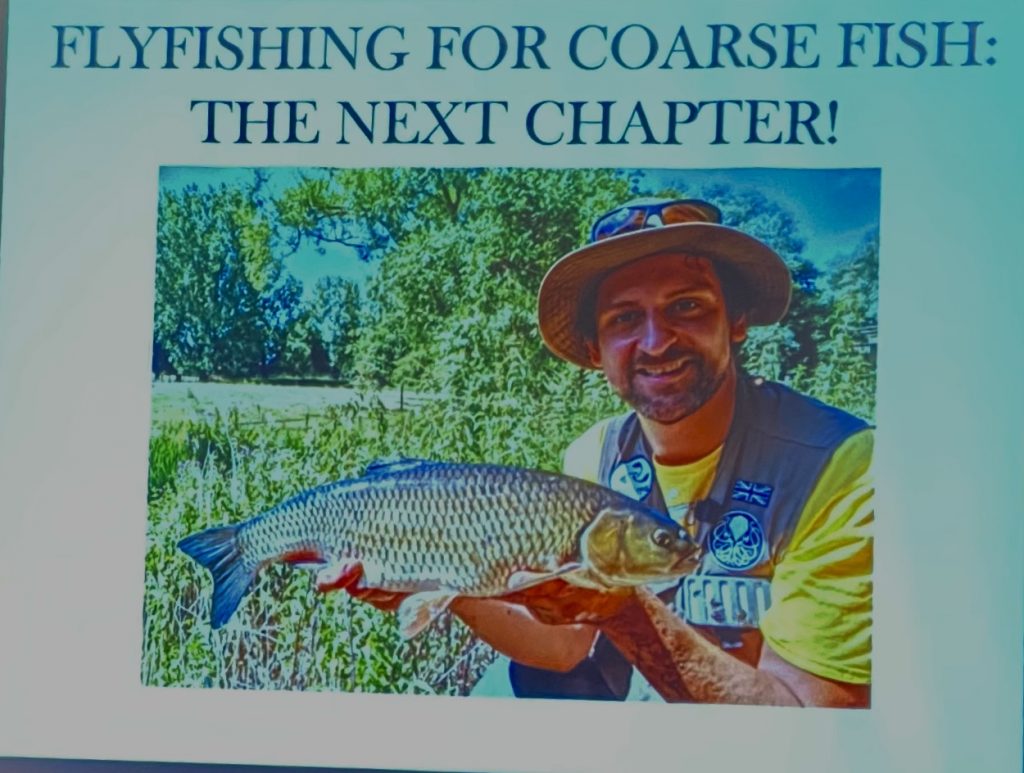
Dom talks coarse fish on the fly the new frontier; exploring a wide range of West Country venues suggesting that Fly Fishing offers opportunites to target many species not tradionally targeted with Fly Tackle. Species targetted by Dom included perch, Rudd, pike, carp, bream, roach, chub and even huge catfish.
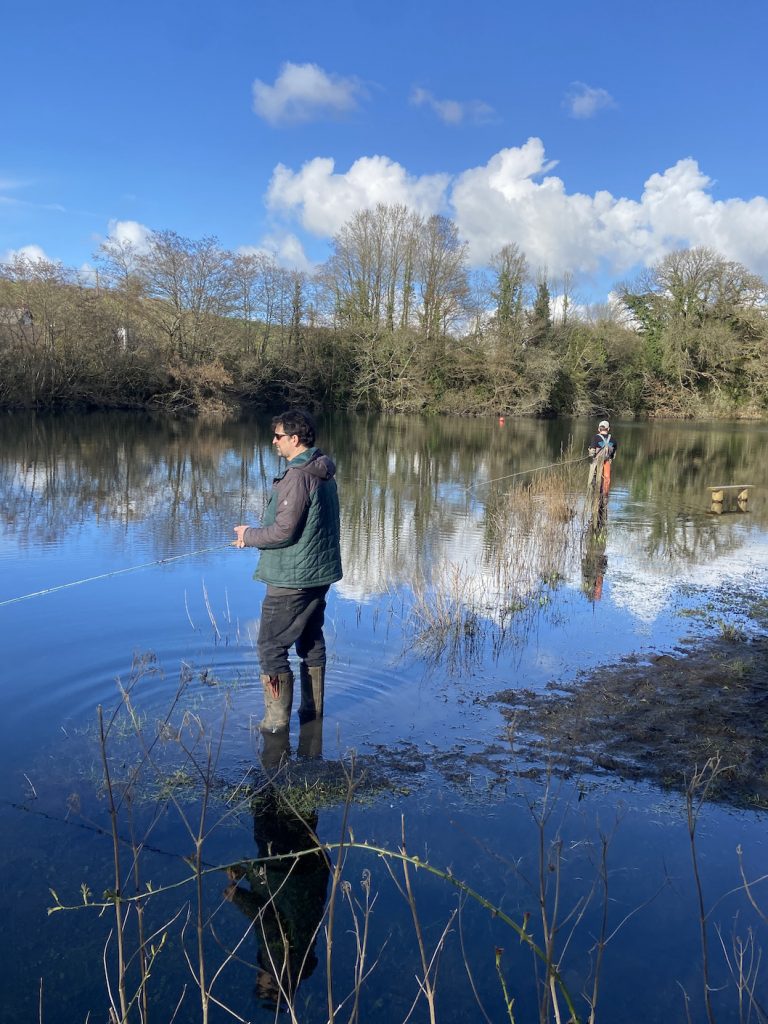
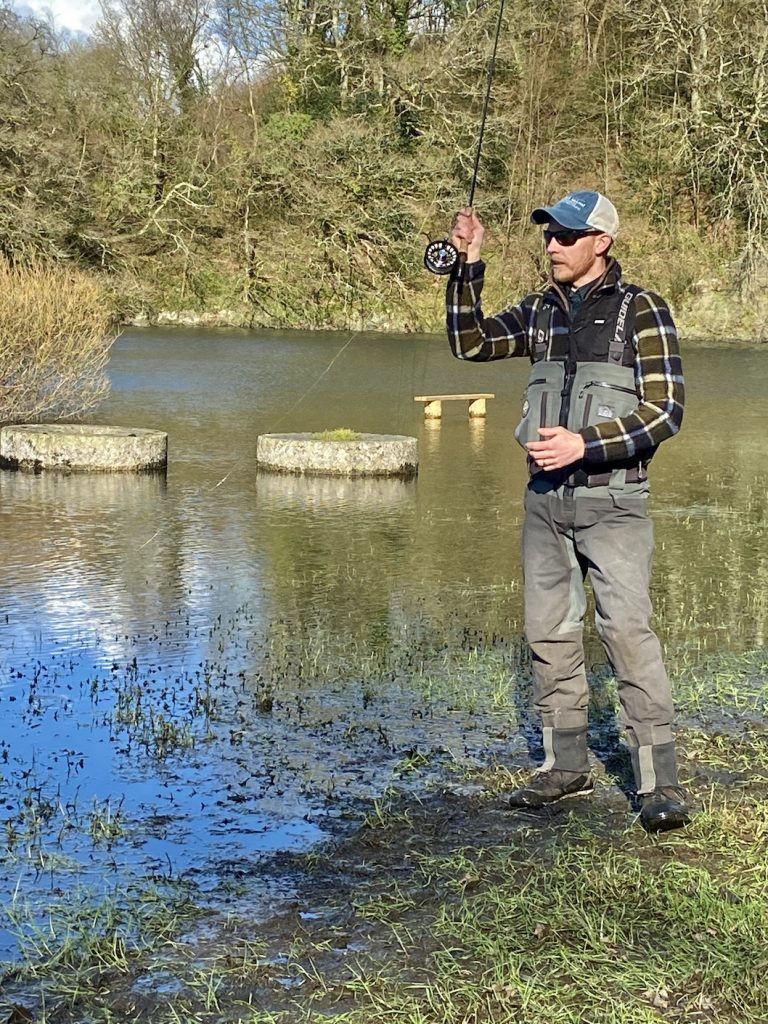
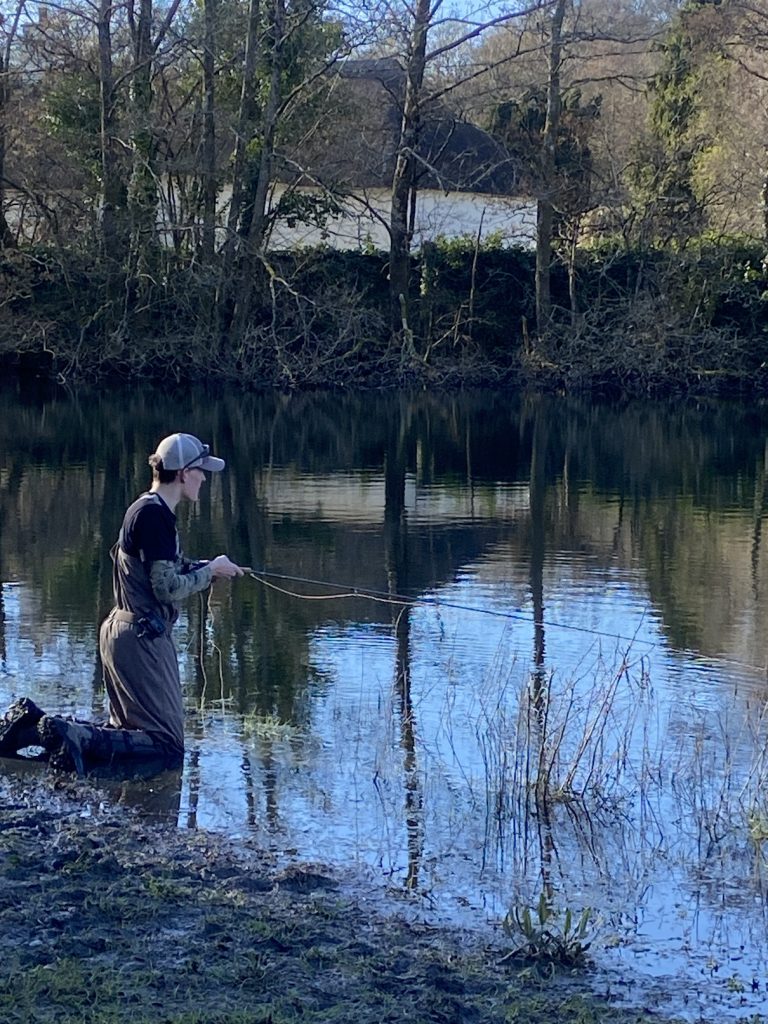
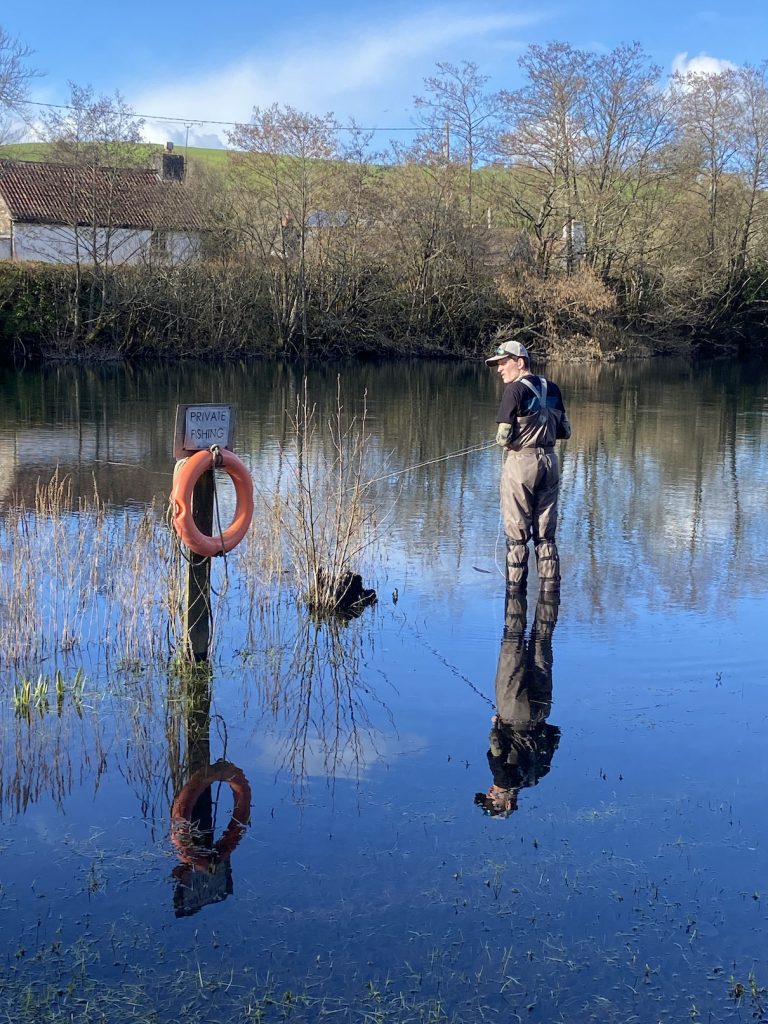
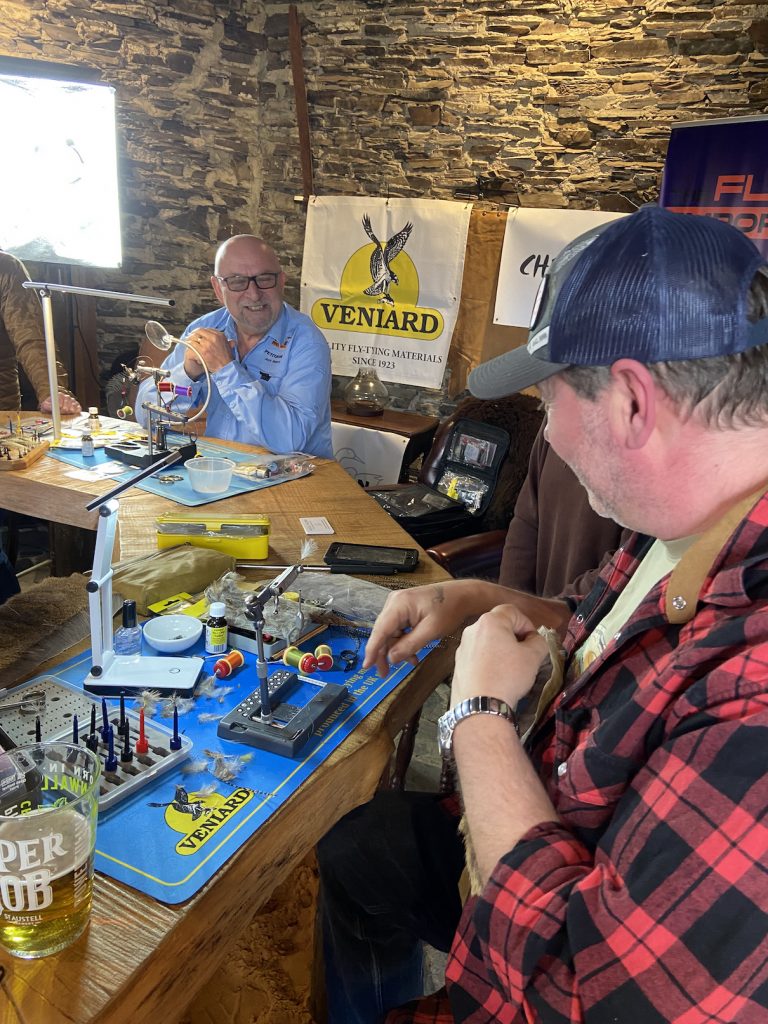
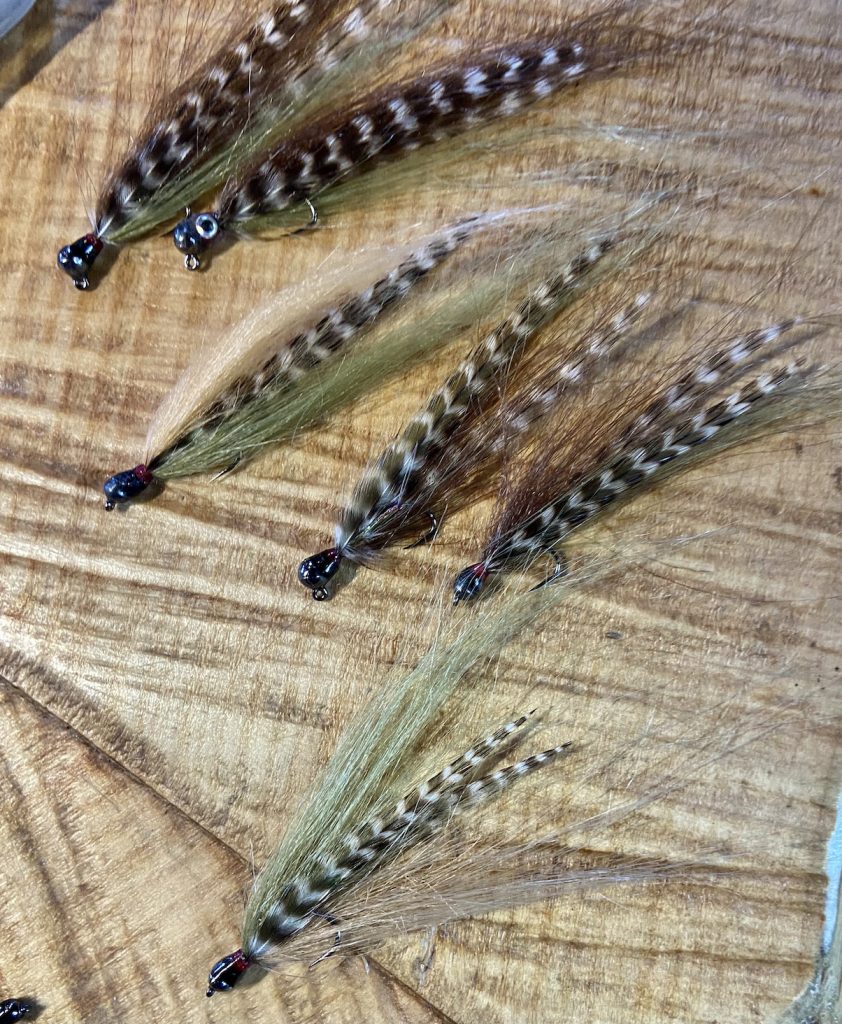
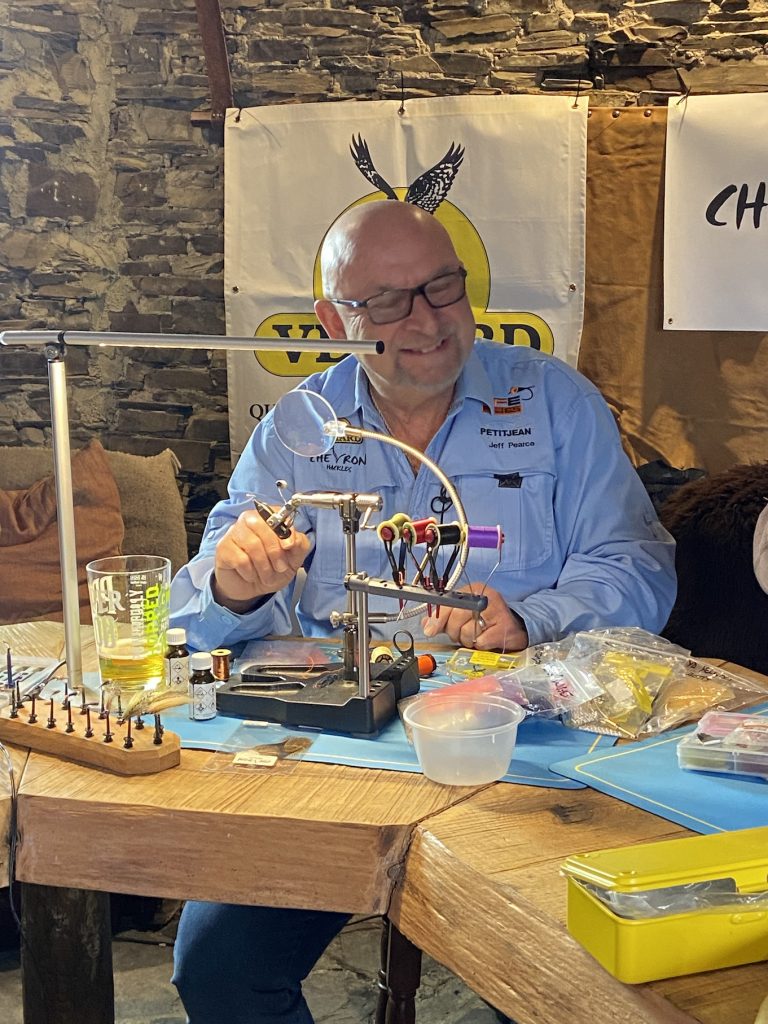
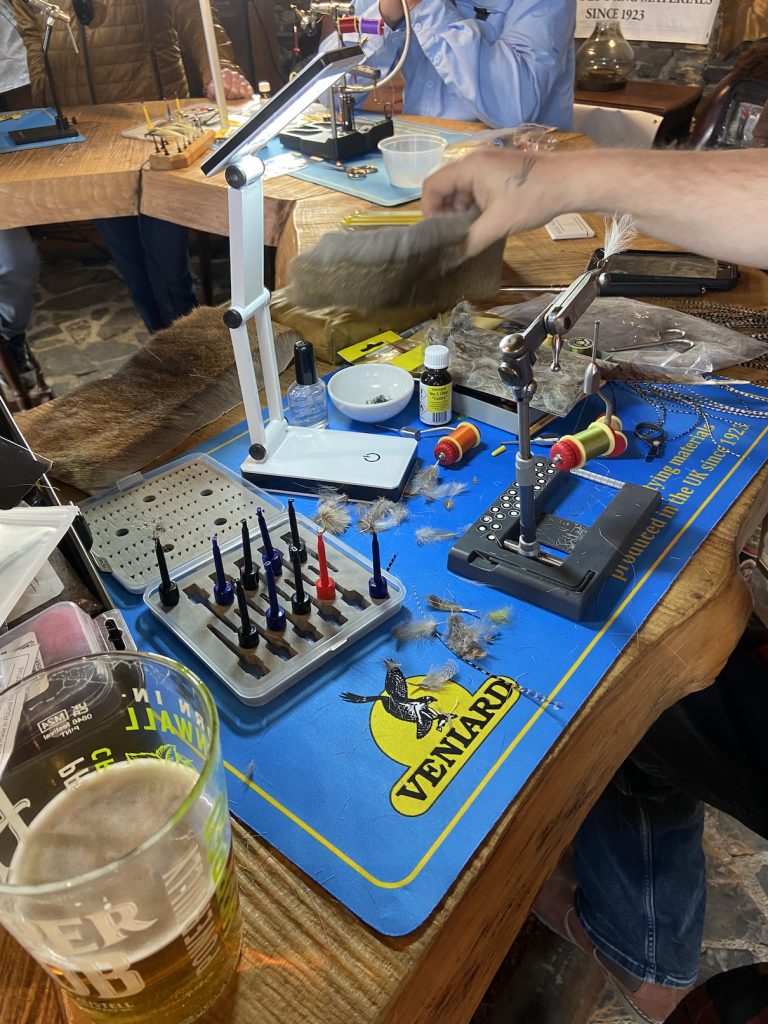
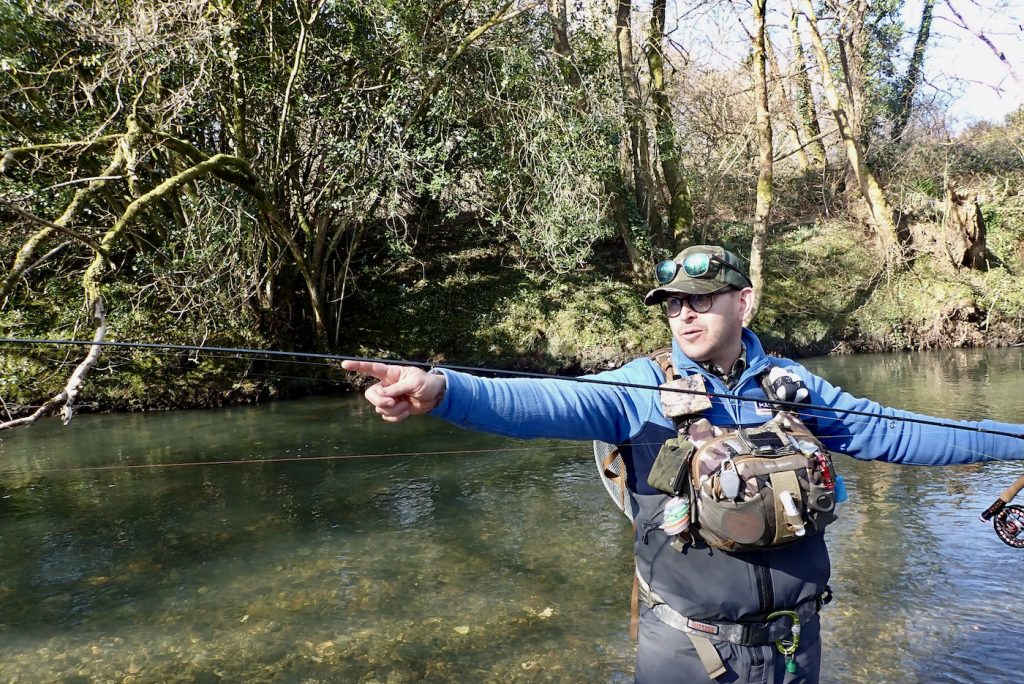
Jeff Pearce and Nigel Nunn creating tempting flies with a dash of banter and a cheery grin.
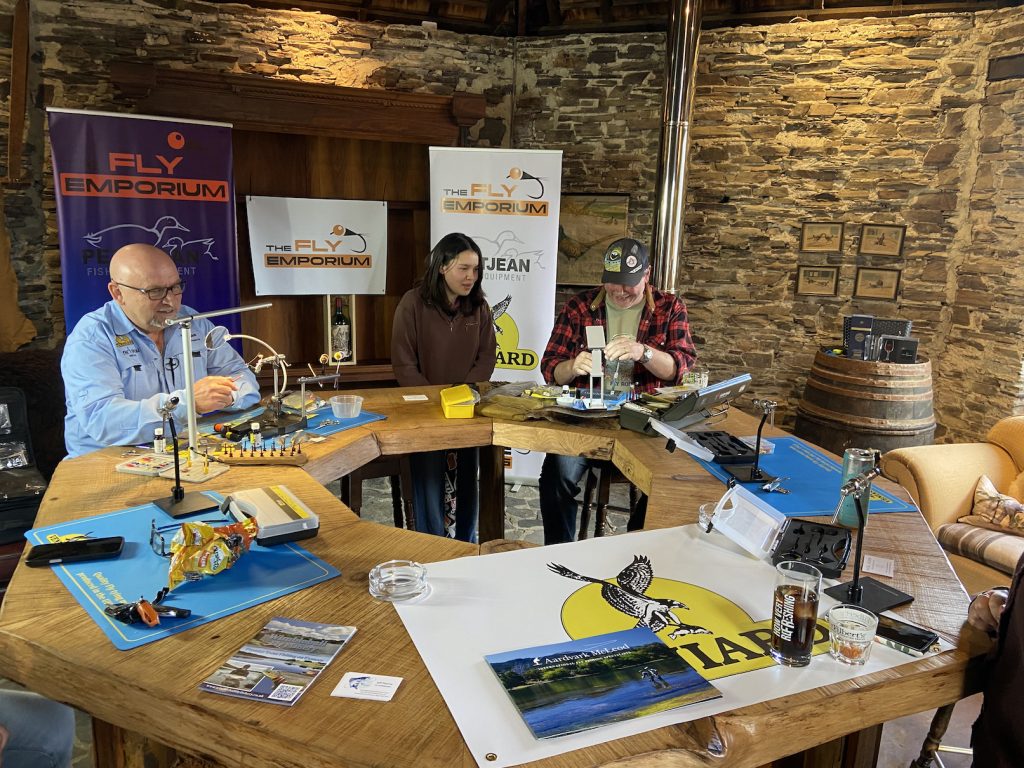
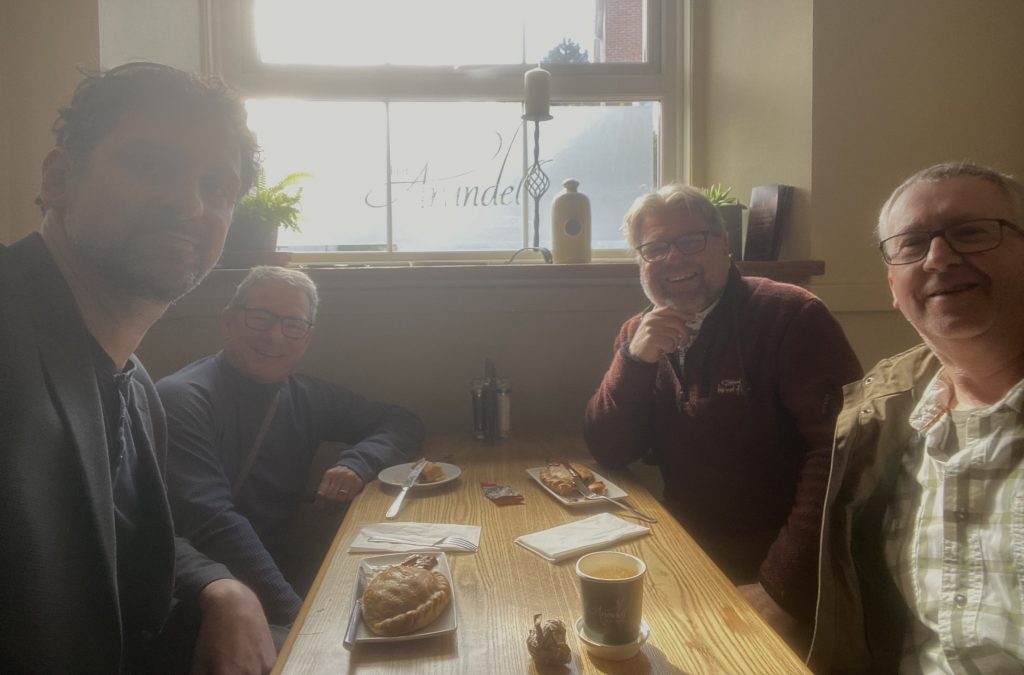
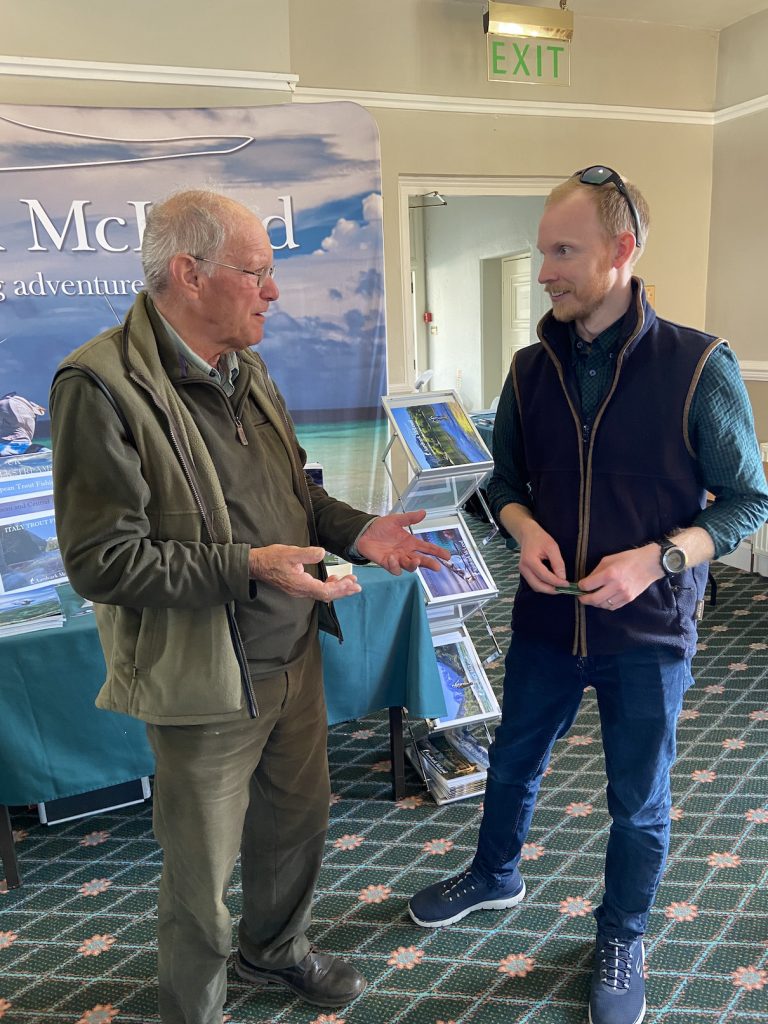
Exhibitors host a multitude of stands in the Tamar Room. Quality tackle, flies and holidays to tempt both angler and trout!
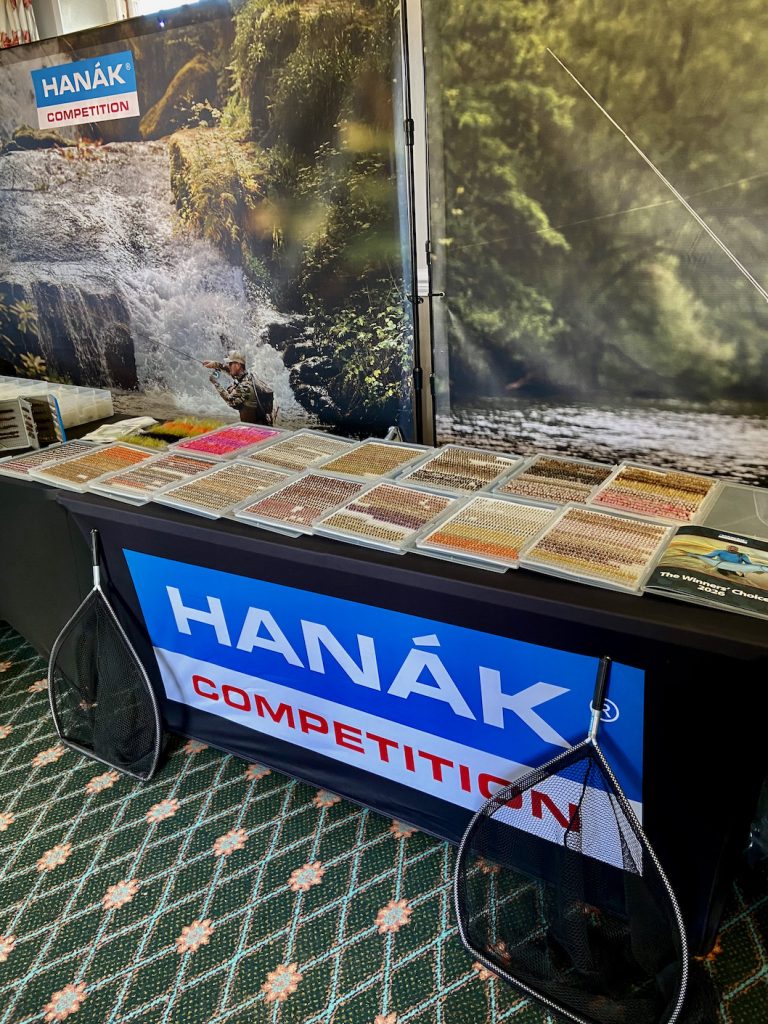
UNIQUE FLIES Offer fine quality barbless flies for river and lake
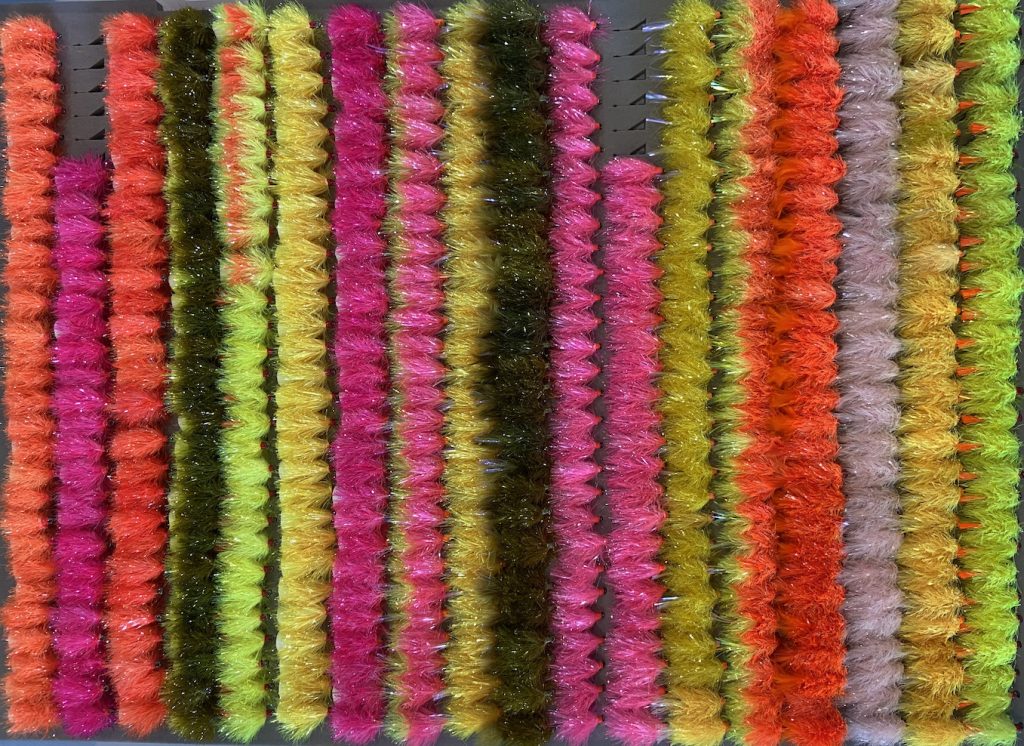
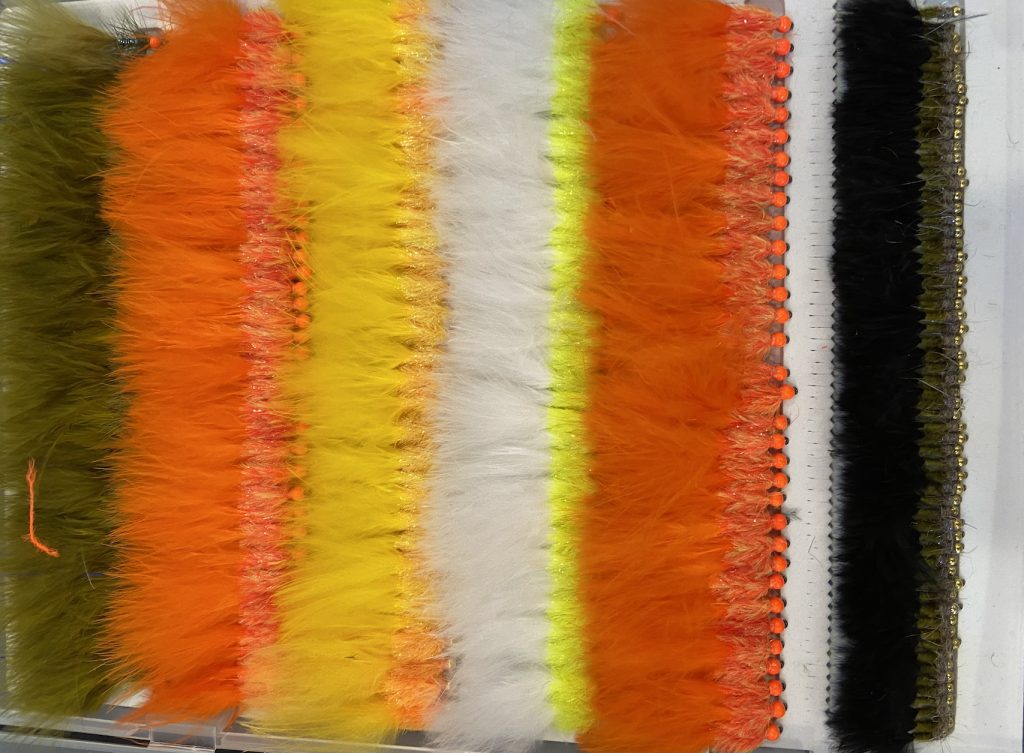
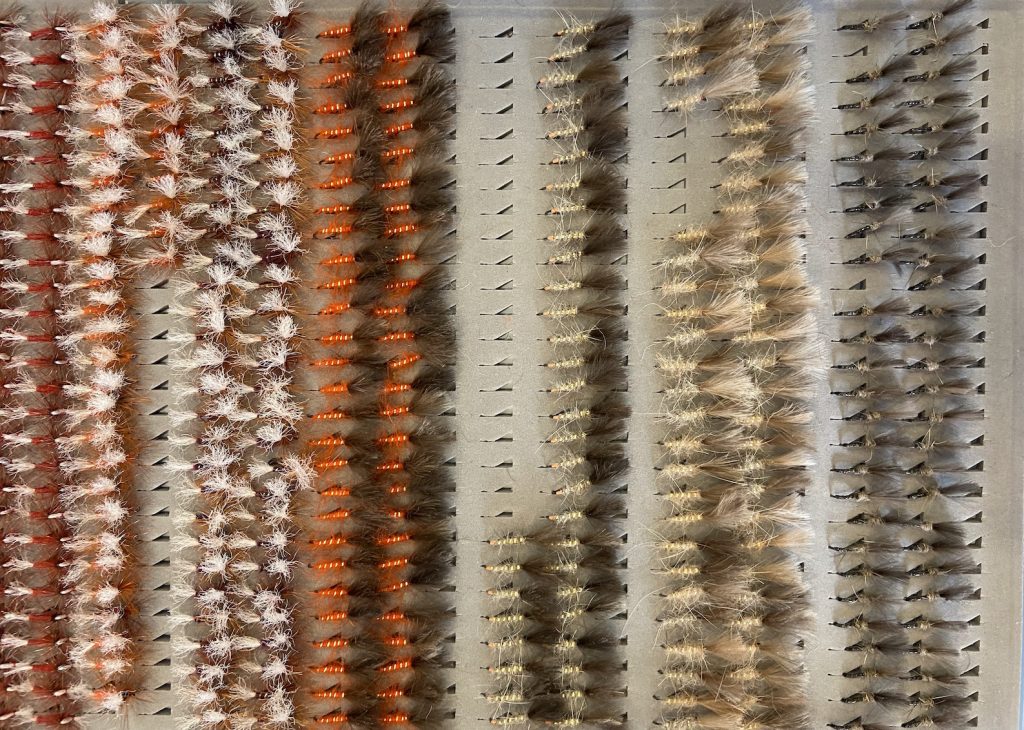
All the way from France
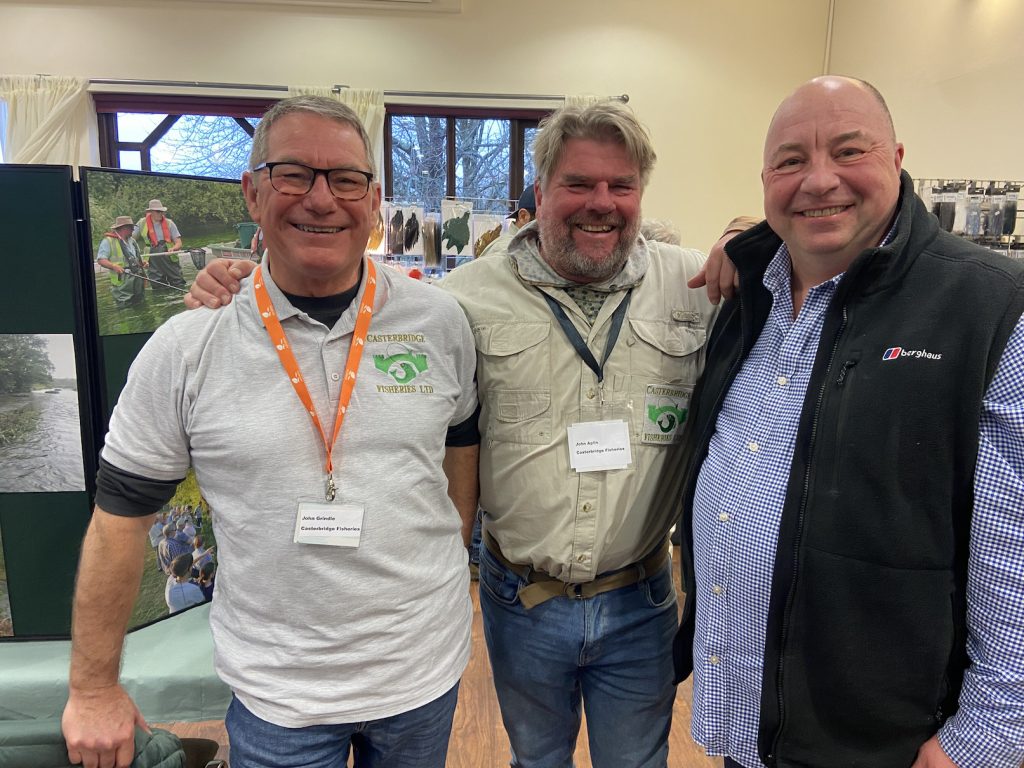
Casterbridge Fisheries (River Frome)
The River Frome home of the UK’s biggest grayling and stunning wild chalkstream trout.
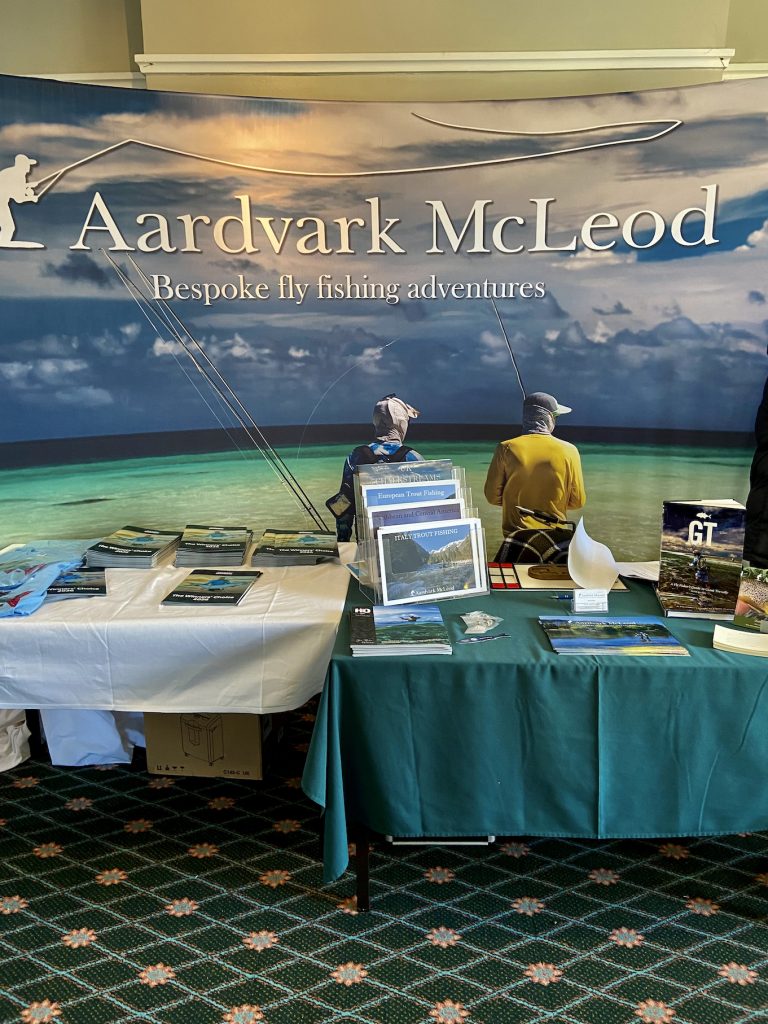
Veniards & The Fly Emporium – Fly Tying materials and accessories at their finest.
Wimbleball Reservior Fly Fishery
Picaris The UK Distributor of Peux Fly Fishing, Fasna Fly Fishing and Diamond Back Fly Rods.
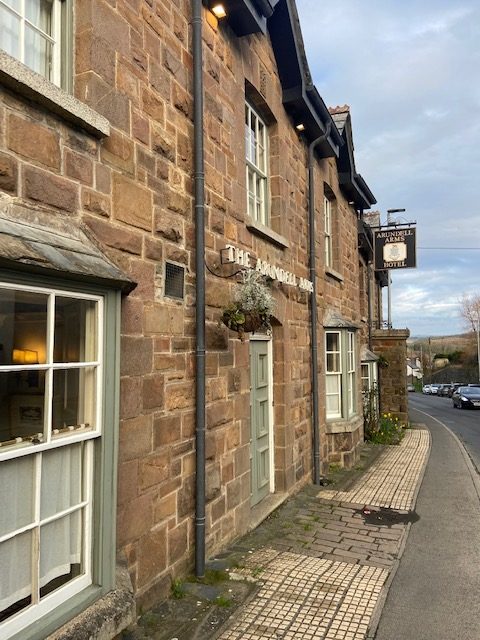
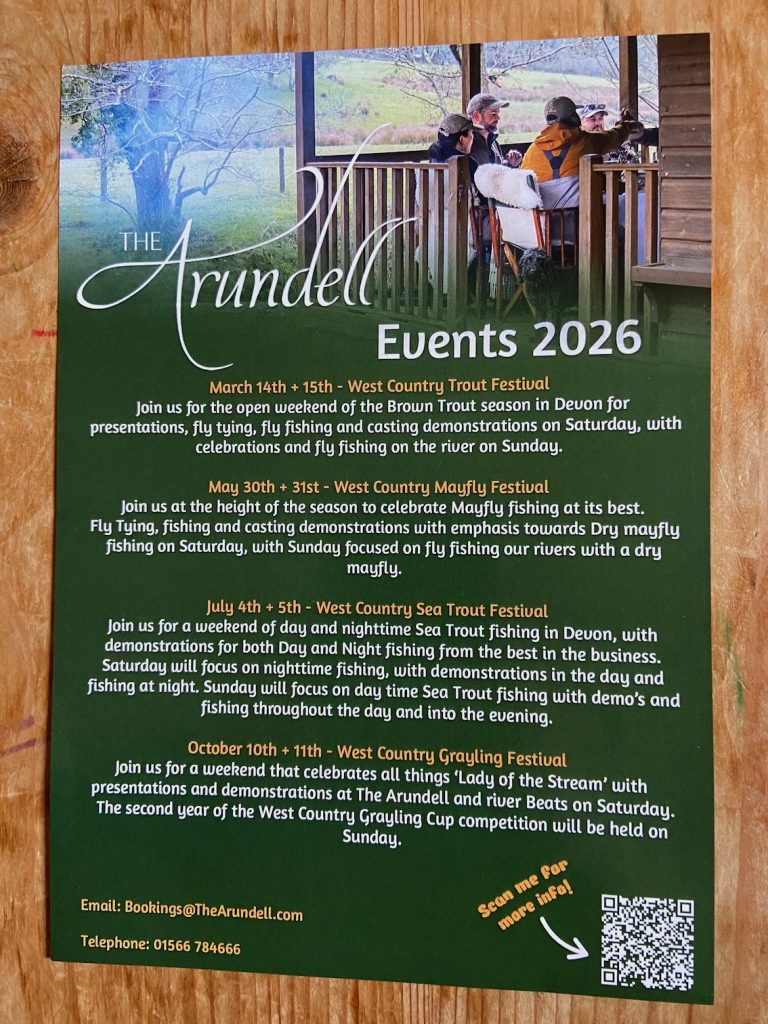
The Arundell Arms is a 300 year old Coaching Inn set in West Devon that is at the heart of the West Country Fly Fishing Scene. The Arundell has a rich fishing history and has hosted many influential anglers and gifted literary scholars during its history as one of England’s precious country hotels.
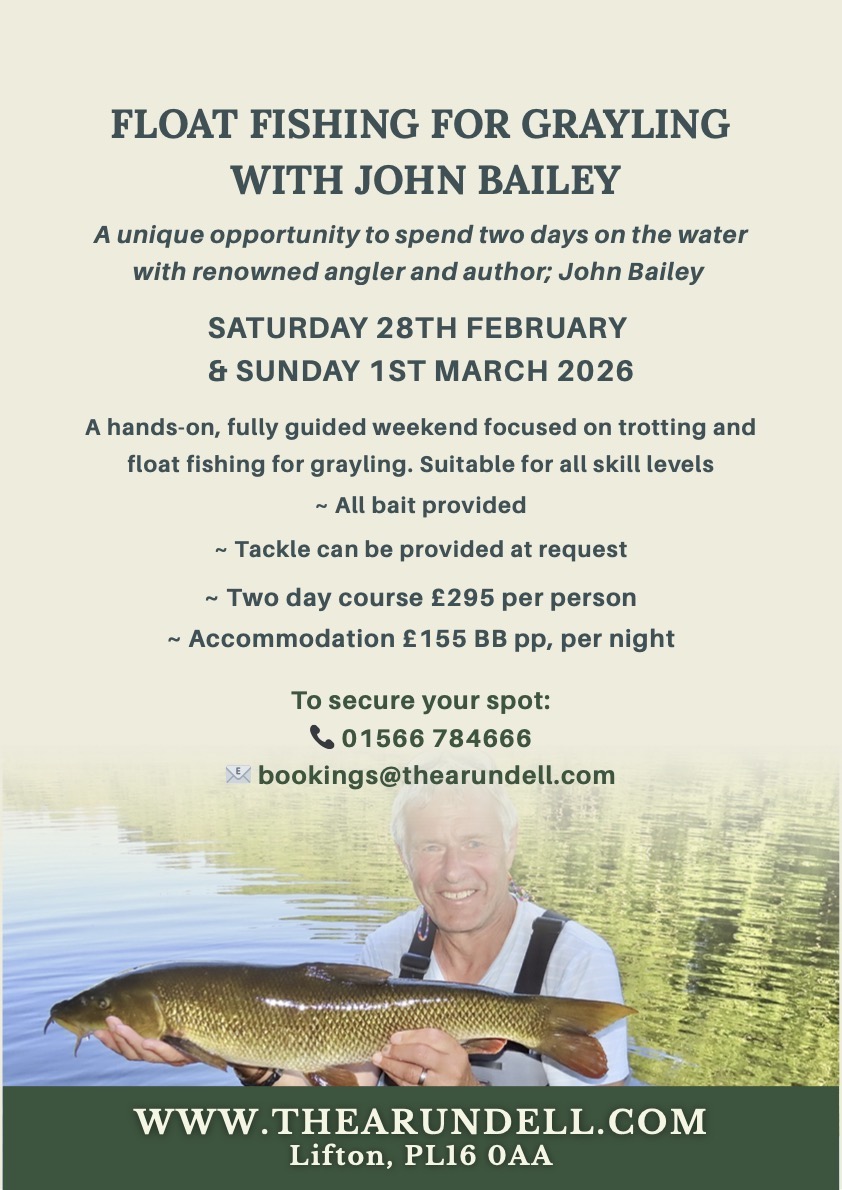
On the evening of February 28th Pauline and I joined with friends to listen to a talk by the well known angling author John Bailey who is also the lead angling consultant in the popular BBC Two series, Mortimer & Whitehouse : Gone Fishing.
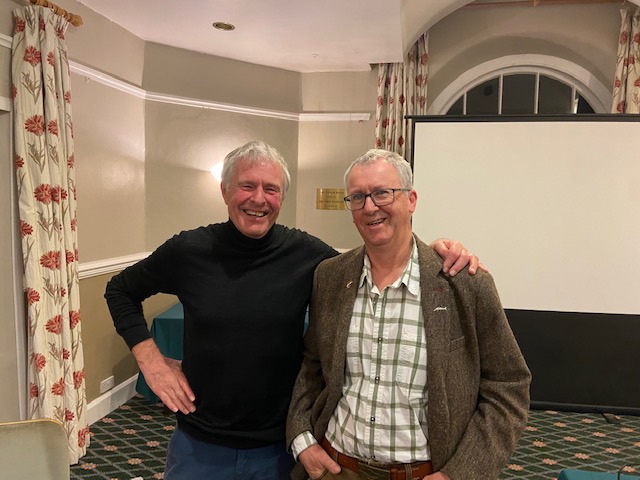
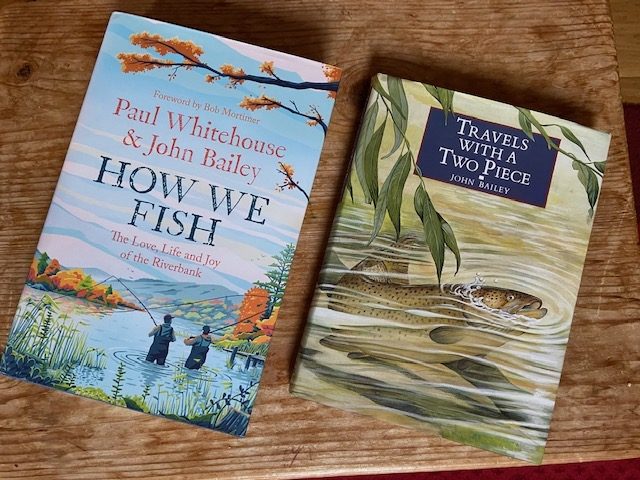
I have many of John Baileys angling books and my favourite is ‘Travels with a Two Piece’ published in 1985. The book takes the reader on a journey around the UK with John and his trusty vintage split cane fly rod. Within the pages of this delightful book are stories of fishing in the West Country with particular relevance to the Tamar and its tributaries. The magic of night fishing for the wily sea trout of the Lyd are encapsulated in this pleasing prose from the book. “ The pool lies under the gloom and disorder of Gathered Wood. There is a silence there, enough to hear the small brown trout moving on the shallows, so silent you fancy you hear the moon above slowly spin in the sky, the owl float in the air or the mists actually rise from the meadow dips. There is a magic in the very earth this night.”
In the forty odd years since these words were written much has changed in this world and yet the rivers still flow and anglers still fish these waters hoping to connect with the wild fish that swim within.
In 2025 John revisited these waters as part of the Gone Fishing Team and his talk described in detail the processes involved in the production of this highly popular program its vital human element and the dynamics between its three main characters, Bob, Paul and Ted the dog. The entertaining and informative talk was delivered with a liberal sprinkling of humour. The genuine warmth and honesty of the show emphasised throughout.
There are many who watch Gone Fishing who are not anglers and yet they are entranced by the adventures of Bob Mortimer and Paul Whitehouse as they cast their lines into waters across the UK and beyond. The program focuses on wild fish from wild waters a factor that is undoubtedly a reflection of John’s passion for such waters.
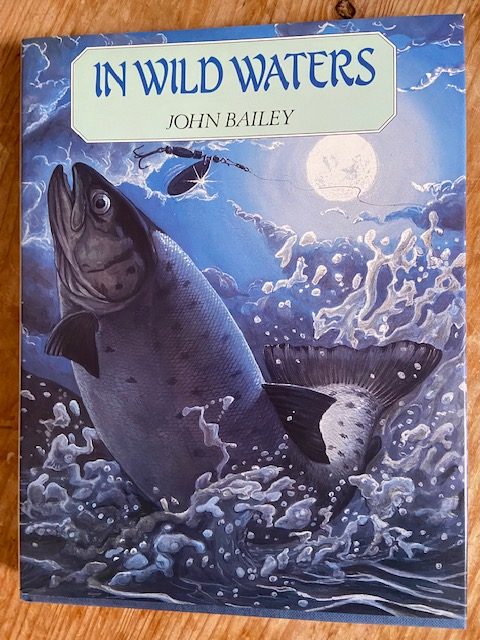
I expressed to John my belief that one aspect that makes the show so popular is that it relays the joys of companionship at the water’s edge and doesn’t actually take the fishing too seriously. For whilst John is a dedicated angler like myself many non- anglers would fail to grasp the depth and passion involved.
Wild rivers their value and the value of wild fish was discussed in depth along with the complex links between angling the community and the environment.
The impact of a changing society upon angling for young people was debated at length. I’m sure that many in the audience related to a time when children would fish alone and learn for themselves. Both John and myself could relate to a childhood spent at the water’s edge wandering free without fear in what is now a distant age. Few of today’s youth are likely to enjoy such freedoms.
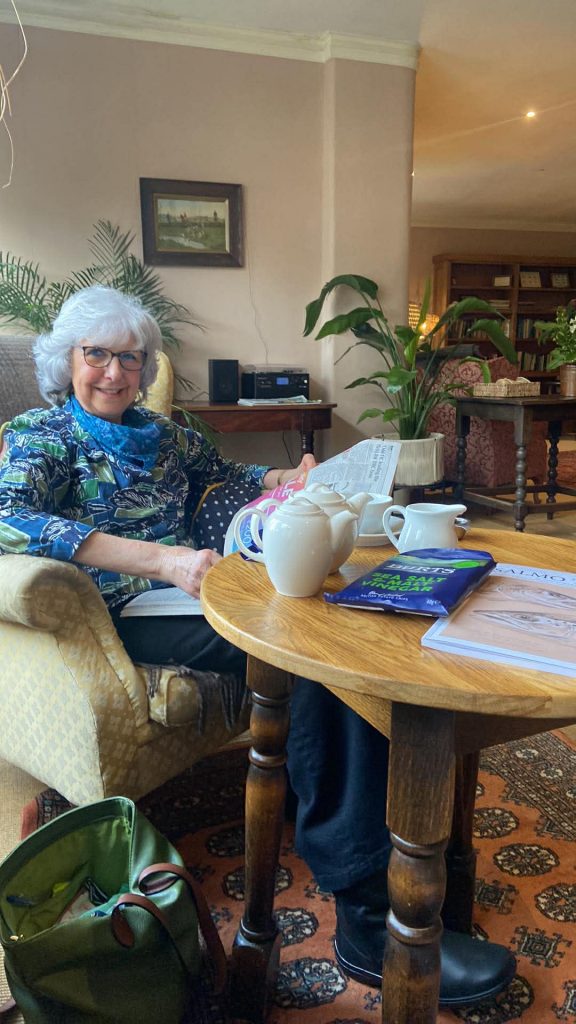
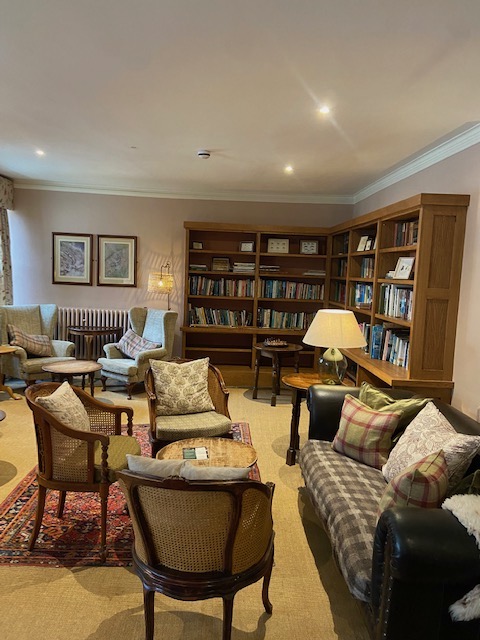
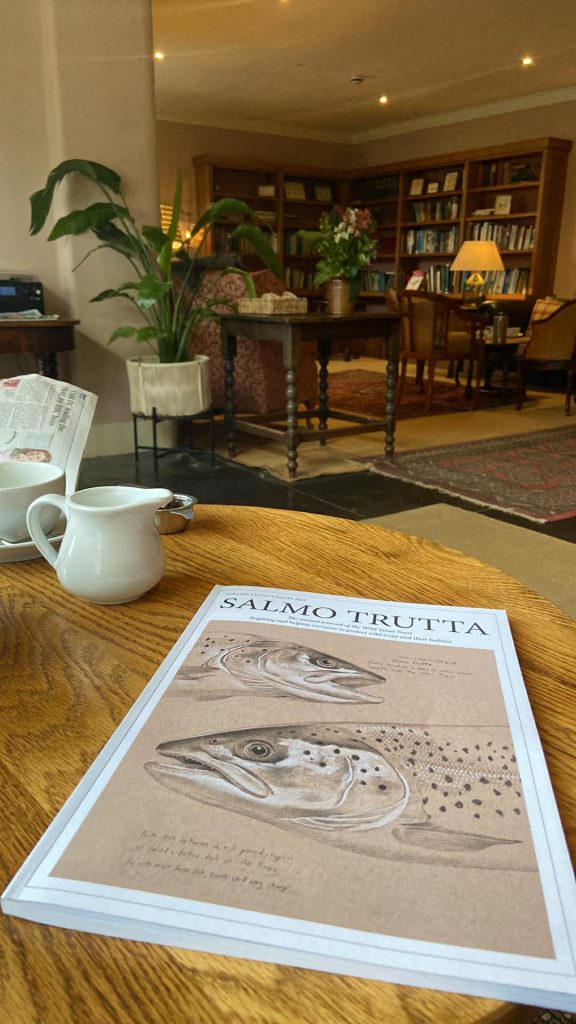
The Arundell is a special place steeped in history and a tranquil oasis from the troubled world in which we live. After a delicious meal my wife and I retreated to the reading room its shelves abounding with angling and countryside titles in keeping with the hotels essence. There have undoubtedly been many interesting conversations within the timeless comfort of this room.


Autumn and Winter Fishing
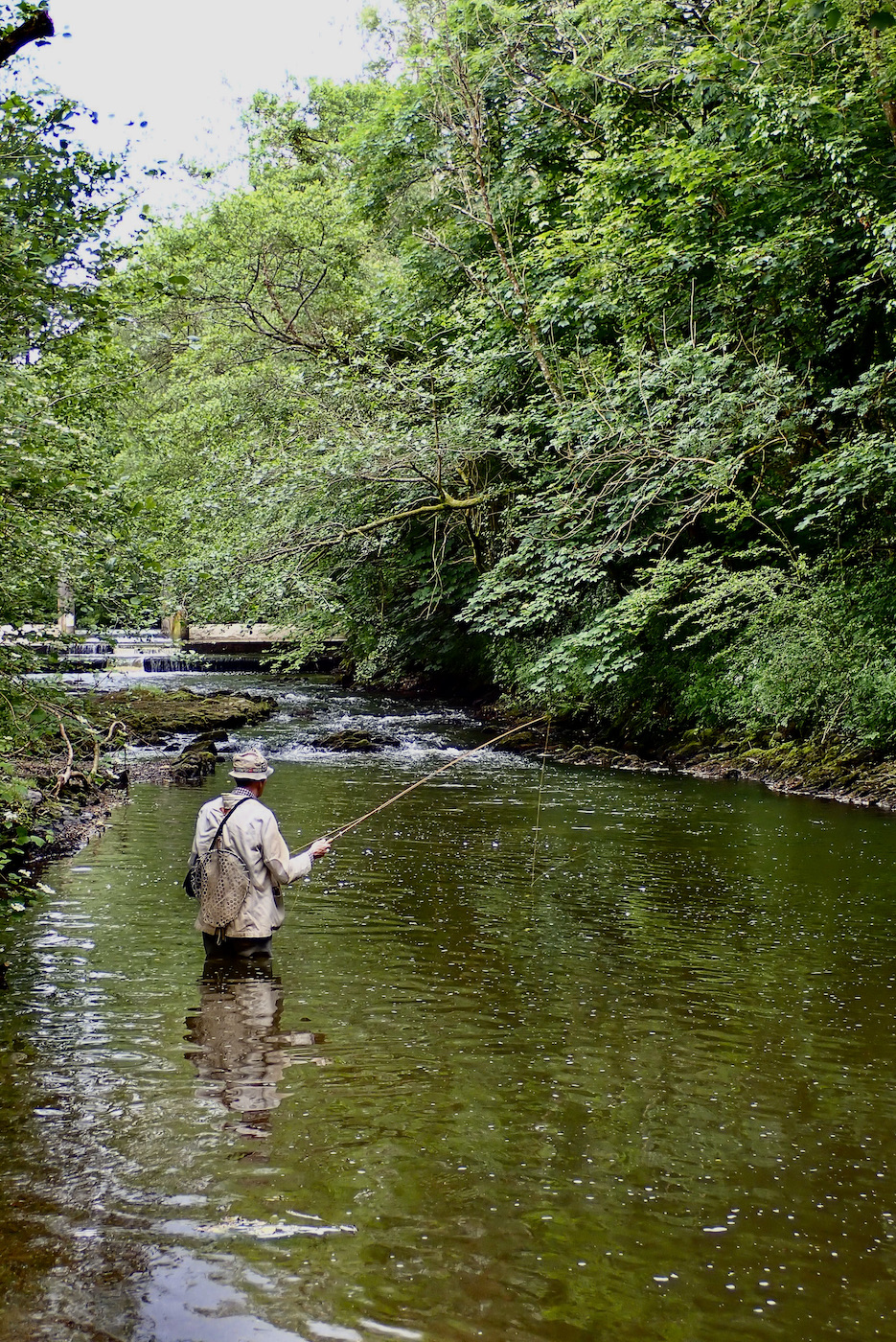
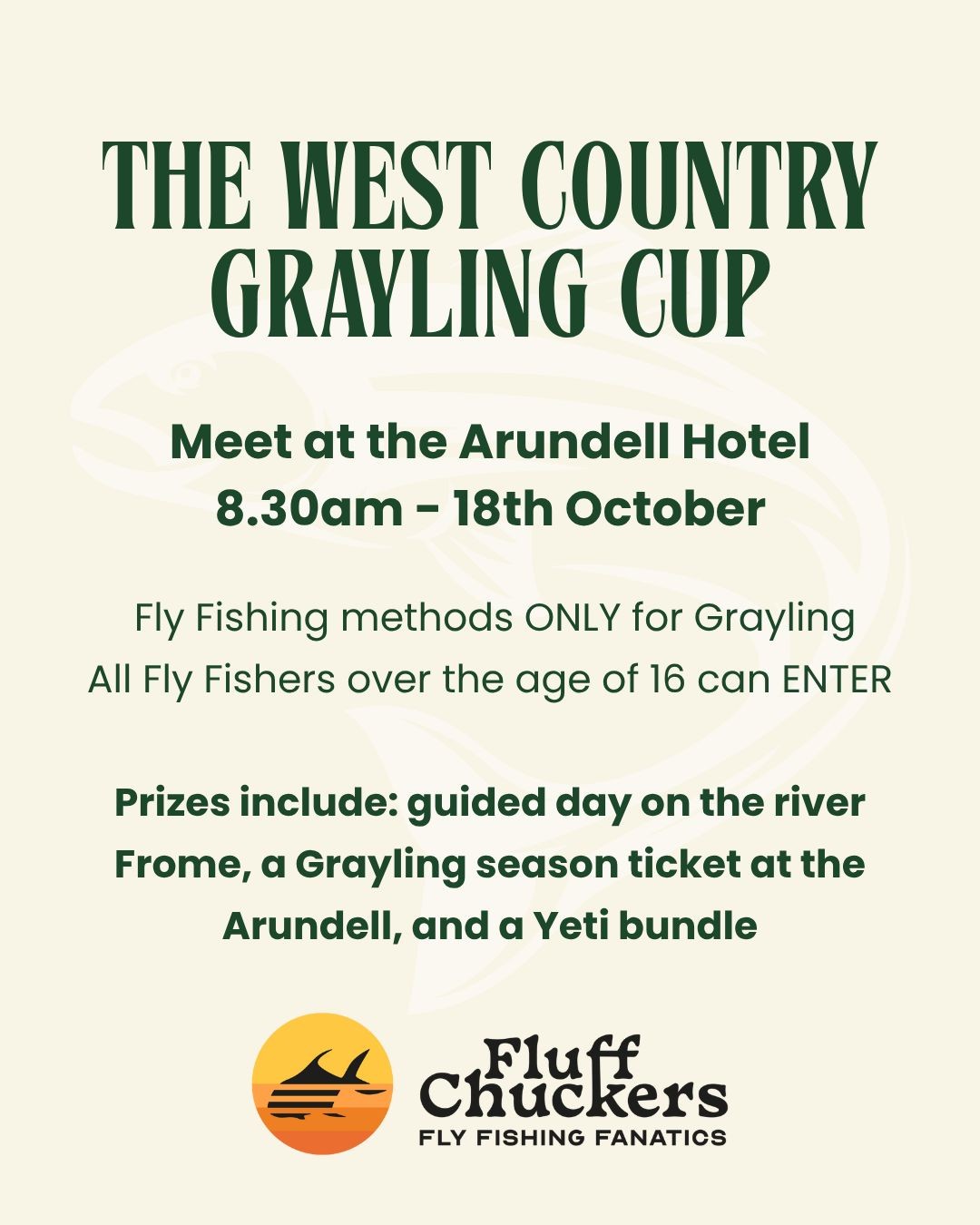
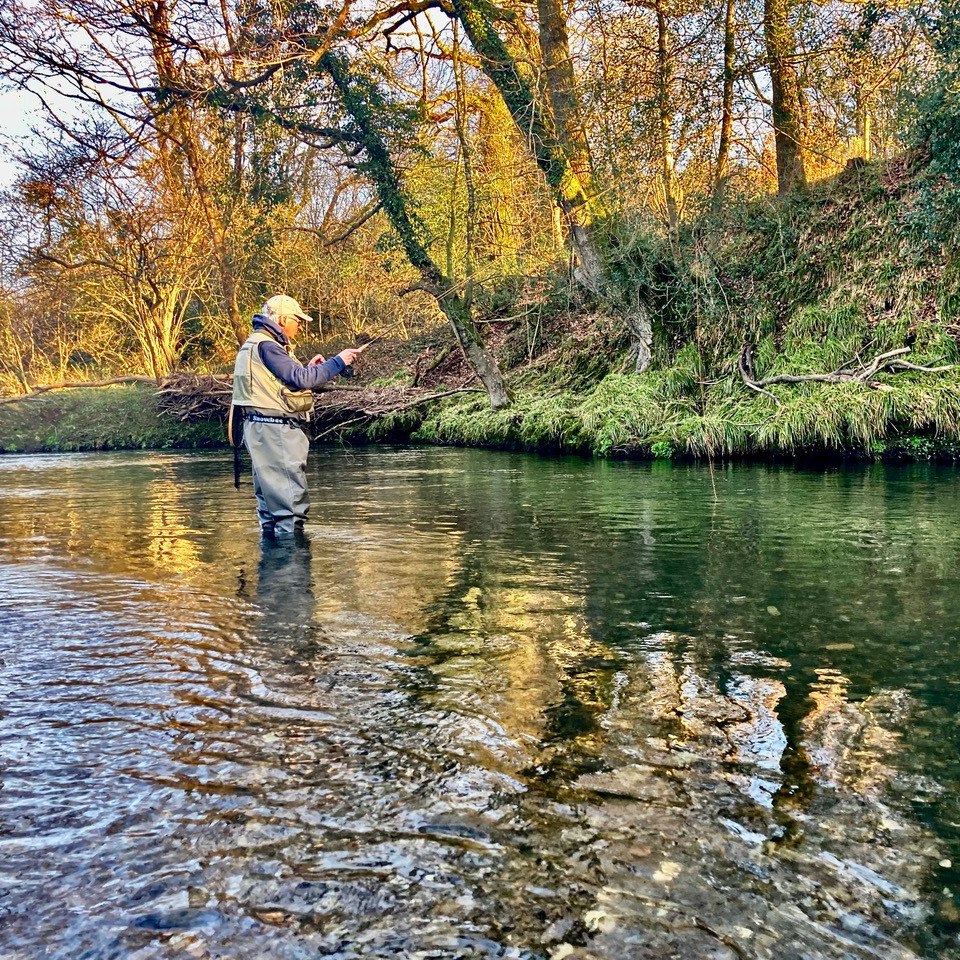
Fishing for the silvery grey lady of the rivers is increasingly popular at the Arundell and happily this does mean the continuation of fishing into the winter season. Day tickets for grayling are £25 per rod or £150 for a season ticket valid from 1st October 2025 – 14th March 2026. We also have our first West Country Grayling Cup on 18th October – entry fee is £25, details below!
We are so looking forward to the return of the renowned world champion, Katka Švagrová at the end of the month. Her three, one- day courses are almost fully booked but we do still have some spaces on Saturday 1st November and possibly one space on Friday 31st October. Please call or email bookings. Tel: 01566 784666.
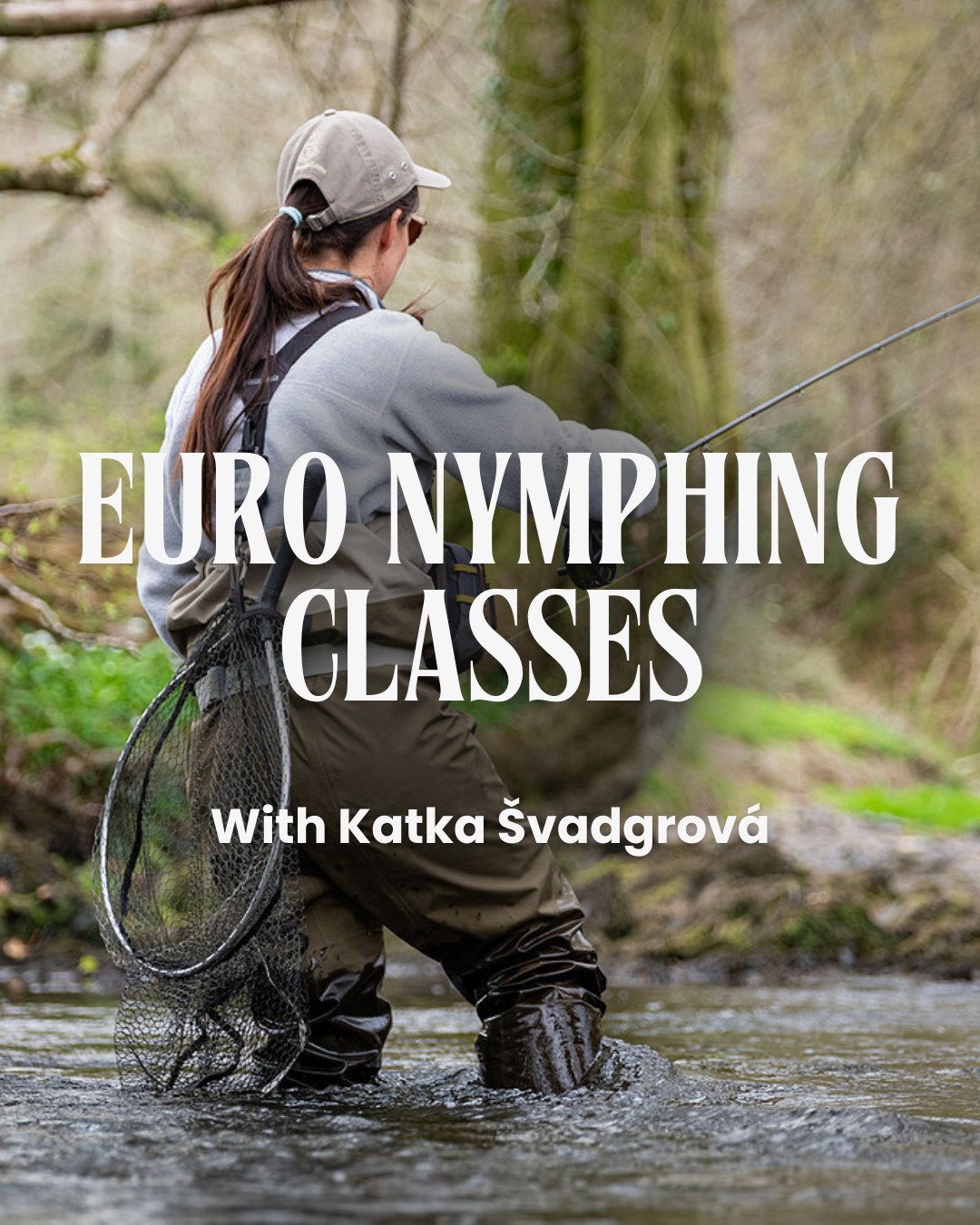
 Katka Švadgrová returns to The Arundell!
The season certainly seem to be drifting by on life’s current in an ever increasing speed and it seems only a short time since I was last at the Arundell for the grayling day back in early March. https://www.northdevonanglingnews.co.uk/2025/03/06/arundell-spring-grayling-day/
Over three months later and the grayling closed season has passed and summer sea trout are ascending the rivers of the Tamar catchment. The Arundell boasts twenty miles of water amidst lush landscapes of the Devon and Cornish borders. I had arranged a day’s fishing with my good friend Jeff Pearce and had arranged to meet at the Arundell tackle shop for 9:00am.
Traffic at Bideford delayed my journey and it was 9:30am before I arrived and apologised for my lateness. Jeff had enjoyed chatting with fellow fishing guests and James Christoforou who is the venues head of Fishing.
James is a breath of fresh air with an abundance of passion and optimism befitting an angler from a younger generation. James talked of the recent upturn in fishing in the rivers following a good summer spate with good numbers of sea trout showing along with a few salmon. These migratory visitors really are the icing on the cake with abundant wild brown trout and some stunning grayling providing consistent opportunity’s for anglers.
It is always well worth listening carefully to advice from experienced local anglers and James certainly knows the hotels waters intimately explaining to Jeff and I where to fish and suggesting which flies to use and how to fish them.
Jeff is a keen exponent of nymph fishing and engaged in an in depth discussion with James delving into the intricacies of fly design. Like many other anglers I know including myself he carries an extensive selection of fly patterns yet in reality only fishes with a tiny proportion of them. My own interpretation of the discussion is to some extent that there is some basis in certain flies working well on specific rivers. This could be in part be due to anglers following trends and traditions. It is also likely that certain colours are more visible in certain tinges of water colour. The weight of a nymph is undoubtedly vital in ensuring that a fly gets down to where the fish are so the stronger and deeper the pool the heavier the fly needs to be. So the perfect nymph for the Arundell waters is perhaps a tungsten silver headed jig style with black body and sprinkling of silver flashy sparkle.
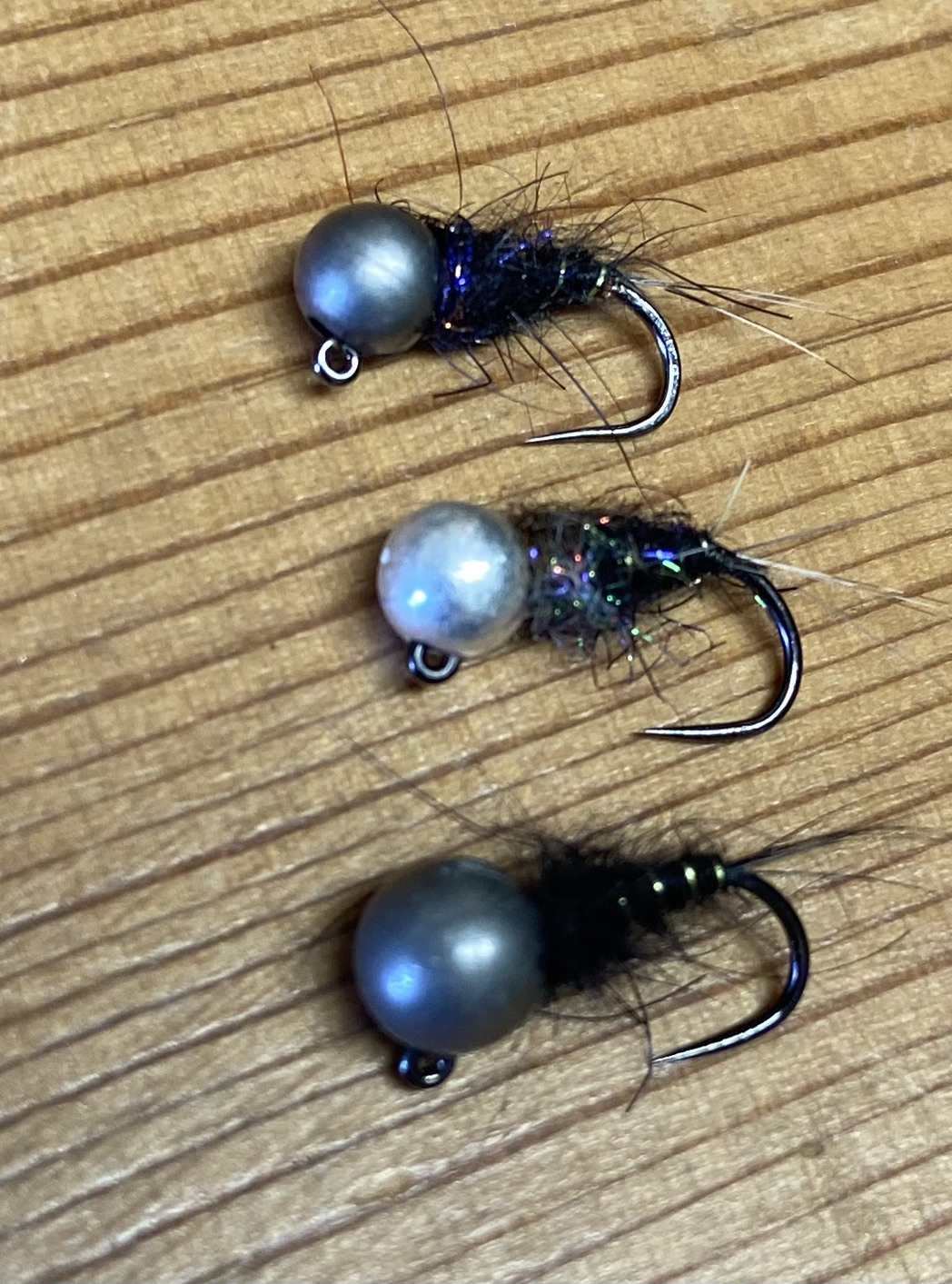
It was late morning by the time we actually arrived at the waters edge keen to start exploring the deep pools and runs. We both carried two rods one set up with a dry fly and the other with a nymphing set up.
We started fishing on Beat 2 and Bridge Pool where Jeff commenced the days quest drifting his team of nymphs slow and deep as a rather nonchalant duck observed proceedings.
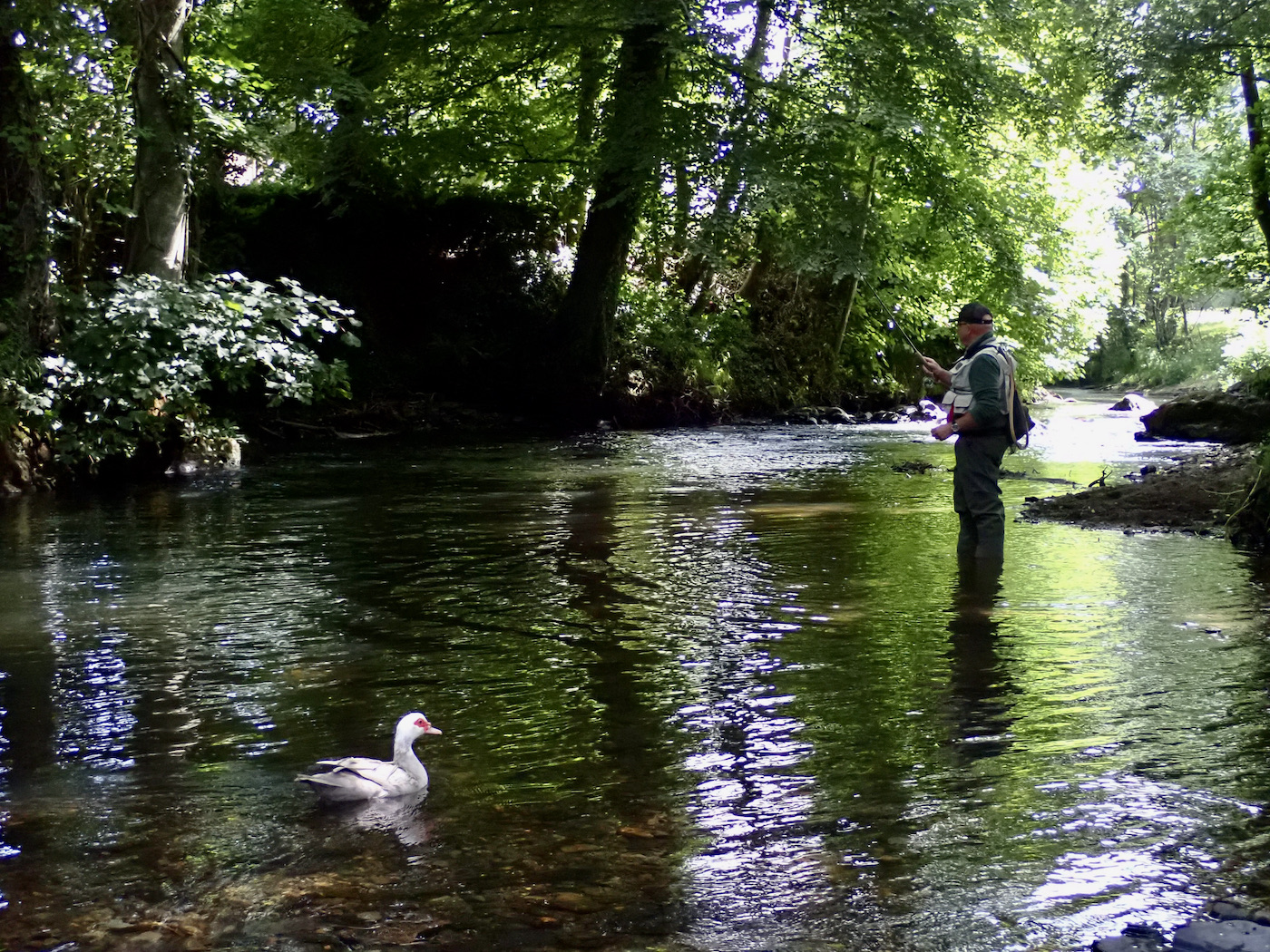
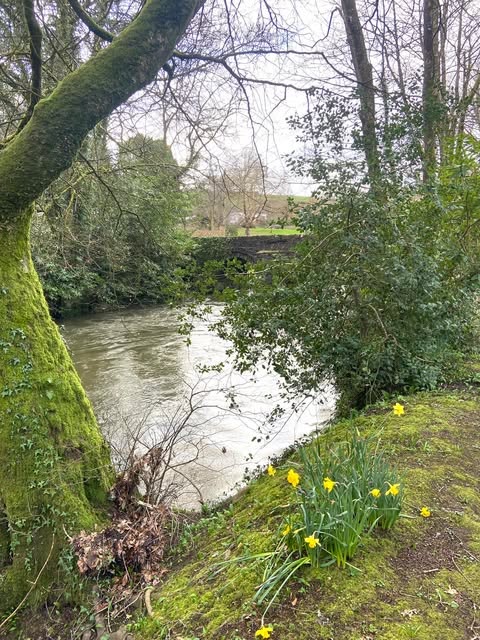
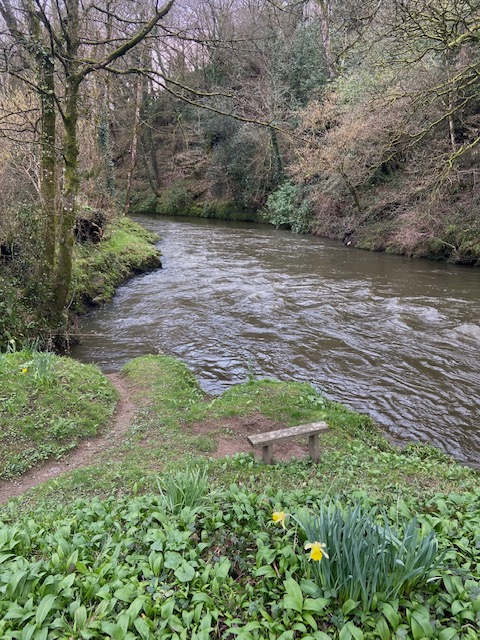
The lush green foliage of late June hung over the river its course carved through rocky bed rock over thousands of years. As I often say each river has its own unique character and the River Lyd is undoubtedly one of the West Country’s finest and after recent rainfall to flush sediment its waters seemed to be in sparkling health.

BB that great Countryside Writers Children’s Book ‘The Little Grey Men’ is a classic tome that captures the magic of a rivers journey and the shaded waters of the River Lyd somehow resonated within the pages of the book. This morning could easily have been a day BB describes “ After a soft grey morning, the sun had slowly broken through the clouds, and every blackbird and thrush in Lucking’s Meadow began to warble and tune up; the first opening bars of a great symphony in praise of life”. My ponderings on gnomes dwelling in the shady banks of the River Lyd are undoubtedly deluded for BB states “ For secrecy was of utmost importance, especially in these modern days when discovery would mean the end of everything. Why these little creatures had survived for so long is puzzling, because though they lived in this rural countryside, it was by no means ‘wild’ in the sense that some parts of Devon and Cornwall are wild, and there are, to my knowledge, no gnomes left now in either of these last two localities, though I understand they are still to be found in some parts of Ireland”.
We fished carefully up through deep shady pools that hid their secrets as sunlight broke through the vibrant green canopy of midsummer. We were both using bright indicators to suspend our nymphs to just trip the riverbed. This was not traditional fly fishing and the purist would certainly not approve. We are going through a revolution in fly fishing at the moment as technics from across the wider world are embraced by a younger generation who push the boundaries and break down the barriers between disciplines.
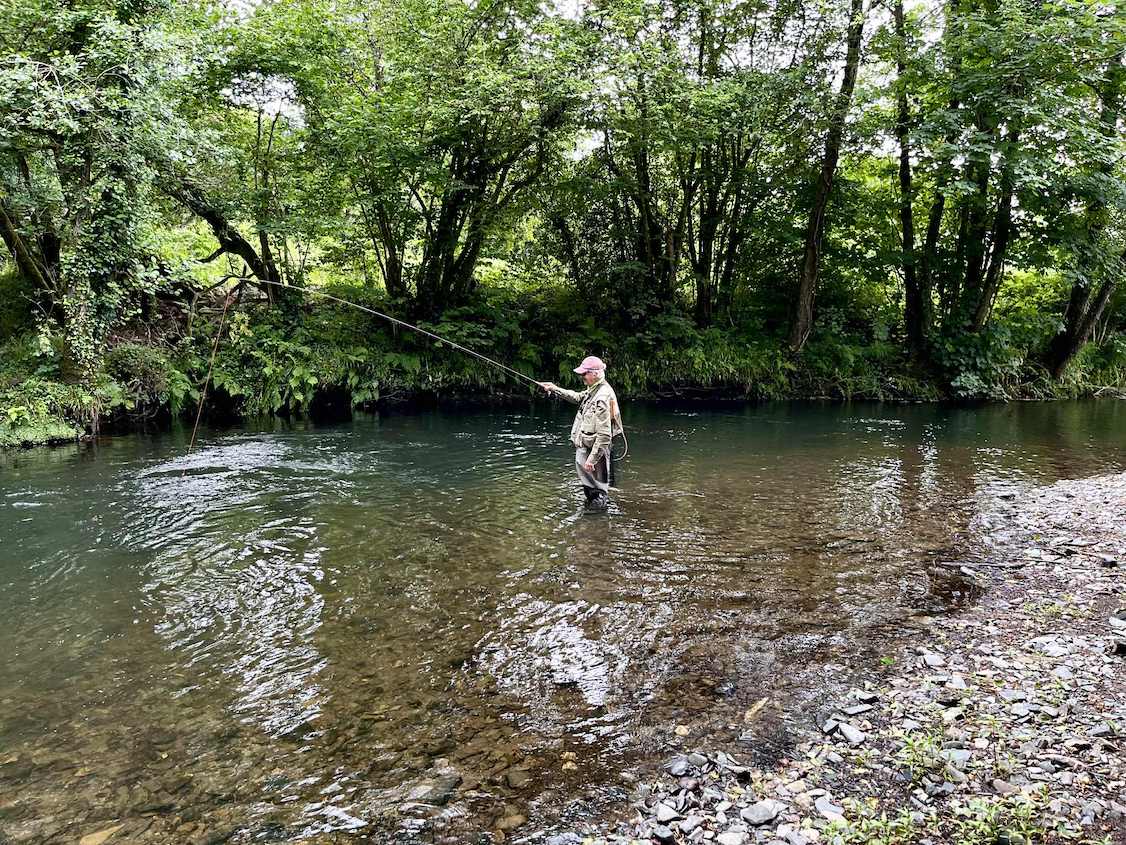
Watching our bright indicators drift slowly through deep calm pools is little different to trotting with a float and what’s wrong with that?
There is no doubt that catching on an upstream dry fly is more satisfying and that delectable moment of deception is one to savour. However life is short and in these modern times if we want a younger generation to embrace the sport then perhaps we have to accept a wider range of tactics and values. It is perhaps possible to draw comparison with today’s cricket scene. The traditionalist will always extol proper Test match cricket; five days of endeavours to be savoured and analysed. A younger generation will perhaps prefer the wham bam thrust of 20/20 cricket that is all over in just a few hours.
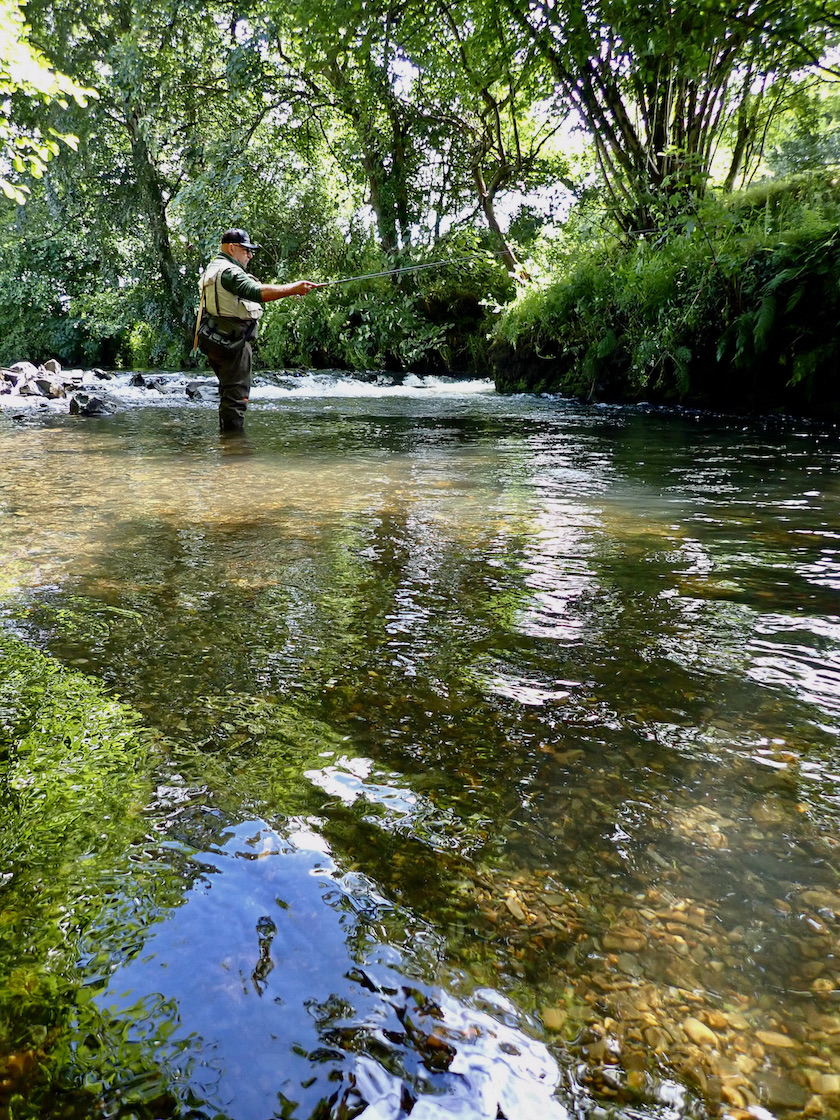
Jeff was first to connect and I watched as a sea trout gyrated in the strong current as it was persuaded to the waiting net. The silver flanks glistened as we admired its beauty before slipping it back into the cool waters.
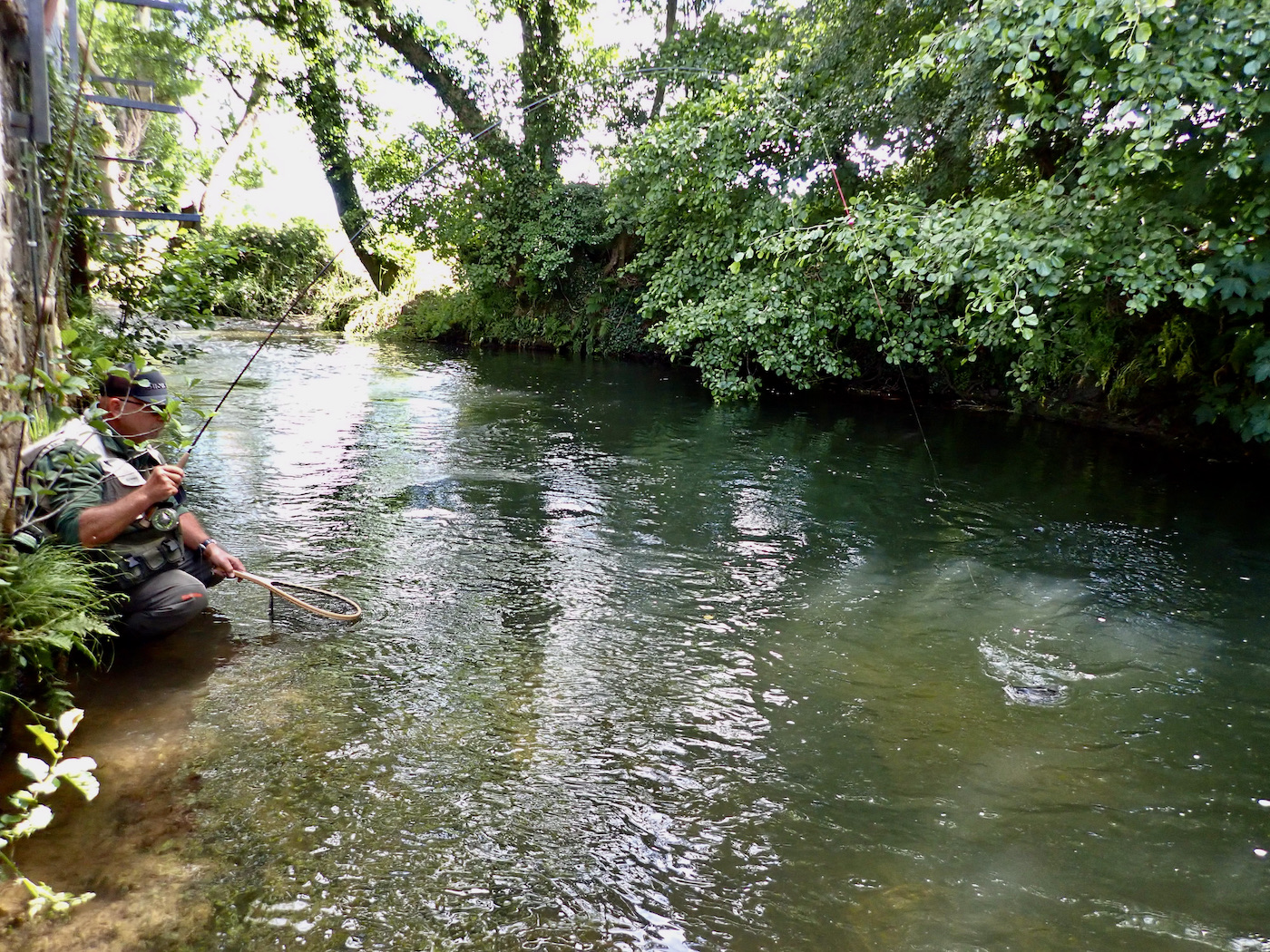
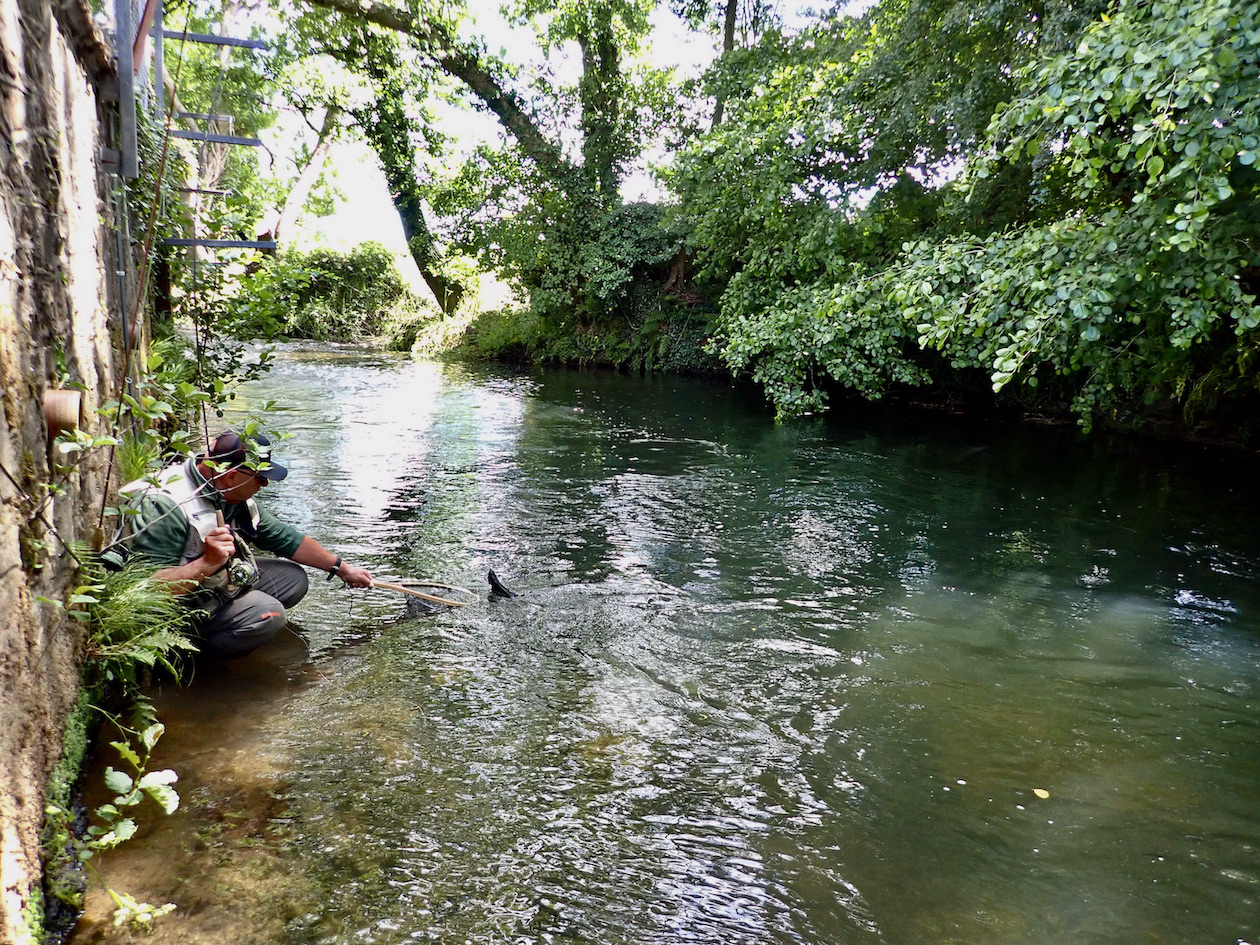
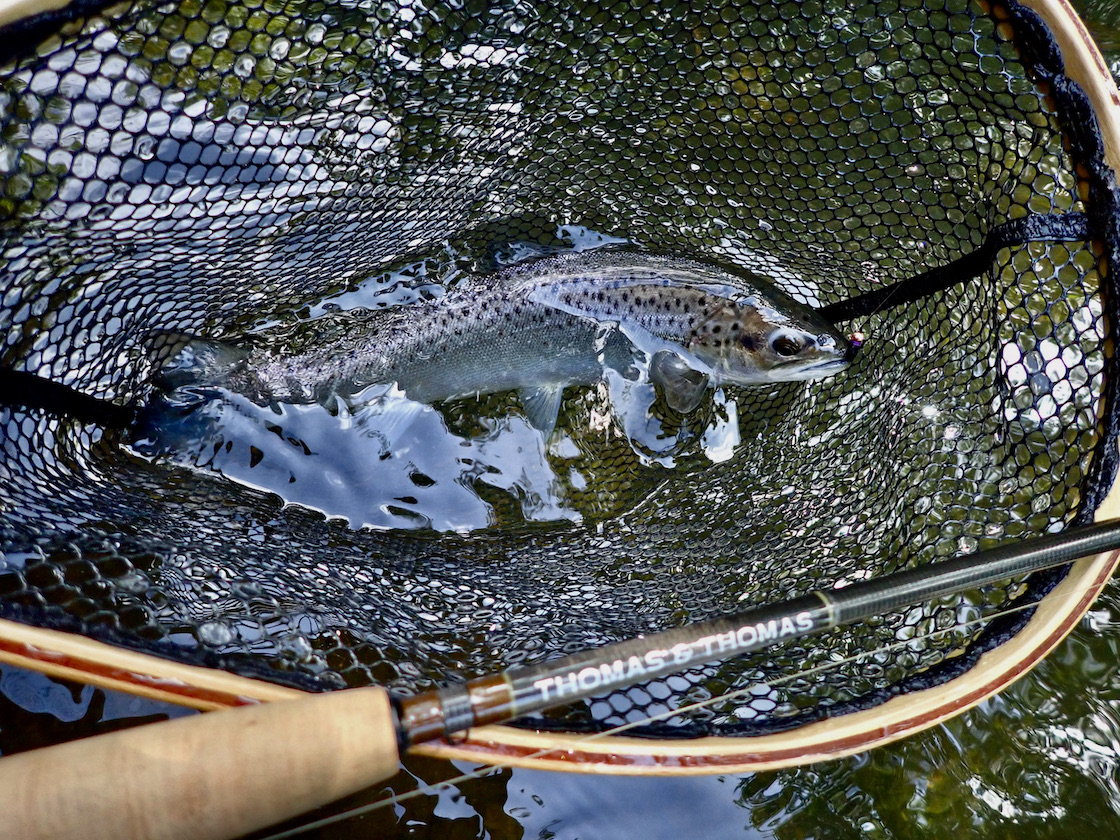
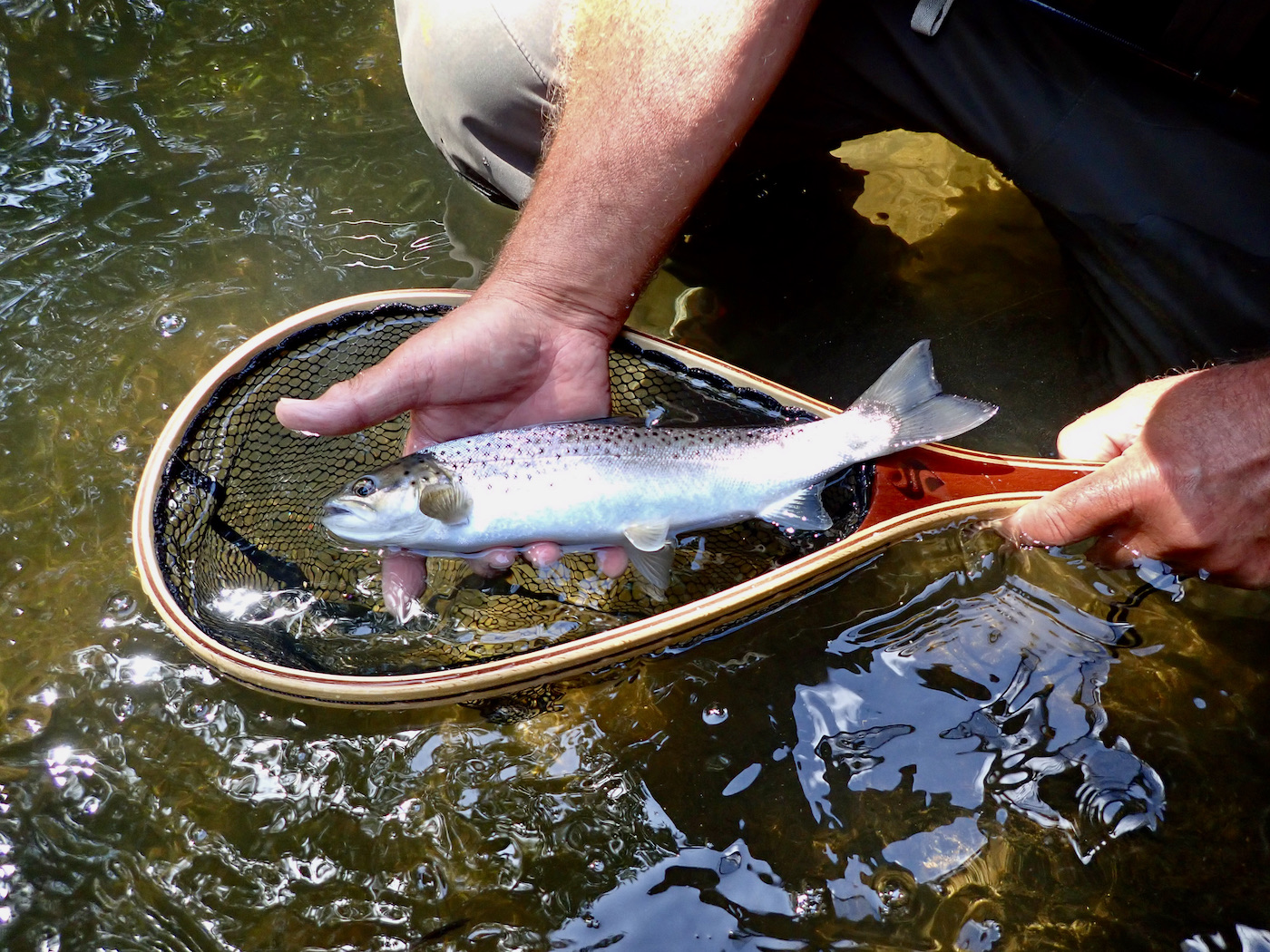
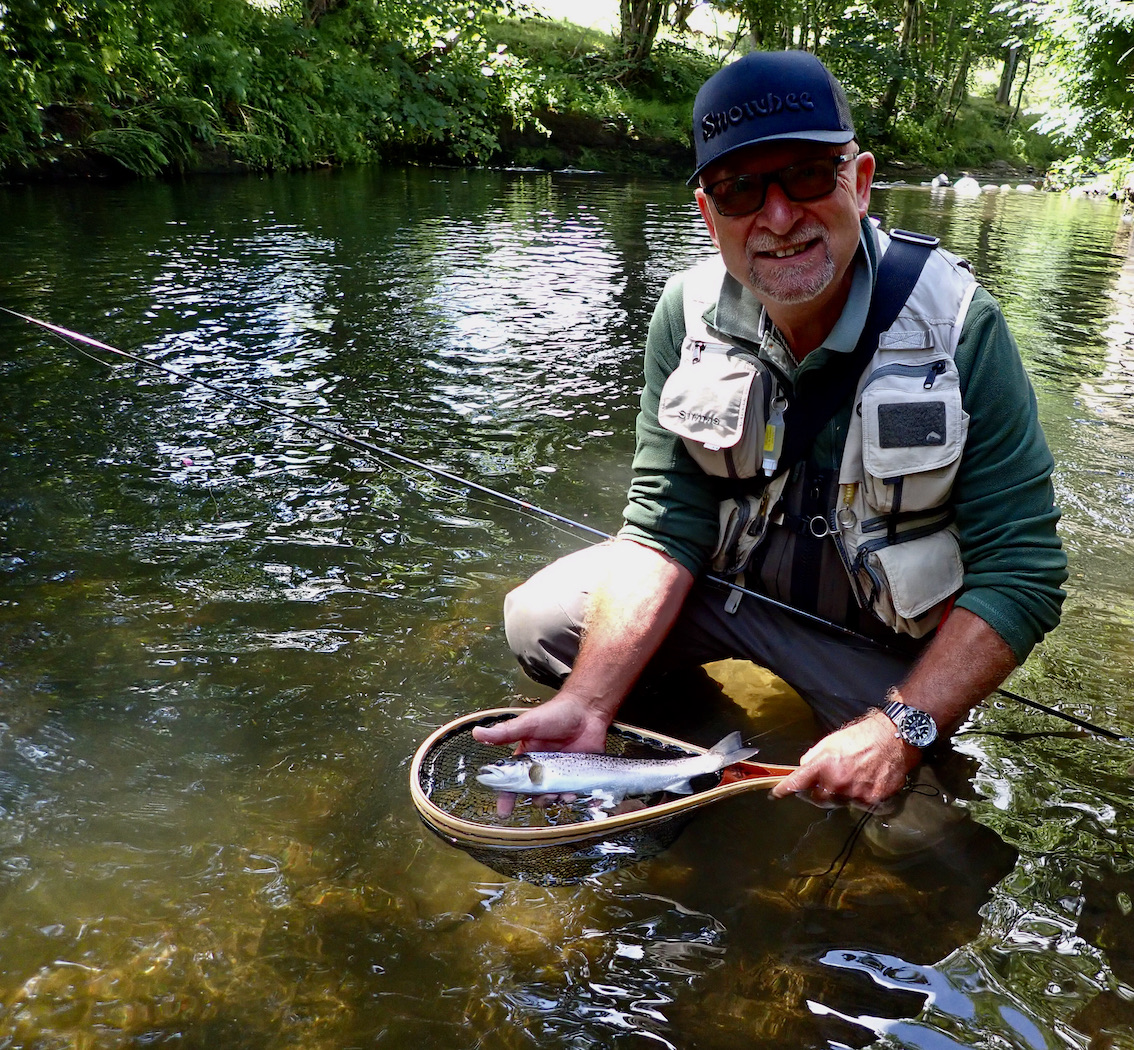


Boosted by this success we both searched intently drifting the nymphs through the pools. I hooked a small brown trout that shook the hook and caught a couple of small parr.
We then took a break to drive a short distance to the fish beat 3 a stretch of river that we had fished back in early March when Jeff had caught a grayling and I had lost one.
We went our separate ways now alternating between pools immersed in our own endeavours to a large extent. When we met up a short while later Jeff was excited to recall the capture of a fine sea trout estimated at around 2lb at had made his reel scream as it battled gamely.
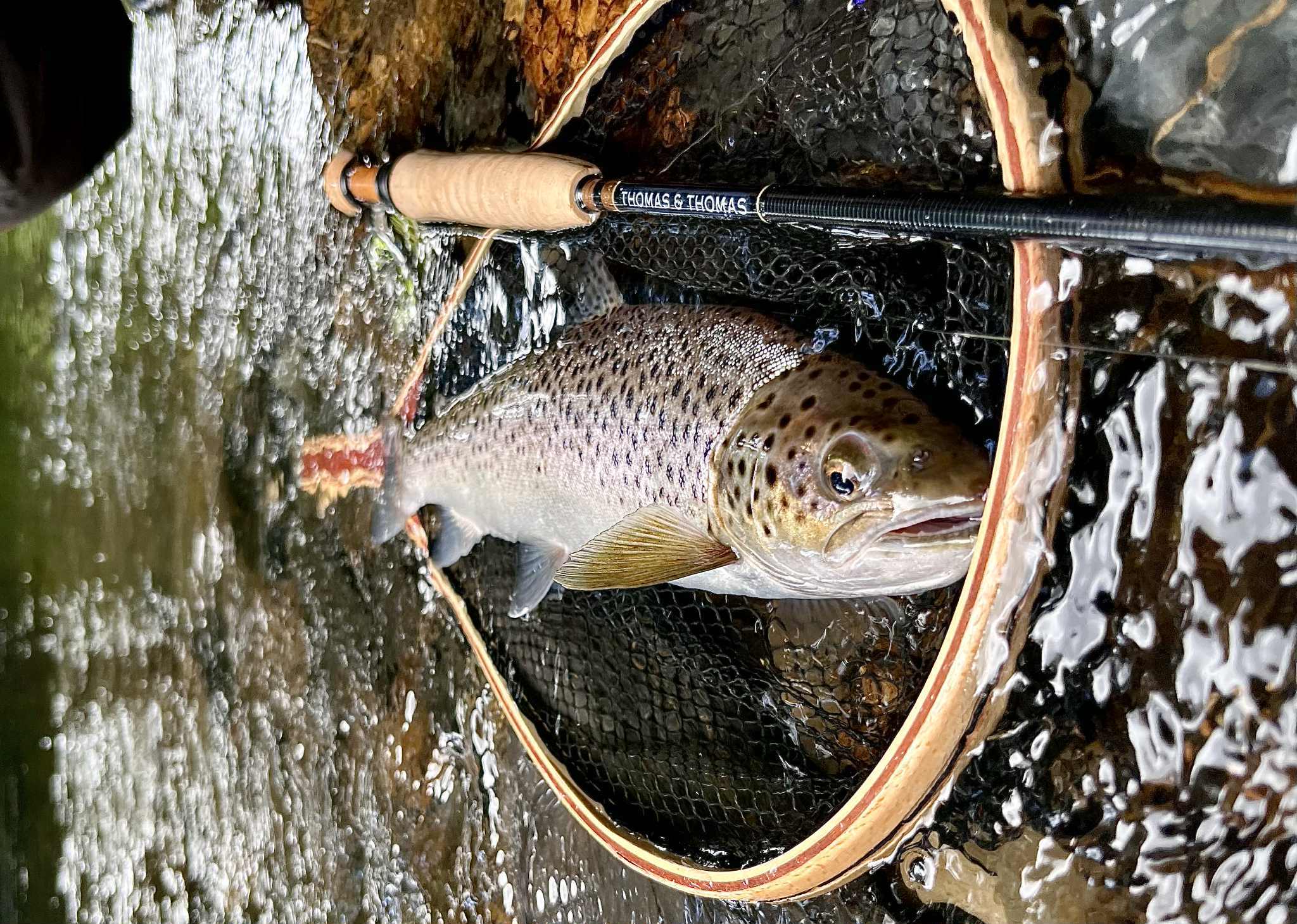
It is often the case that when I fish with Jeff we seem to mirror each other’s catch’s and when one of us enjoys a good first half the other succeeds in the second half. This was certainly my hope as I searched the pools attempting to read the water carefully focussing on those sections that took my fancy.
The deep fast water towards the head of the pools and runs tempted me and I searched these areas in preference to the slower deeper areas.
I undoubtedly missed a couple of fish as my indicator dipped beneath the surface or twitched vigorously with my strike finding no connection.
Then that wonderful moment of connection came and a bar of silver erupted from the water leaping almost to eye level before coming adrift after just a few seconds of adrenalin fuelled excitement.
Ten minutes later I hooked another larger fish that battled hard again leaping from the water before diving deep and under the far bank where I feared the line would catch in the roots of bankside trees. I savoured the bending rod and feel of a good fish in the strong current. I knelt at the water’s edge and guided the sea trout towards the waiting net. Then elation turned to dejection as the hook hold gave and my silver prize disappeared with flick of its tail.
The two glimpses of silver leaping and gyrating on my line are lodged in that deep file of memories in the mind. Merging with the lush green of early summer clear glistening water following a summer spate. The electric blue of kingfisher and the cheerful echoes of chiff-chaff and wren song in a river valley. Damsel flies and dragon flies haunting the river margins. As many of BB’s books commence,
The wonder of the world
Its beauty and its power,
The shapes of things,
Their colours lights and shades,
Look ye also while life lasts.
I caught up with Jeff at the weir pool and told of my losses. We chatted and fished the deep water above the weir together. A few trout dimpled the surface and Jeff switched to dry fly tactics whilst I persisted with the deep nymph tactics and missed a couple of chances.
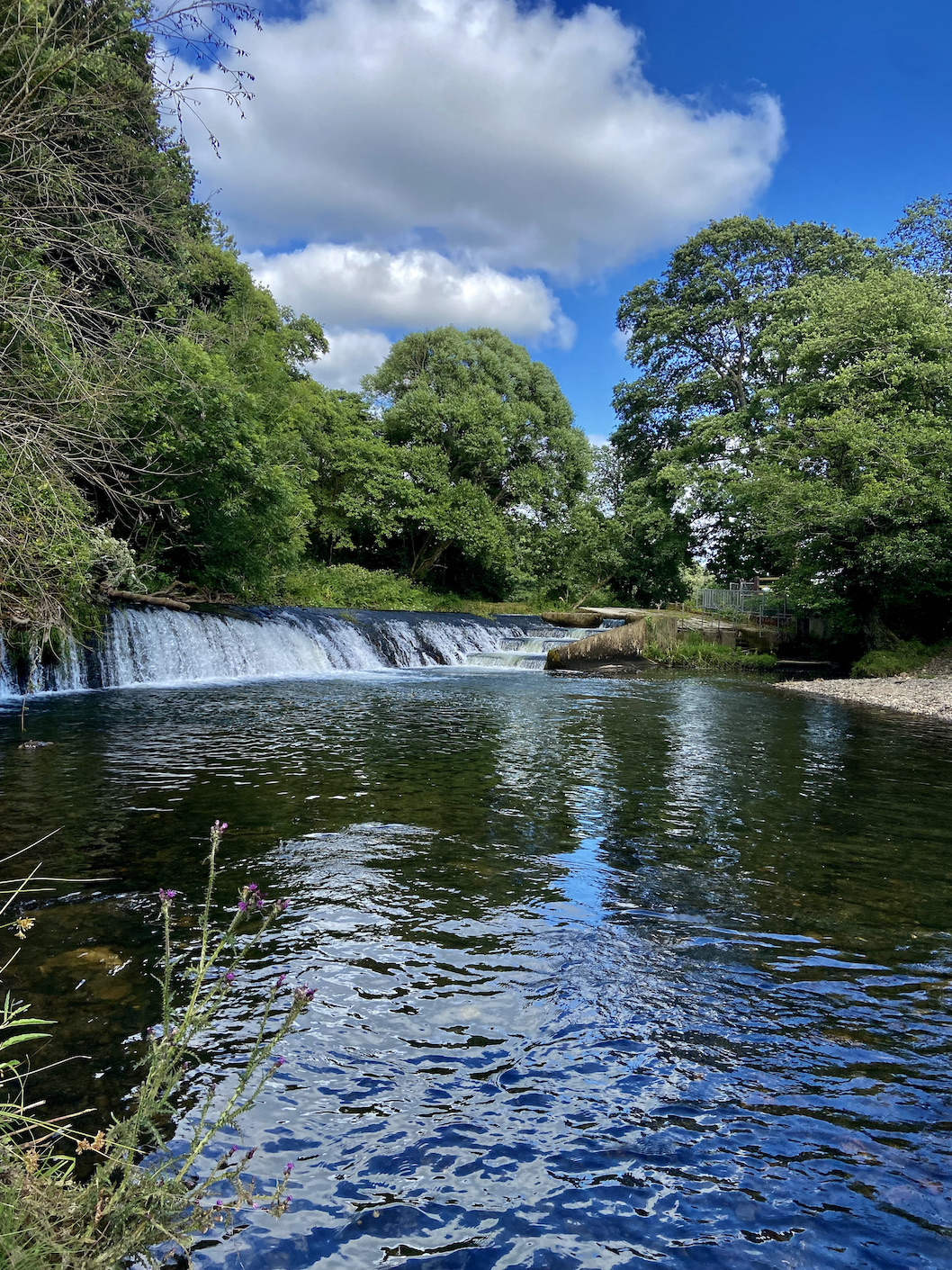
We had planned to pack up at around 5.00pm but a glance at the time revealed it was now past 6.00pm and after ten or so last casts we reluctantly walked back across the waterside meadows to return home. Already plotting further trips with a youthful enthusiasm that belied our years. The indicator deep fished nymph will certainly be used elsewhere to explore those deeper pools when the fish are not rising.